Department of Pharmacy Quaid-i-Azam University, Islamabad, 45320, Pakistan.
Department of Pharmacy Administration and Clinical Pharmacy, School of Pharmacy, Xi'an Jiaotong University, Xi'an, 710061, China.
BMC Pediatr. 2022 May 7;22(1):257. doi: 10.1186/s12887-022-03297-z.
Adherence to standard guidelines is imperative when question comes to disease management. The present study aimed to evaluate the administration of adjunctive vitamin D therapy in various diseases, its adherence to standard guideline and the effect of socioeconomic status on the consumption of vitamin D in children.
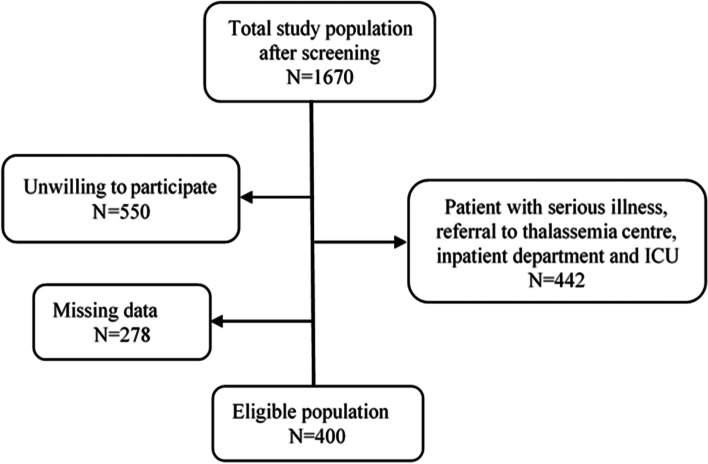
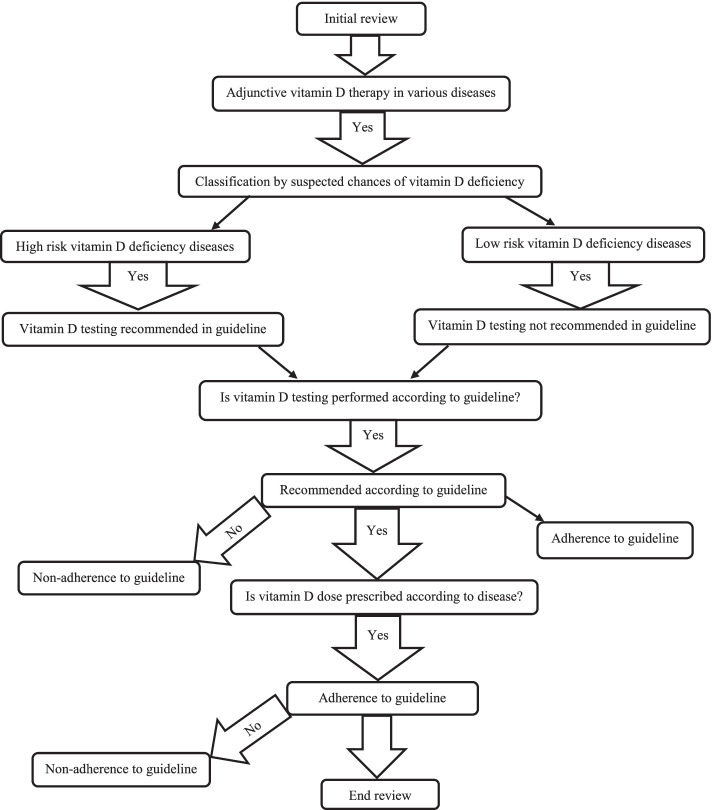
Cross sectional observational study was conducted among 400 ambulatory pediatric patients at Children's Hospital, Pakistan Institute of Medical Sciences Islamabad, from November 2017 to June 2018. Data were collected by a self-designed structured questionnaire from the patient's medical chart. Adjunctive vitamin D therapy adherence was evaluated by the U. S endocrinology clinical practice guideline of vitamin D deficiency. The association between socioeconomic status and consumption of vitamin D was examined by chi-square. Alpha value (p ≤ 0.005) was considered statistically significant. Statistical analysis was done by SPSS version 25.
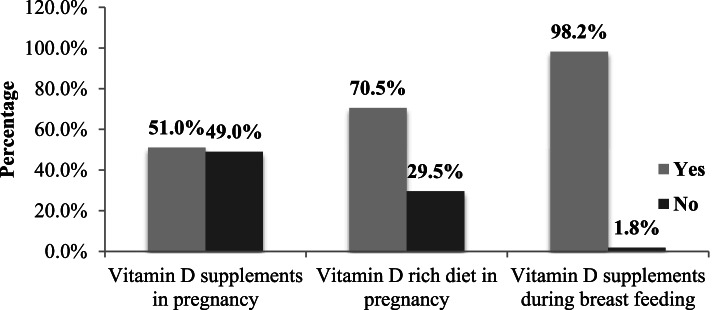
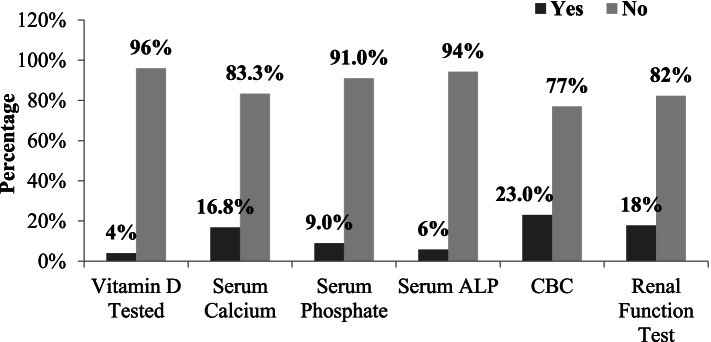
In 400 patients, 9 diseases and 21 comorbid conditions were identified, in which adjunctive vitamin D therapy was prescribed. Adherence to vitamin D testing in high-risk vitamin D deficiency diseases as; seizures (3.8%), bone deformities (13.3%), steroid-resistant nephrotic syndrome (0.0%), cerebral palsy (5.9%) and meningitis (14.3%). Adherence to prescribed vitamin D dose was in (41.3%) patients in various diseases. Significant association (p < 0.05) was found between socioeconomic status and consumption of vitamin D in children and mothers.
It was found that adjunctive vitamin D was being prescribed in various diseases and comorbidities. Overall poor adherence to the standard guideline was observed in disease management in children. Low socioeconomic status affects vitamin D supplementation consumption in children.
在疾病管理中,遵循标准指南至关重要。本研究旨在评估各种疾病中辅助维生素 D 治疗的应用、其对标准指南的遵循情况以及社会经济地位对儿童维生素 D 消费的影响。
本横断面观察性研究于 2017 年 11 月至 2018 年 6 月在巴基斯坦伊斯兰堡巴基斯坦医学科学院儿童医院的 400 名门诊儿科患者中进行。通过从患者病历中收集的自我设计的结构化问卷收集数据。通过美国内分泌临床实践指南评估维生素 D 缺乏症的辅助维生素 D 治疗依从性。通过卡方检验评估社会经济地位与维生素 D 消费之间的关系。α 值(p≤0.005)被认为具有统计学意义。统计分析采用 SPSS 版本 25。
在 400 名患者中,确定了 9 种疾病和 21 种合并症,其中开了辅助维生素 D 治疗。在高风险维生素 D 缺乏症中,对维生素 D 检测的依从性为:癫痫(3.8%)、骨畸形(13.3%)、类固醇耐药性肾病综合征(0.0%)、脑瘫(5.9%)和脑膜炎(14.3%)。在各种疾病中,有(41.3%)患者遵循了规定的维生素 D 剂量。发现社会经济地位与儿童和母亲的维生素 D 消费之间存在显著关联(p<0.05)。
研究发现,在各种疾病和合并症中都开了辅助维生素 D。在儿童疾病管理中,总体上对标准指南的遵循情况较差。低社会经济地位会影响儿童维生素 D 补充剂的消费。