State Key Laboratory of Pharmaceutical Biotechnology, Division of Sports Medicine and Adult Reconstructive Surgery, Department of Orthopedic Surgery, Nanjing Drum Tower Hospital, The Affiliated Hospital of Nanjing University Medical School, 321 Zhongshan Road, Nanjing, 210008, Jiangsu, People's Republic of China.
Branch of National Clinical Research Center for Orthopedics, Sports Medicine and Rehabilitation, Beijing, People's Republic of China.
J Orthop Surg Res. 2022 May 7;17(1):257. doi: 10.1186/s13018-022-03140-2.
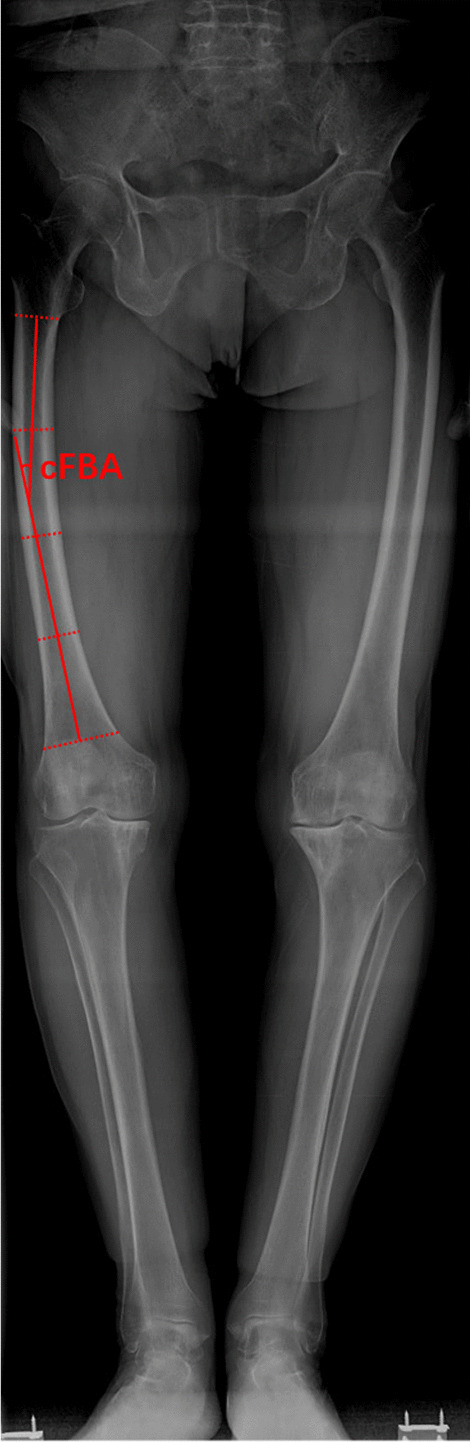
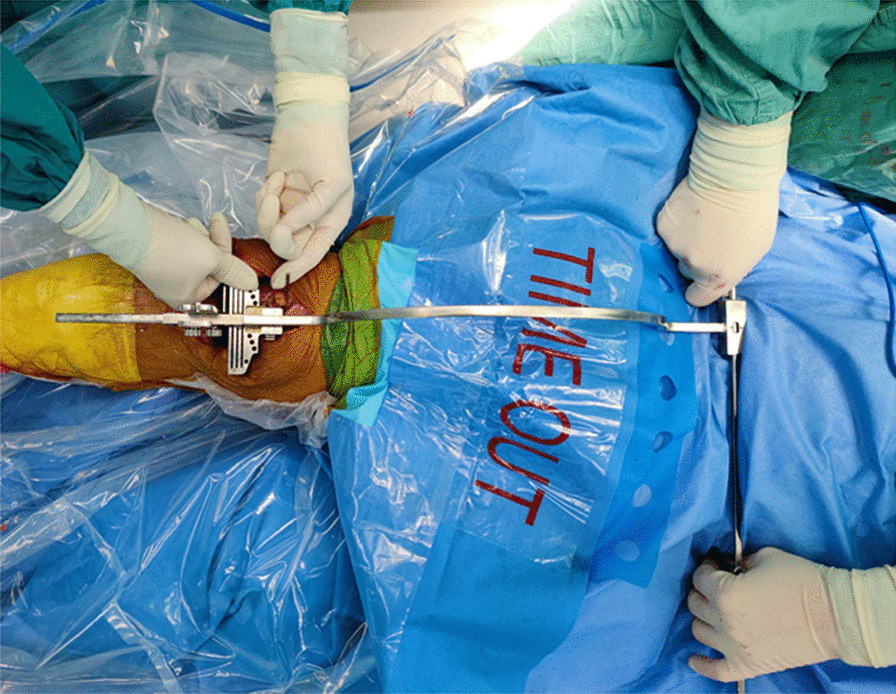
Intramedullary (IM) femoral alignment instrument is imprecise for the coronal alignment in total knee arthroplasty (TKA) in patients with severe lateral bowing of the femur, while the extramedullary (EM) alignment system does not depend on the structure of the femoral medullary cavity. The aim of this retrospective study was to compare the accuracy of postoperative limb alignment with the two femoral alignment techniques for patients with severe coronal femoral bowing.
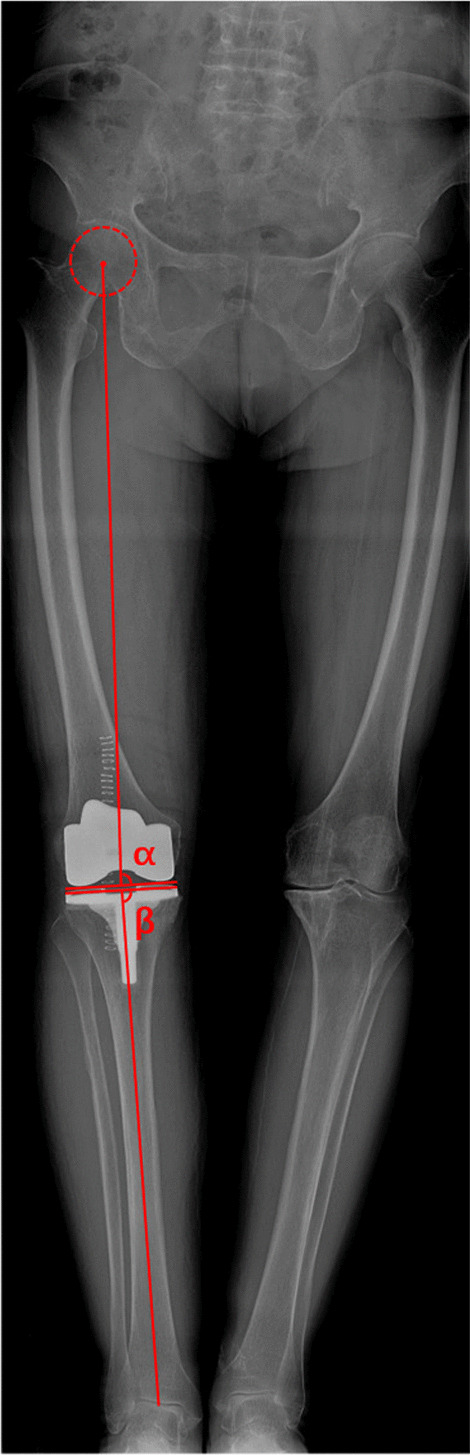
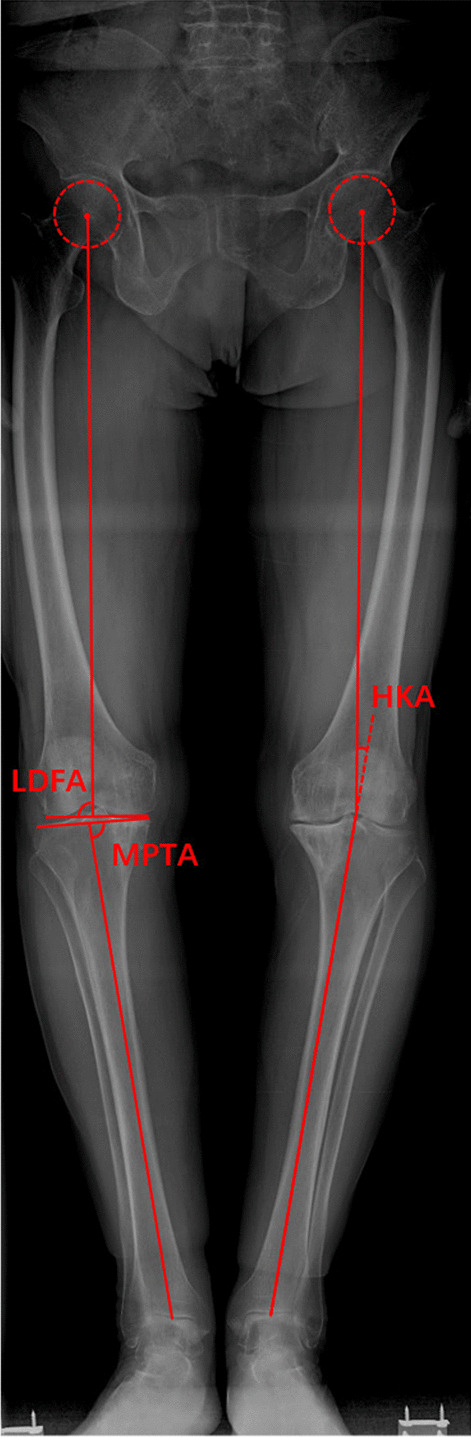
From January 2017 to December 2019, patients with end-stage knee osteoarthritis and coronal femoral bowing angle (cFBA) ≥ 5° who underwent total knee arthroplasty TKA at our institution were enrolled in the study. The postoperative hip-knee-ankle (HKA) alignment, femoral and tibial component alignment between the IM group and the EM group were compared on 5° ≤ cFBA < 10° and cFBA ≥ 10°.
In patients with 5° ≤ cFBA < 10°, no significant differences were observed in the EM group and IM group, including preoperative and postoperative parameters. However, when analyzing the patients with cFBA ≥ 10°, we found a significant difference in postoperative HKA (4.51° in the IM group vs. 2.23°in the EM group, p < 0.001), femoral component alignment angle (86.84° in the IM group vs. 88.46° in the EM group, p = 0.001) and tibial component alignment angle (88.69° in the IM group vs. 89.81° in the EM group, p = 0.003) between the two groups. Compared to the EM group, the IM group presents a higher rate of outliers for the postoperative HKA and femoral components.
The study showed that severe lateral bowing of the femur has an important influence on the postoperative alignment with the IM femoral cutting system. In this case, the application of EM cutting system in TKA will perform accurate distal femoral resection and optimize the alignment of lower limb and the femoral component.
在股骨严重外侧弯曲的全膝关节置换术(TKA)患者中,髓内(IM)股骨对线仪器对于冠状对线的准确性不高,而髓外(EM)对线系统则不依赖于股骨髓腔的结构。本回顾性研究的目的是比较两种股骨对线技术在股骨冠状弯曲严重的患者中的术后肢体对线准确性。
从 2017 年 1 月到 2019 年 12 月,在我院接受全膝关节置换术 TKA 的终末期膝骨关节炎和冠状股骨弯曲角(cFBA)≥5°的患者被纳入本研究。比较了 IM 组和 EM 组的术后髋关节-膝关节-踝关节(HKA)对线、股骨和胫骨组件对线在 5°≤cFBA<10°和 cFBA≥10°之间的差异。
在 5°≤cFBA<10°的患者中,EM 组和 IM 组在术前和术后参数方面均无显著差异。然而,在分析 cFBA≥10°的患者时,我们发现术后 HKA(IM 组为 4.51°,EM 组为 2.23°,p<0.001)、股骨组件对线角度(IM 组为 86.84°,EM 组为 88.46°,p=0.001)和胫骨组件对线角度(IM 组为 88.69°,EM 组为 89.81°,p=0.003)在两组之间存在显著差异。与 EM 组相比,IM 组术后 HKA 和股骨组件的离群值发生率更高。
本研究表明,股骨严重外侧弯曲对 IM 股骨截骨系统的术后对线有重要影响。在这种情况下,EM 截骨系统在 TKA 中的应用将进行准确的股骨远端切除,并优化下肢和股骨组件的对线。