Pathology and Laboratory Medicine, Vancouver General Hospital, University of British Columbia, Vancouver, Canada.
Molecular Oncology, BC Cancer Agency, Vancouver, Canada.
Acta Neuropathol Commun. 2022 May 7;10(1):70. doi: 10.1186/s40478-022-01372-1.
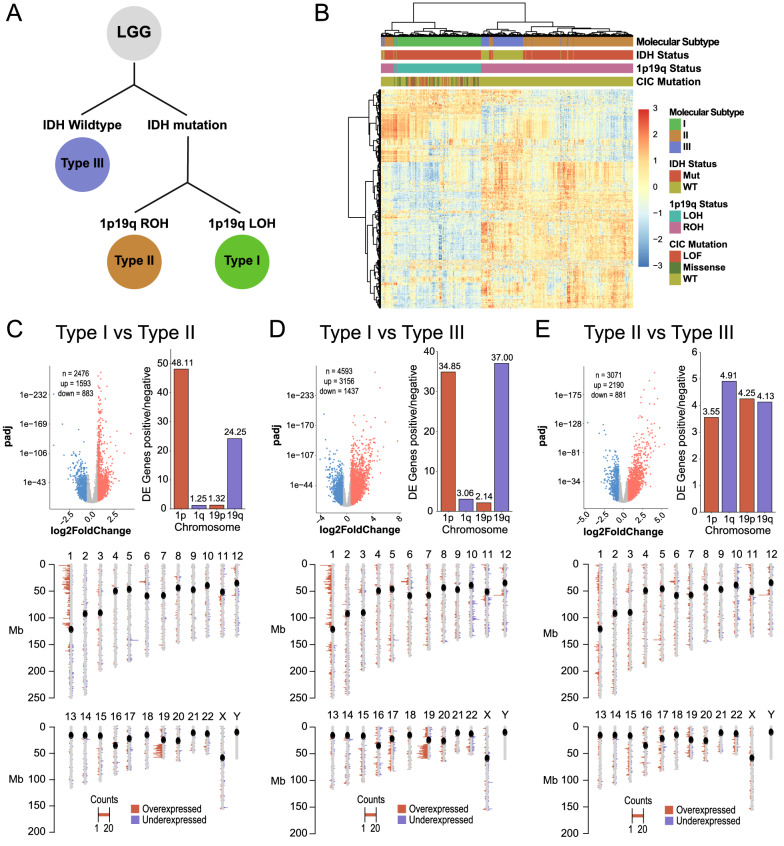
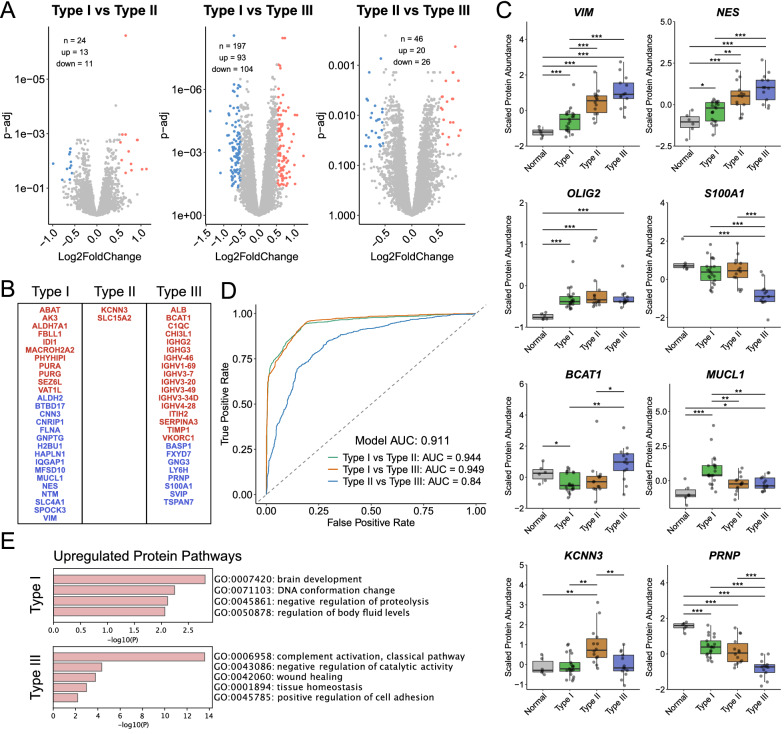
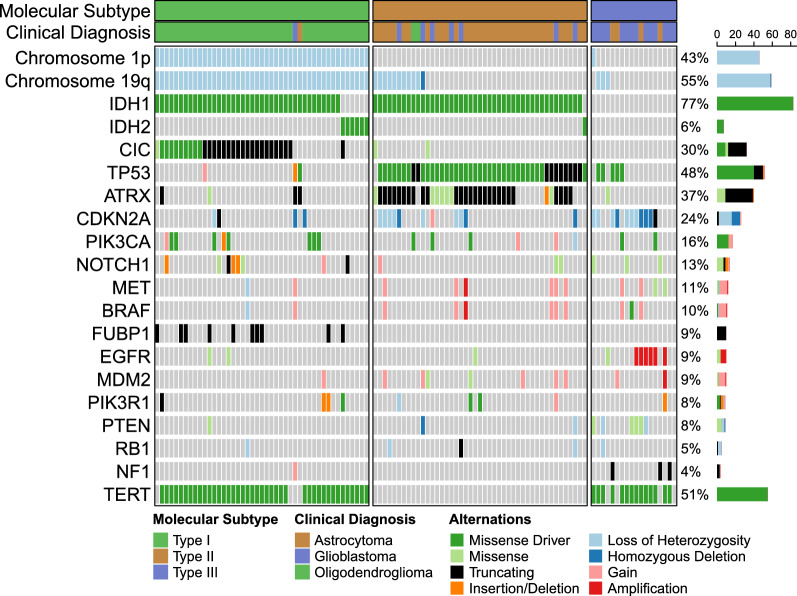
Diffusely infiltrative low-grade gliomas (LGG) are primary brain tumours that arise predominantly in the cerebral hemispheres of younger adults. LGG can display either astrocytic or oligodendroglial histology and do not express malignant histological features. Vast majority of LGG are unified by IDH mutations. Other genomic features including ATRX as well as copy number status of chromosomes 1p and 19q serve to molecularly segregate this tumor group. Despite the exponential gains in molecular profiling and understanding of LGG, survival rates and treatment options have stagnated over the past few decades with few advancements. In this study, we utilize low grade glioma RNA-seq data from the Cancer Genome Atlas (TCGA-LGG) and tandem mass-spectrometry on an in-house cohort of 54 formalin-fixed paraffin-embedded (FFPE) LGG specimens to investigate the transcriptomic and proteomic profiles across the three molecular subtypes of LGG (Type I: IDH mutant - 1p19q co-deleted, Type II: IDH mutant - 1p19q retained, Type III: IDH wildtype). Within the 3 LGG subtypes, gene expression was driven heavily by IDH mutation and 1p19q co-deletion. In concordance with RNA expression, we were able to identify decreased expressions of proteins coded in 1p19q in Type I LGG. Further proteomic analysis identified 54 subtype specific proteins that were used to classify the three subtypes using a multinomial regression model (AUC = 0.911). Type I LGG were found to have increased protein expression of several metabolic proteins while Type III LGG were found to have increased immune infiltration and inflammation related proteins. Here we present the largest proteomic cohort of LGG and show that proteomic profiles can be successfully analyzed from FFPE tissues. We uncover previously known and novel subtype specific markers that are useful for the proteomic classification of LGG subtypes.
弥漫浸润性低级别神经胶质瘤(LGG)是主要发生在年轻成年人大脑半球的原发性脑肿瘤。LGG 可以表现为星形细胞瘤或少突胶质细胞瘤的组织学特征,不表达恶性组织学特征。绝大多数 LGG 具有 IDH 突变。其他基因组特征,包括 ATRX 以及染色体 1p 和 19q 的拷贝数状态,有助于对该肿瘤组进行分子分类。尽管在 LGG 的分子谱分析和理解方面取得了指数级的进展,但在过去几十年中,生存率和治疗选择却停滞不前,几乎没有任何进展。在这项研究中,我们利用癌症基因组图谱(TCGA-LGG)中的低级别神经胶质瘤 RNA-seq 数据和我们内部的 54 例福尔马林固定石蜡包埋(FFPE)LGG 标本的串联质谱,来研究 LGG 的三个分子亚型(I 型:IDH 突变 - 1p19q 同时缺失,II 型:IDH 突变 - 1p19q 保留,III 型:IDH 野生型)的转录组和蛋白质组谱。在 3 种 LGG 亚型中,基因表达主要受 IDH 突变和 1p19q 同时缺失的驱动。与 RNA 表达一致,我们能够在 I 型 LGG 中鉴定到 1p19q 编码蛋白的表达下调。进一步的蛋白质组学分析鉴定出 54 种亚型特异性蛋白,这些蛋白可用于使用多项回归模型对三种亚型进行分类(AUC=0.911)。I 型 LGG 中几种代谢蛋白的表达增加,而 III 型 LGG 中免疫浸润和炎症相关蛋白的表达增加。在这里,我们展示了最大的 LGG 蛋白质组学队列,并表明可以从 FFPE 组织中成功分析蛋白质组学谱。我们揭示了以前已知和新的亚型特异性标志物,这些标志物对 LGG 亚型的蛋白质组分类很有用。