Wang Yongyong, Yuan Yao, Wang Chunpeng, Wang Bingjie, Zou Wenbin, Zhang Ni, Chen Xiaoqiang
Department of Thoracic Surgery, Tongji Hospital, Tongji Medical College, Huazhong University of Science and Technology, Wuhan, China.
National "111" Center for Cellular Regulation and Molecular Pharmaceutics, Key Laboratory of Fermentation Engineering, Ministry of Education, Hubei University of Technology, Wuhan, China.
Front Nutr. 2022 Apr 21;9:858261. doi: 10.3389/fnut.2022.858261. eCollection 2022.
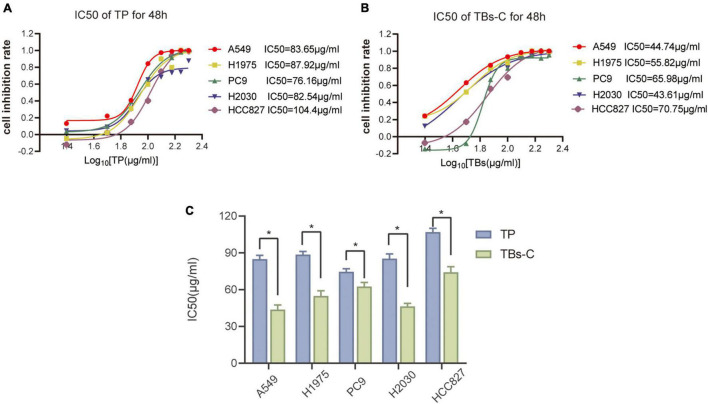
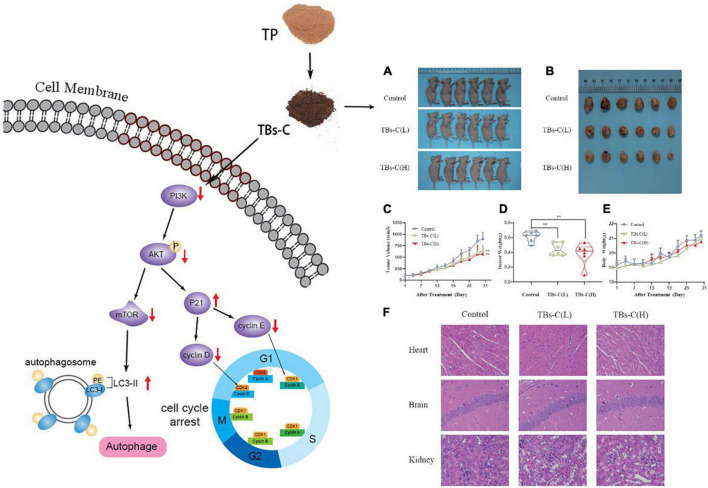
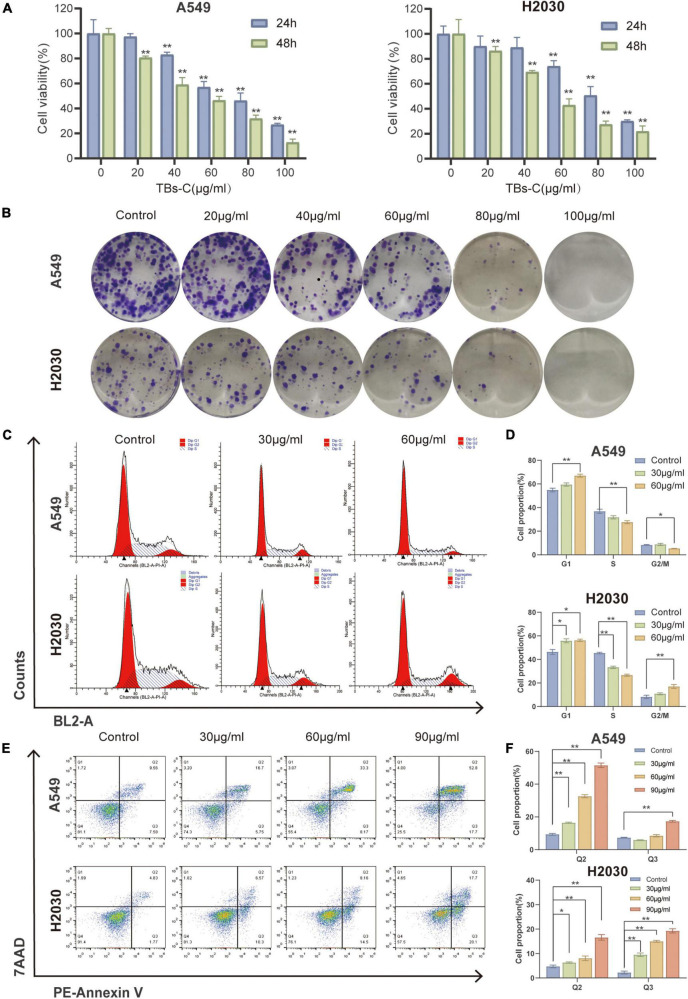
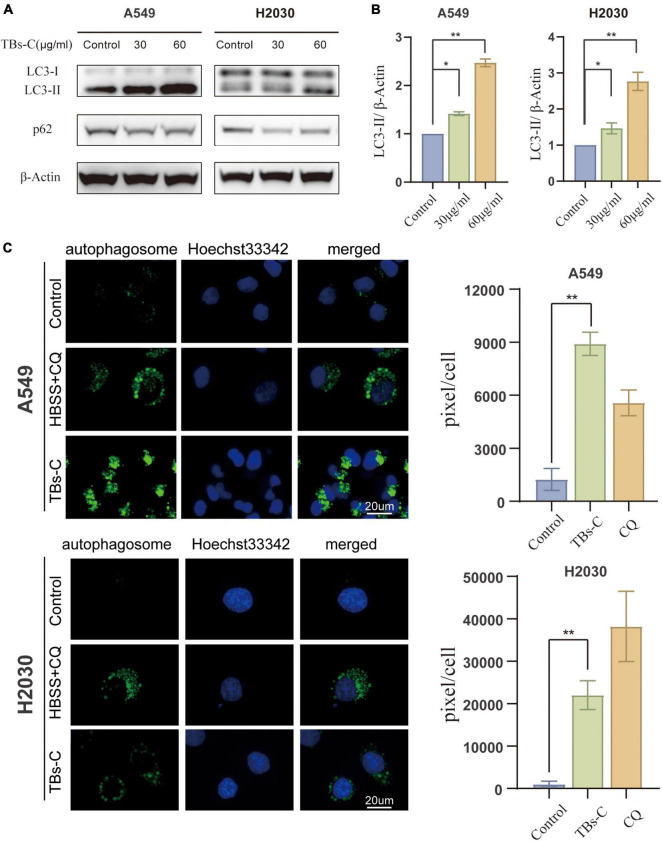
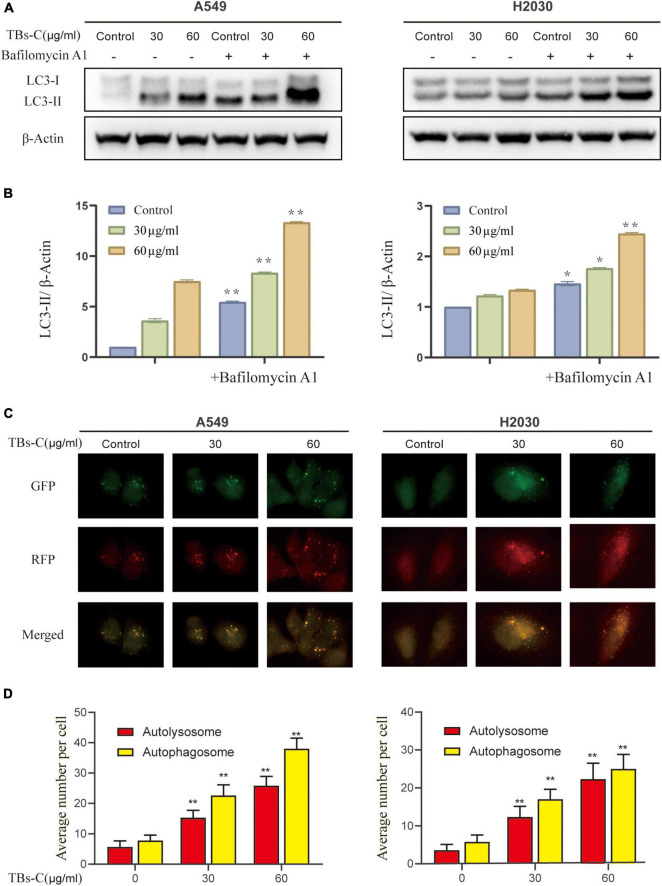
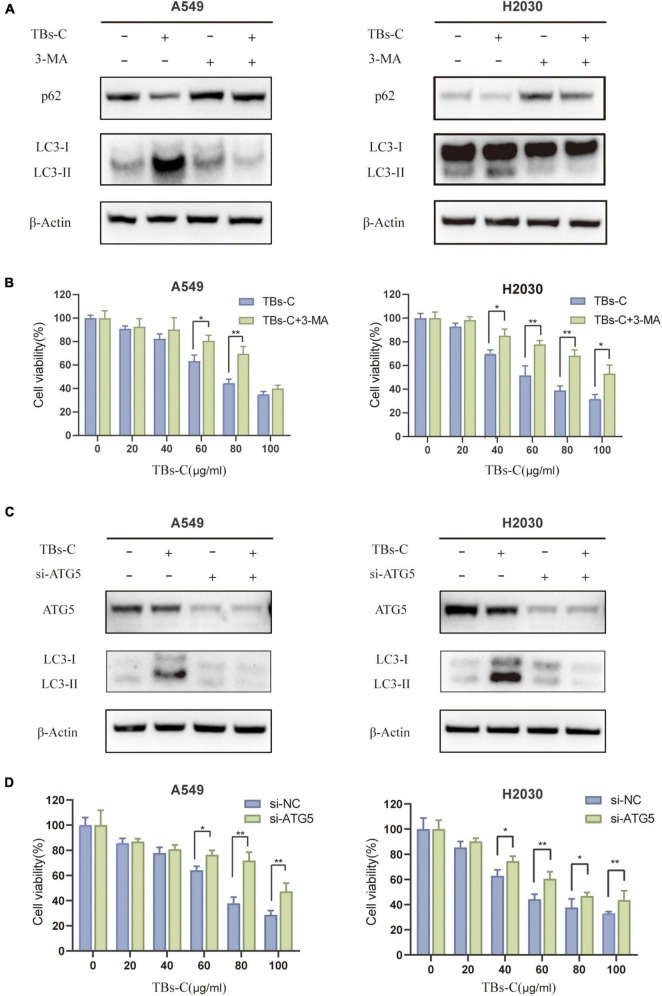
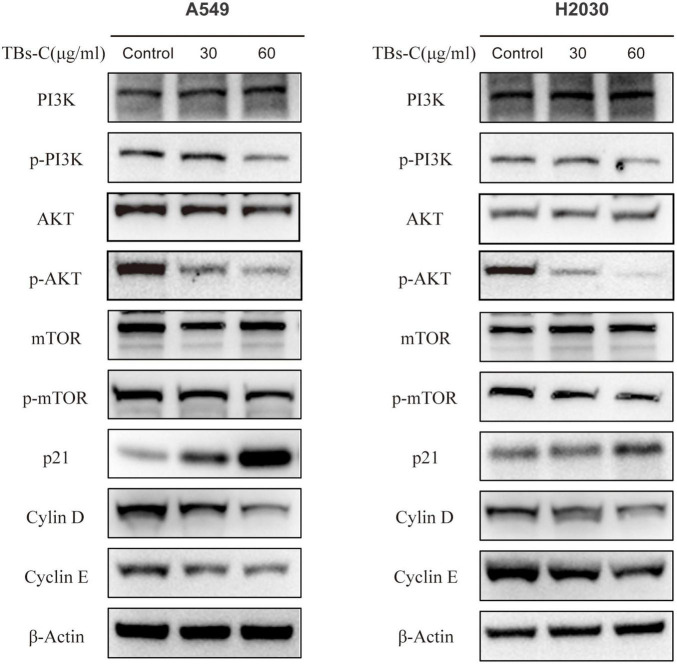
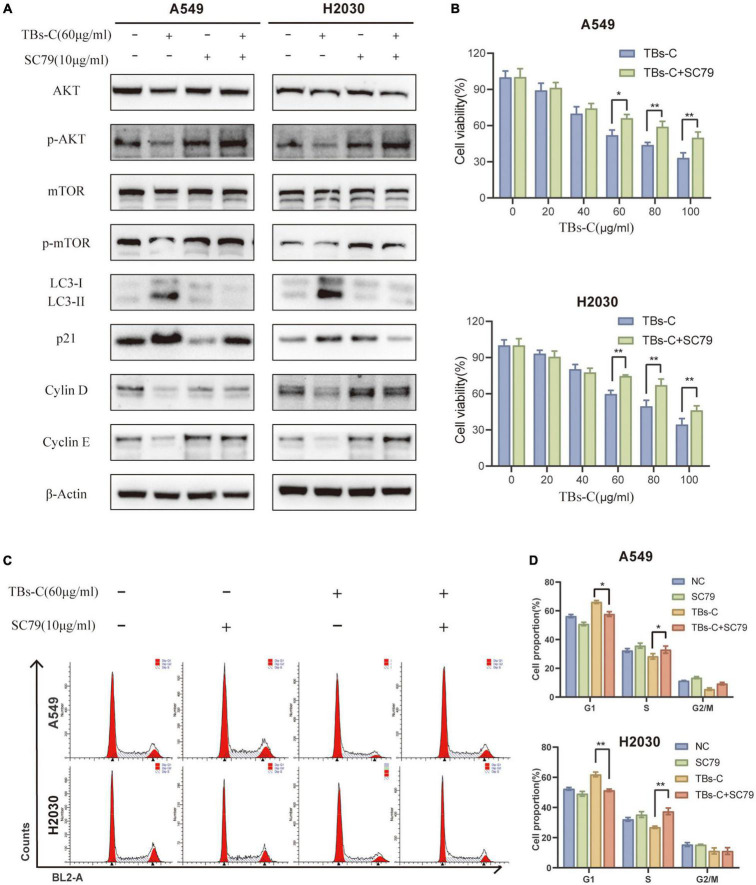
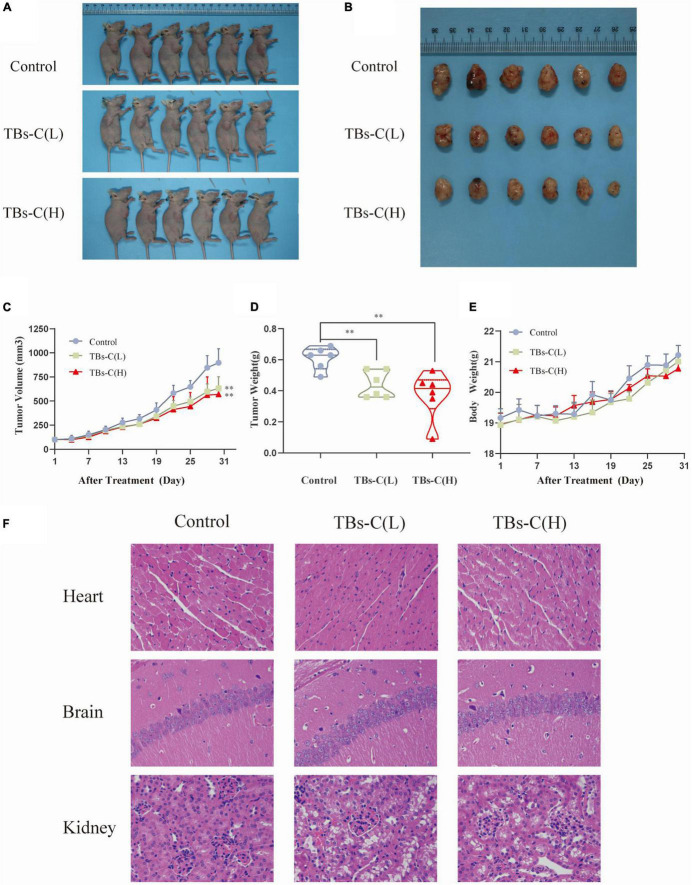
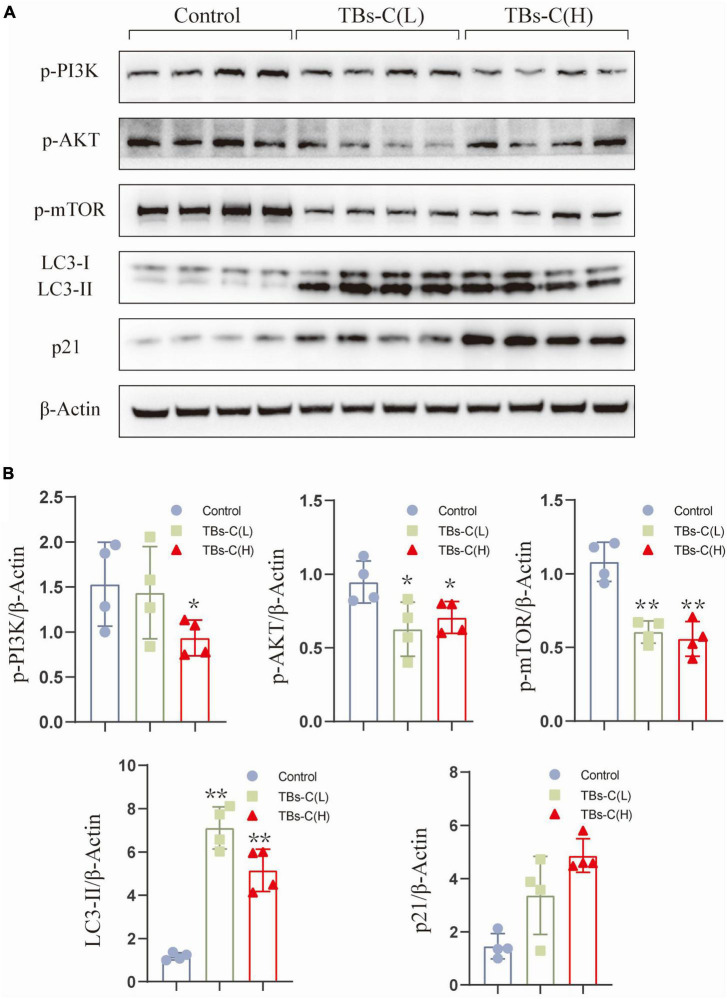
During the fermentation of dark tea, theabrownins (TBs), carbohydrates, and other substances get irreversibly complex. Recent research on the biological activity of TBs is not based on free TBs. In the present study, some brown polyphenol oxidized polymers, the generalized TBs (TBs-C), were prepared via alkali oxidation from tea polyphenols (TP). We also investigated the inhibitory mechanism of TBs-C on non-small-cell-lung cancer (NSCLC). TBs-C demonstrated a stronger inhibition than TP on the NSCLC cell lines A549, H2030, HCC827, H1975, and PC9. Next, A549 and H2030 cell lines were selected as subjects to explore this mechanism. TBs-C was found to inhibit proliferation, promote apoptosis, and induce G1 cell-cycle arrest in the cells. In addition, TBs-C increased autophagic flux, which in turn promoted the death of lung cancer cells. Moreover, TBs-C suppressed the PI3K/AKT/mTOR pathway activation, promoted autophagy, and increased the expression of p21 downstream of AKT, which resulted in G1 cell-cycle arrest. In xenotransplanted NSCLC nude mice derived from A549 cells, TBs-C could significantly suppress tumor growth by inhibiting the PI3K/AKT/mTOR pathway without causing hepatotoxicity, brain toxicity, or nephrotoxicity. We believe that our present findings would facilitate advancement in the research and industrialization of TBs.
在黑茶发酵过程中,茶褐素(TBs)、碳水化合物及其他物质会发生不可逆的络合。近期关于茶褐素生物活性的研究并非基于游离茶褐素。在本研究中,通过碱氧化从茶多酚(TP)制备了一些棕色多酚氧化聚合物,即广义茶褐素(TBs-C)。我们还研究了TBs-C对非小细胞肺癌(NSCLC)的抑制机制。TBs-C对NSCLC细胞系A549、H2030、HCC827、H1975和PC9的抑制作用比TP更强。接下来,选择A549和H2030细胞系作为研究对象来探究该机制。发现TBs-C可抑制细胞增殖、促进凋亡并诱导细胞G1期阻滞。此外,TBs-C增加自噬通量,进而促进肺癌细胞死亡。而且,TBs-C抑制PI3K/AKT/mTOR通路激活,促进自噬,并增加AKT下游p21的表达,从而导致G1期细胞阻滞。在源自A549细胞的异种移植NSCLC裸鼠中,TBs-C可通过抑制PI3K/AKT/mTOR通路显著抑制肿瘤生长,且不会引起肝毒性、脑毒性或肾毒性。我们相信我们目前的研究结果将有助于推动茶褐素研究及产业化的进展。