Immune Tolerance Laboratory, School of Medicine, University of New South Wales (UNSW) Sydney, Ingham Institute, and Renal Service and Multiple Sclerosis Clinic, Liverpool Hospital, Liverpool, NSW, Australia.
Front Immunol. 2022 Apr 21;13:810798. doi: 10.3389/fimmu.2022.810798. eCollection 2022.
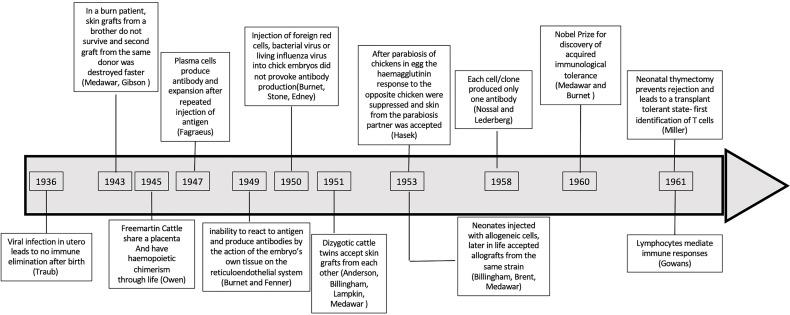
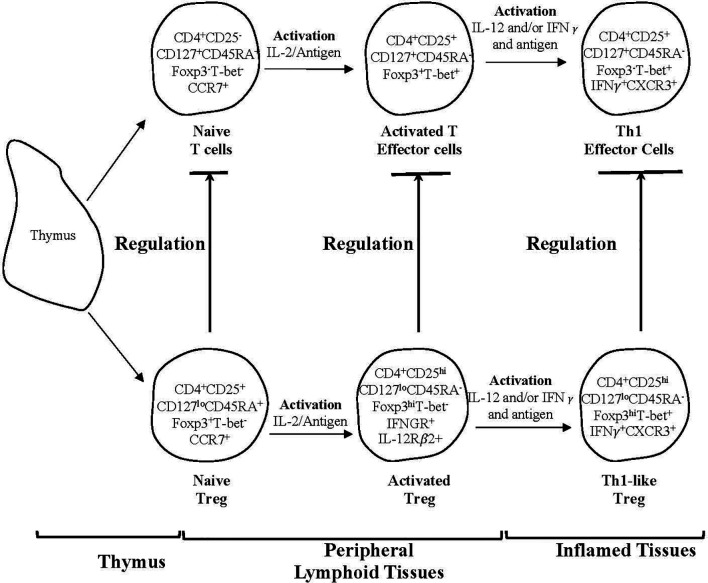
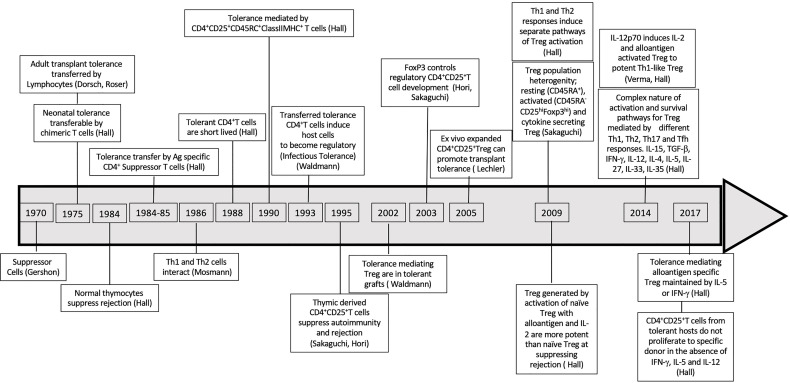
The quest to understand how allogeneic transplanted tissue is not rejected and how tolerance is induced led to fundamental concepts in immunology. First, we review the research that led to the Clonal Deletion theory in the late 1950s that has since dominated the field of immunology and transplantation. At that time many basic mechanisms of immune response were unknown, including the role of lymphocytes and T cells in rejection. These original observations are reassessed by considering T regulatory cells that are produced by thymus of neonates to prevent autoimmunity. Second, we review "operational tolerance" induced in adult rodents and larger animals such as pigs. This can occur spontaneously especially with liver allografts, but also can develop after short courses of a variety of rejection inhibiting therapies. Over time these animals develop alloantigen specific tolerance to the graft but retain the capacity to reject third-party grafts. These animals have a "split tolerance" as peripheral lymphocytes from these animals respond to donor alloantigen in graft versus host assays and in mixed lymphocyte cultures, indicating there is no clonal deletion. Investigation of this phenomenon excludes many mechanisms, including anti-donor antibody blocking rejection as well as anti-idiotypic responses mediated by antibody or T cells. This split tolerance is transferred to a second immune-depleted host by T cells that retain the capacity to effect rejection of third-party grafts by the same host. Third, we review research on alloantigen specific inhibitory T cells that led to the first identification of the CD4CD25T regulatory cell. The key role of T cell derived cytokines, other than IL-2, in promoting survival and expansion of antigen specific T regulatory cells that mediate transplant tolerance is reviewed. The precise methods for inducing and diagnosing operational tolerance remain to be defined, but antigen specific T regulatory cells are key mediators.
探索异体移植组织不被排斥以及诱导耐受的机制导致了免疫学的基本概念的产生。首先,我们回顾了 20 世纪 50 年代后期导致克隆删除理论的研究,该理论从此主导了免疫学和移植学领域。当时,许多免疫反应的基本机制尚不清楚,包括淋巴细胞和 T 细胞在排斥反应中的作用。通过考虑新生儿胸腺产生的 T 调节细胞来预防自身免疫,重新评估这些最初的观察结果。其次,我们回顾了成年啮齿动物和较大动物(如猪)中诱导的“操作性耐受”。这种情况尤其会在肝脏移植物中自发发生,但也可以在接受各种抑制排斥的治疗后短期发生。随着时间的推移,这些动物会对移植物产生同种异体抗原特异性耐受,但仍保留排斥第三方移植物的能力。这些动物具有“分裂耐受”,因为来自这些动物的外周淋巴细胞在移植物抗宿主测定和混合淋巴细胞培养中对供体同种异体抗原作出反应,表明不存在克隆删除。对这一现象的研究排除了许多机制,包括抗供体抗体阻断排斥反应以及抗体或 T 细胞介导的抗独特型反应。通过同种异体抗原特异性抑制性 T 细胞的研究,我们转移了这种分裂耐受到第二个免疫耗竭的宿主,这些 T 细胞保留了通过同一宿主排斥第三方移植物的能力。第三,我们回顾了关于同种异体抗原特异性抑制性 T 细胞的研究,这些研究导致了第一个 CD4CD25T 调节性 T 细胞的鉴定。审查了 T 细胞衍生细胞因子(除了 IL-2 以外)在促进同种抗原特异性 T 调节细胞存活和扩增中的关键作用,这些细胞调节移植耐受。诱导和诊断操作性耐受的确切方法仍有待确定,但抗原特异性 T 调节细胞是关键介质。