Department of Dermatology, Huashan Hospital, Fudan University, Shanghai, China.
Front Immunol. 2022 Apr 21;13:855622. doi: 10.3389/fimmu.2022.855622. eCollection 2022.
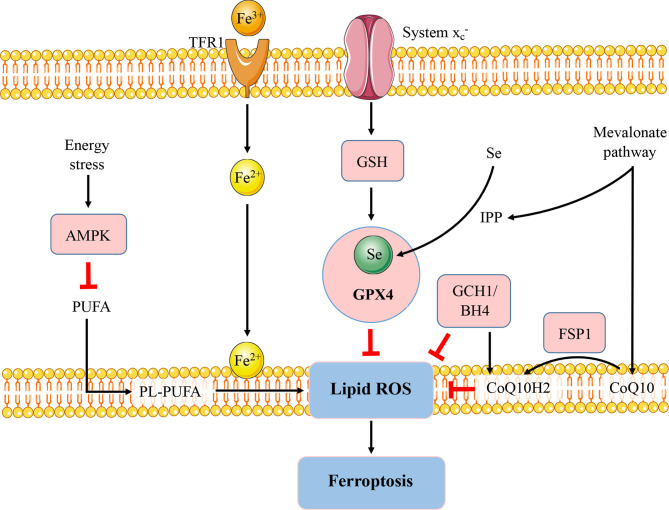
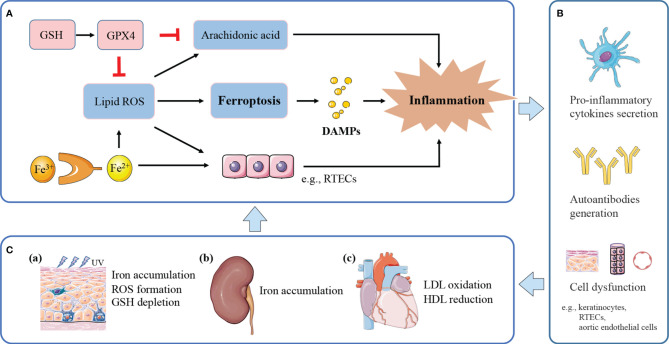
Systemic lupus erythematosus (SLE) is an autoimmune disease that is accompanied with autoantibody production and inflammation. Other features of SLE pathogenesis include iron accumulation, oxidative stress, and lipid peroxidation, which are also major biochemical characteristics of ferroptosis, a novel non-apoptotic regulated form of cell death. To date, ferroptosis has been demonstrated to be an important driver of lupus progression, and several ferroptosis inhibitors have therapeutic effect in lupus-prone mice. Given the emerging link between ferroptosis and SLE, it can be postulated that ferroptosis is an integral component in the vicious cycle of immune dysfunction, inflammation, and tissue damage in SLE pathogenesis. In this review, we summarize the potential links between ferroptosis and SLE, with the aim of elucidating the underlying pathogenic mechanism of ferroptosis in lupus, and providing a new promising therapeutic strategy for SLE.
系统性红斑狼疮(SLE)是一种自身免疫性疾病,伴有自身抗体的产生和炎症。SLE 发病机制的其他特征还包括铁积累、氧化应激和脂质过氧化,这些也是铁死亡这一新型非凋亡调控细胞死亡形式的主要生化特征。迄今为止,铁死亡已被证明是狼疮进展的重要驱动因素,几种铁死亡抑制剂在狼疮易感小鼠中具有治疗作用。鉴于铁死亡与 SLE 之间的新联系,可以推测铁死亡是 SLE 发病机制中免疫功能障碍、炎症和组织损伤的恶性循环中的一个组成部分。在这篇综述中,我们总结了铁死亡与 SLE 之间的潜在联系,旨在阐明铁死亡在狼疮中的潜在发病机制,并为 SLE 提供一种有前景的新治疗策略。