Le Bars Michael, Barik Ankit, Burmann Fabian, Lathrop Daniel P, Noir Jerome, Schaeffer Nathanael, Triana Santiago A
CNRS, Aix Marseille Univ, Centrale Marseille, IRPHE UMR 7342, 13013 Marseille, France.
Johns Hopkins University, 3400 N. Charles Street, Baltimore, 21210 USA.
Surv Geophys. 2022;43(1):229-261. doi: 10.1007/s10712-021-09681-1. Epub 2021 Dec 10.
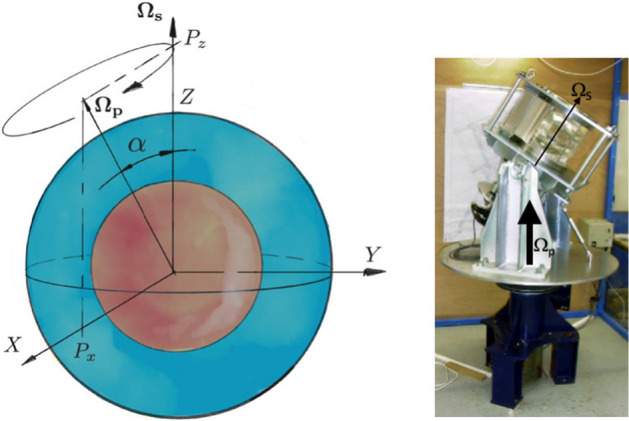
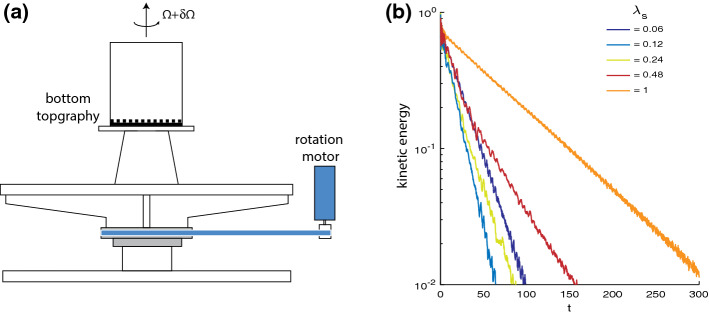
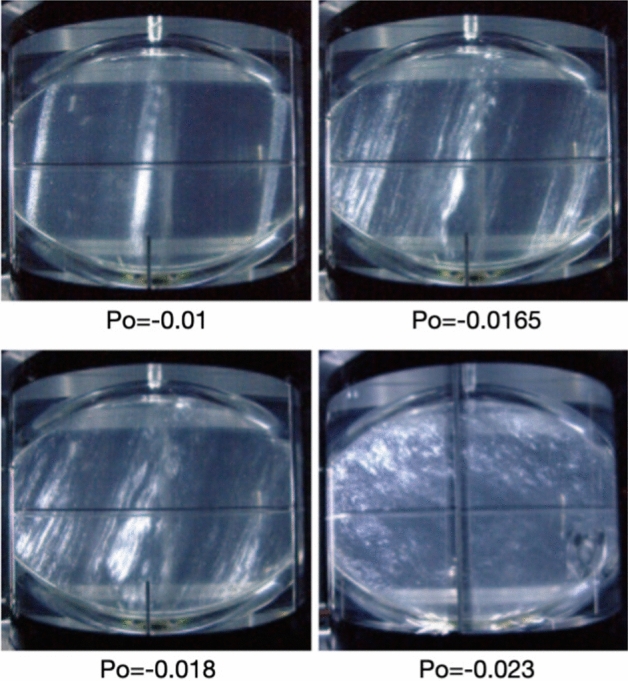
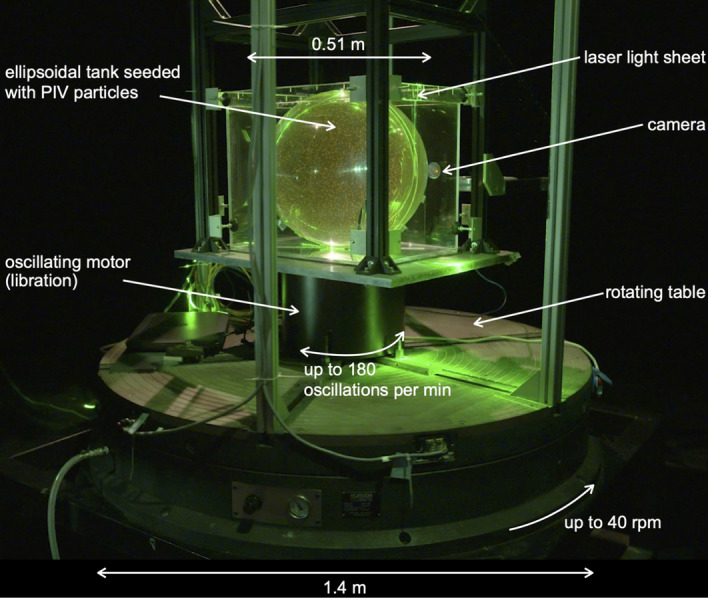
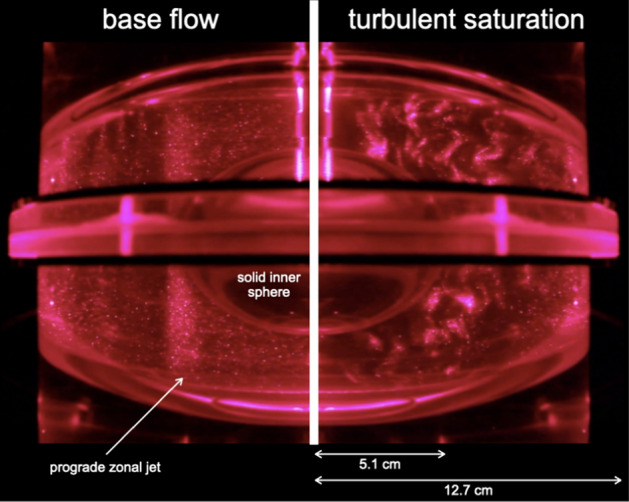
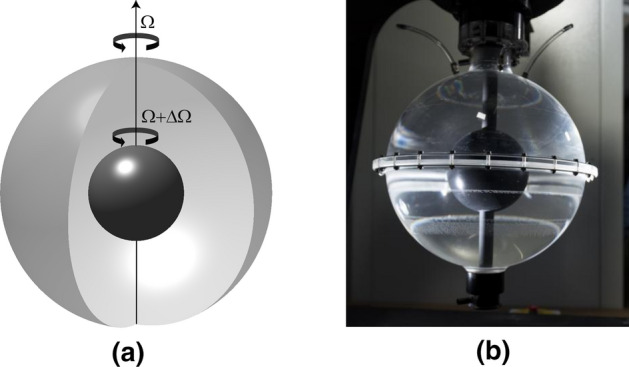
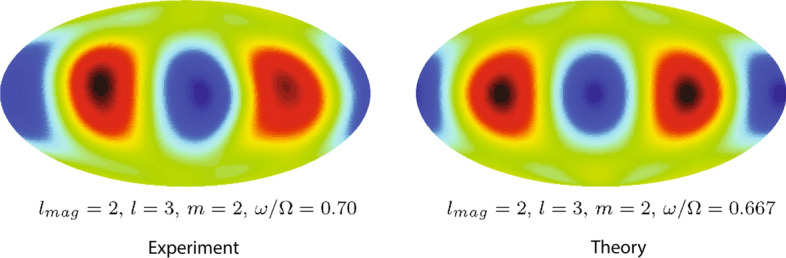
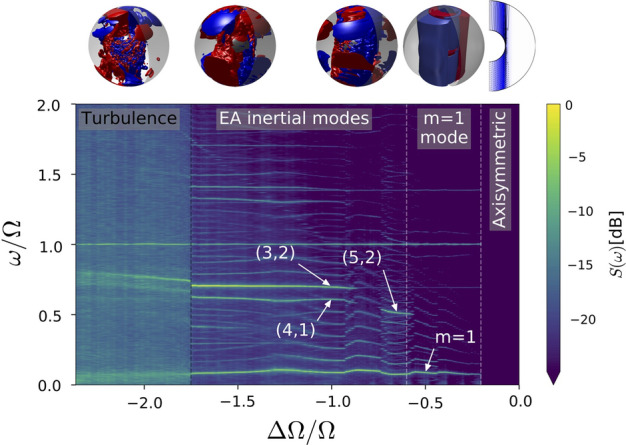
Understanding fluid flows in planetary cores and subsurface oceans, as well as their signatures in available observational data (gravity, magnetism, rotation, etc.), is a tremendous interdisciplinary challenge. In particular, it requires understanding the fundamental fluid dynamics involving turbulence and rotation at typical scales well beyond our day-to-day experience. To do so, laboratory experiments are fully complementary to numerical simulations, especially in systematically exploring extreme flow regimes for long duration. In this review article, we present some illustrative examples where experimental approaches, complemented by theoretical and numerical studies, have been key for a better understanding of planetary interior flows driven by some type of mechanical forcing. We successively address the dynamics of flows driven by precession, by libration, by differential rotation, and by boundary topography.
理解行星核心和地下海洋中的流体流动,以及它们在现有观测数据(重力、磁力、自转等)中的特征,是一项巨大的跨学科挑战。特别是,这需要理解涉及典型尺度下的湍流和自转的基本流体动力学,而这些尺度远超我们的日常经验。为此,实验室实验与数值模拟完全互补,尤其是在系统地长时间探索极端流动状态方面。在这篇综述文章中,我们展示了一些具有代表性的例子,其中实验方法在理论和数值研究的辅助下,对于更好地理解由某种机械力驱动的行星内部流动起到了关键作用。我们依次探讨了由岁差、天平动、较差自转和边界地形驱动的流动动力学。