Samutprasert Pawatsanai, Chiablaem Khajeelak, Teeraseranee Chanon, Phaiyarin Punnawich, Pukfukdee Puttikorn, Pienpinijtham Prompong, Svasti Jisnuson, Palaga Tanapat, Lirdprapamongkol Kriengsak, Wanichwecharungruang Supason
Department of Chemistry, Faculty of Science, Chulalongkorn University Thailand
Center of Excellence on Petrochemical and Materials Technology, Chulalongkorn University Bangkok 10330 Thailand.
RSC Adv. 2018 Feb 15;8(14):7369-7376. doi: 10.1039/c7ra10997k. eCollection 2018 Feb 14.
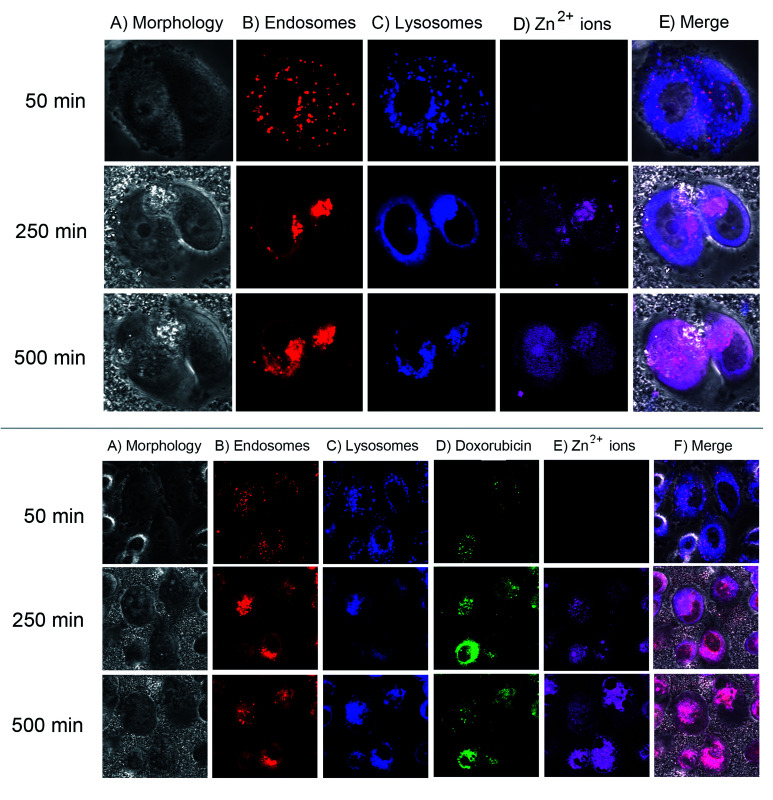
Decreased uptake and cellular accumulation of zinc is a common characteristic in cancer of the liver, pancreas and prostate, because these malignant cells are intolerant to the physiological concentrations of zinc. A tea polyphenol, epigallocatechin-3-gallate (EGCG), can enhance the cytotoxicity of zinc ions to cancer, but the application of this is limited by the low stability of EGCG. In this work, we have prepared a material that can simultaneously preserve the EGCG stability and facilitate zinc uptake and accumulation in cancer cells, under conditions that are not harmful to normal cells. Thus, we co-crystallize zinc oxide with EGCG to obtain hybrid EGCG-ZnO crystalline nanoparticles of 16.5 ± 5.3 nm in diameter. The EGCG-ZnO particles effectively kill PC-3 prostate adenocarcinoma cells at concentrations that are not cytotoxic to normal cells, WI-38 human embryonic lung fibroblasts. The EGCG-ZnO particles are two times more cytotoxic against PC-3 cells than the standard ZnO particles. In PC-3 cells, the EGCG-ZnO particles are taken up by endocytosis, followed by lysosomal disruption to release zinc and EGCG into the cytoplasm, finally resulting in nuclear accumulation of zinc.
锌摄取和细胞蓄积减少是肝癌、胰腺癌和前列腺癌的共同特征,因为这些恶性细胞无法耐受生理浓度的锌。一种茶多酚,表没食子儿茶素-3-没食子酸酯(EGCG),可增强锌离子对癌症的细胞毒性,但由于EGCG稳定性低,其应用受到限制。在这项研究中,我们制备了一种材料,它能在对正常细胞无害的条件下,同时保持EGCG的稳定性,并促进癌细胞对锌的摄取和蓄积。因此,我们将氧化锌与EGCG共结晶,得到直径为16.5±5.3nm的杂化EGCG-ZnO结晶纳米颗粒。EGCG-ZnO颗粒在对正常细胞(WI-38人胚肺成纤维细胞)无细胞毒性的浓度下,能有效杀死PC-3前列腺腺癌细胞。EGCG-ZnO颗粒对PC-3细胞的细胞毒性是标准ZnO颗粒的两倍。在PC-3细胞中,EGCG-ZnO颗粒通过内吞作用被摄取,随后溶酶体破裂,将锌和EGCG释放到细胞质中,最终导致锌在细胞核中蓄积。