Yan Yongda, Wang Jiqiang, Chang Shunyu, Geng Yanquan, Chen Leyi, Gan Yang
Key Laboratory of Micro-systems and Micro-structures Manufacturing of Ministry of Education, Harbin Institute of Technology Harbin Heilongjiang 150001 P. R. China
Center for Precision Engineering, Harbin Institute of Technology Harbin Heilongjiang 150001 P. R. China.
RSC Adv. 2019 Nov 27;9(66):38814-38821. doi: 10.1039/c9ra06428a. eCollection 2019 Nov 25.
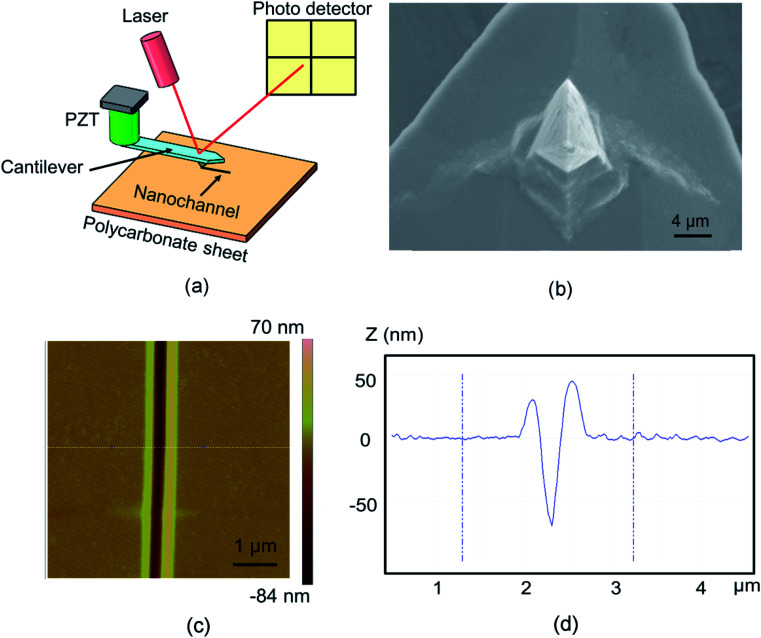
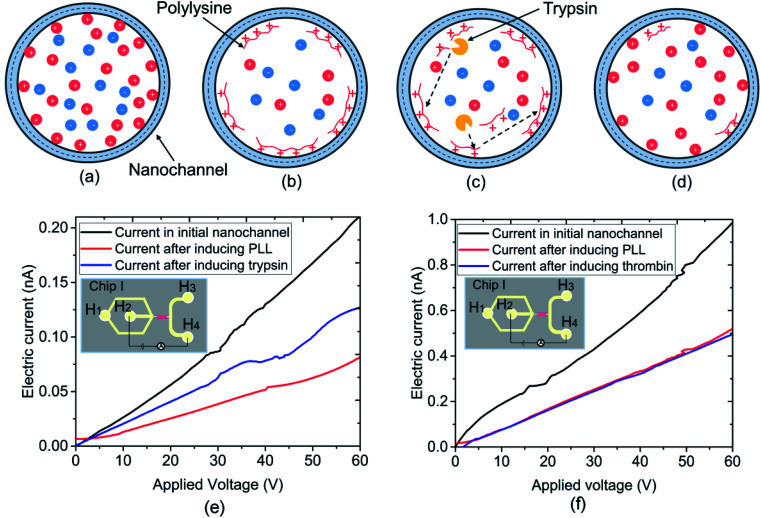
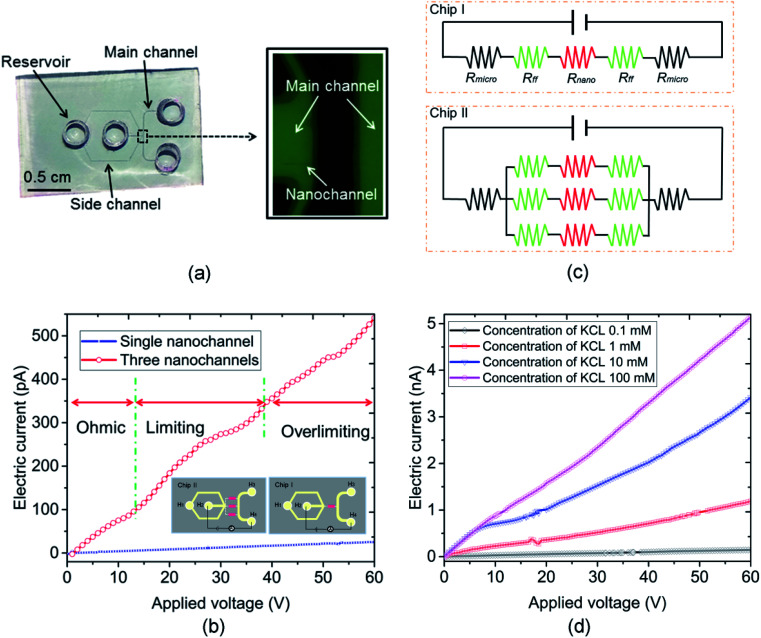
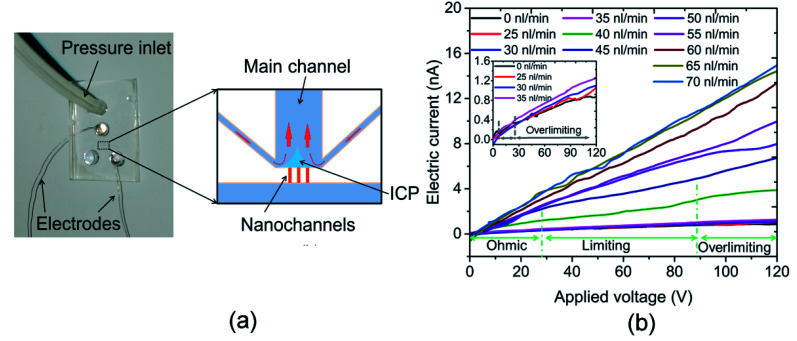
Nanofluidic chips with different numbers of nanochannels were fabricated based on a commercial AFM system using a single-scratch approach. The electrical characterization and enzymatic reactions at the nanoscale were demonstrated using the obtained chips. The effects of the number of nanochannels and the solution concentration on the measured electric current were investigated. The influence of the hydrodynamic convection generated from the induced inflow at the end of the nanochannel on the ion transport through the nanochannel was also studied. Moreover, the enzymatic reactions for trypsin towards poly-l-lysine (PLL) or thrombin were conducted with a nanofluidic chip to investigate the reaction specificity between trypsin and PLL. Results show that the electric current change during the experimental process could be used as a label-free indicator to detect the enzymatic activity.
基于商用原子力显微镜系统,采用单划痕方法制备了具有不同纳米通道数量的纳米流体芯片。利用所制备的芯片展示了纳米尺度下的电学特性和酶促反应。研究了纳米通道数量和溶液浓度对测量电流的影响。还研究了纳米通道末端诱导流入产生的流体动力对流对离子通过纳米通道传输的影响。此外,利用纳米流体芯片进行了胰蛋白酶对聚-L-赖氨酸(PLL)或凝血酶的酶促反应,以研究胰蛋白酶与PLL之间的反应特异性。结果表明,实验过程中的电流变化可作为一种无标记指标来检测酶活性。