Wei Liming, Wang Yi, Lin Ling, Zhang Lei, Shi Yan, Xiang Ping, Cao Shujun, Shen Min, Yang Pengyuan
Institutes of Biomedical Sciences & Department of Chemistry, Fudan University Shanghai China
Shanghai Songjiang District Central Hospital Shanghai China
RSC Adv. 2018 Mar 16;8(19):10598-10609. doi: 10.1039/c7ra12956d. eCollection 2018 Mar 13.
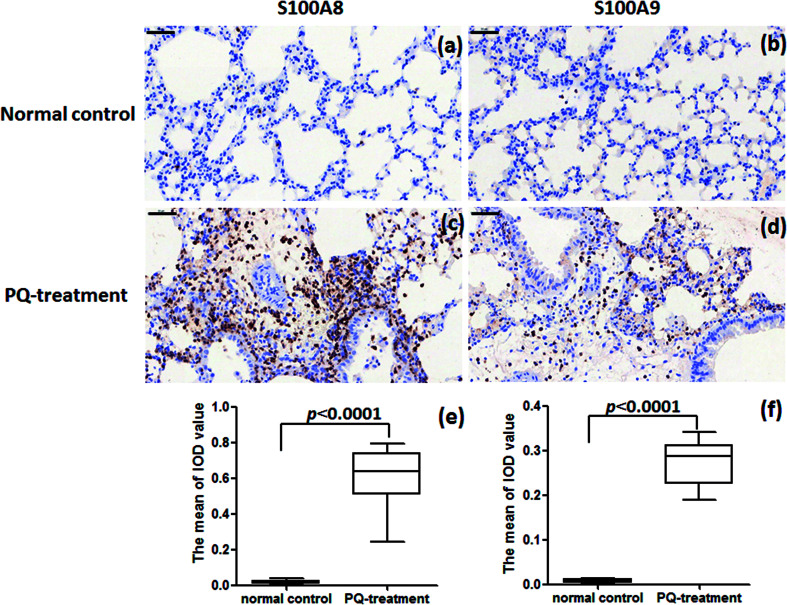
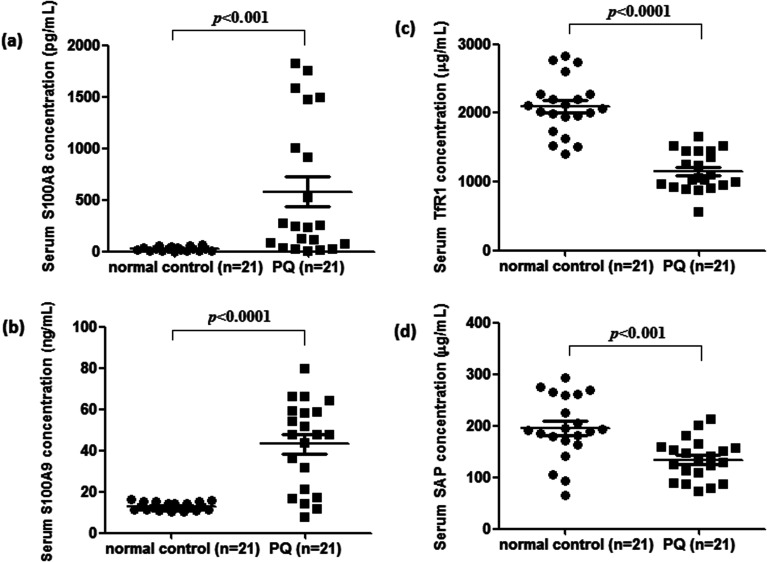
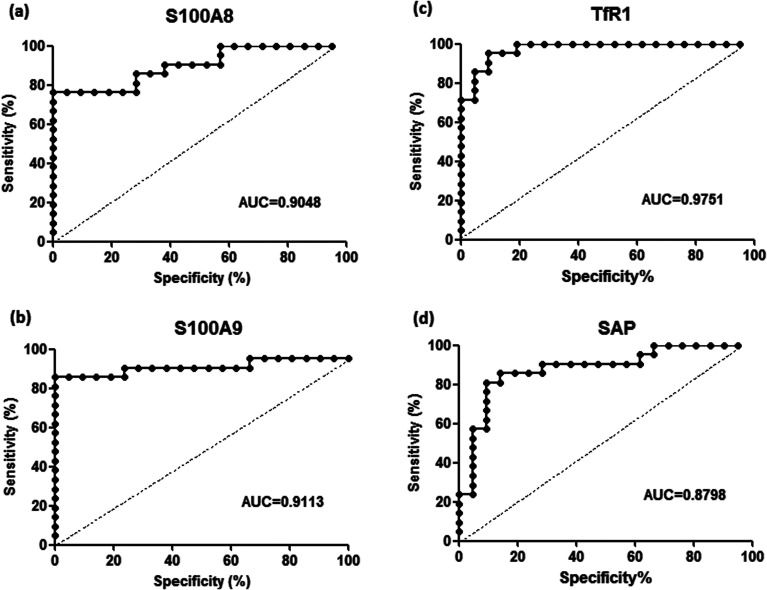
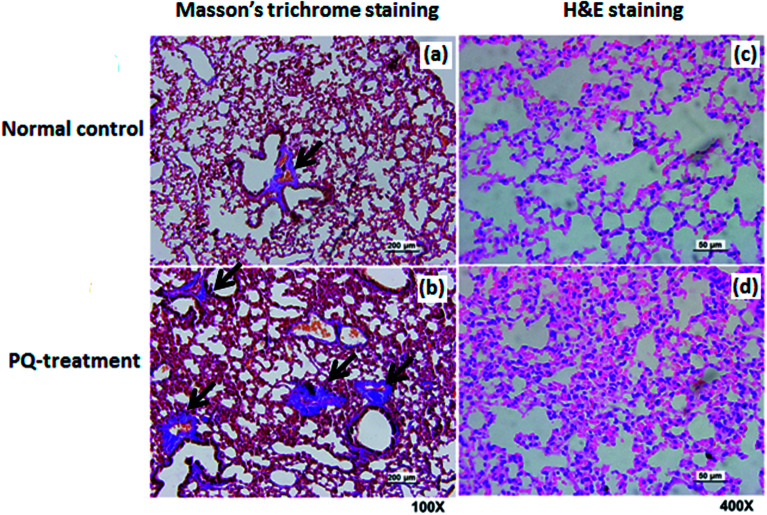
Paraquat (PQ) poisoning has high mortality rates in many countries. Due to it readily being absorbed through the gastrointestinal tract and rapidly excreted in the urine, few biomarkers possess satisfactory specificity and sensitivity in diagnostic and forensic practices. To investigate serum biomarkers in patients with PQ poisoning, pooled sera was analyzed using a proteomic approach based on iTRAQ coupled LC-MS/MS. Of the 413 proteins identified with high confidence, 81 were found to be differentially expressed (1.5-fold change) in the sera of patients with PQ poisoning. The differential expression pattern of 4 of these proteins was validated by enzyme-linked immunosorbent assay (ELISA) in clinical samples. A sera sample from a PQ poisoning patient has shown relatively increased abundance of S100A8 and S100A9. The overexpression of S100A8 and S100A9 was further validated in the lung tissue of PQ-treated rat associated with lung damage. Meanwhile, we identified another two down-expressed proteins, transferrin receptor protein 1 (TfR1) and serum amyloid P-component (SAP), which may be also practicable in human clinical samples as PQ poisoning serum biomarkers. Furthermore, receiver operating characteristic curve analysis confirmed that the expression levels of S100 alarmins, TfR1 and SAP in patient serum could provide a discriminatory diagnostic test for predicting PQ poisoning in patients. Therefore, our results suggest that increased serum levels of S100 alarmins and decreased serum levels of TfR1 and SAP may constitute potential biomarkers for the prediction of PQ poisoning in humans, and might be novel therapeutic targets in PQ poisoning.
百草枯(PQ)中毒在许多国家都有很高的死亡率。由于它很容易通过胃肠道吸收并迅速经尿液排出,在诊断和法医实践中,很少有生物标志物具有令人满意的特异性和敏感性。为了研究PQ中毒患者的血清生物标志物,采用基于iTRAQ耦合液相色谱-串联质谱的蛋白质组学方法对混合血清进行了分析。在413种高可信度鉴定出的蛋白质中,发现有81种在PQ中毒患者的血清中差异表达(变化倍数为1.5倍)。其中4种蛋白质的差异表达模式在临床样本中通过酶联免疫吸附测定(ELISA)得到了验证。一名PQ中毒患者的血清样本显示S100A8和S100A9的丰度相对增加。S100A8和S100A9的过表达在与肺损伤相关的PQ处理大鼠的肺组织中得到了进一步验证。同时,我们鉴定出另外两种表达下调的蛋白质,转铁蛋白受体蛋白1(TfR1)和血清淀粉样P成分(SAP),它们作为PQ中毒血清生物标志物在人类临床样本中可能也可行。此外,受试者工作特征曲线分析证实,患者血清中S100警报素、TfR1和SAP蛋白的表达水平可为预测患者PQ中毒提供鉴别诊断检测。因此,我们的结果表明,血清中S100警报素水平升高以及TfR1和SAP血清水平降低可能构成预测人类PQ中毒的潜在生物标志物,并且可能是PQ中毒的新型治疗靶点。