Grubhofer Florian, Ernstbrunner Lukas, Gerber Christian, Hochreiter Bettina, Schwihla Ines, Wieser Karl, Bouaicha Samy
Department of Orthopaedic Surgery, Balgrist University Hospital, University of Zurich, Zurich, Switzerland.
JB JS Open Access. 2022 May 5;7(2). doi: 10.2106/JBJS.OA.21.00148. eCollection 2022 Apr-Jun.
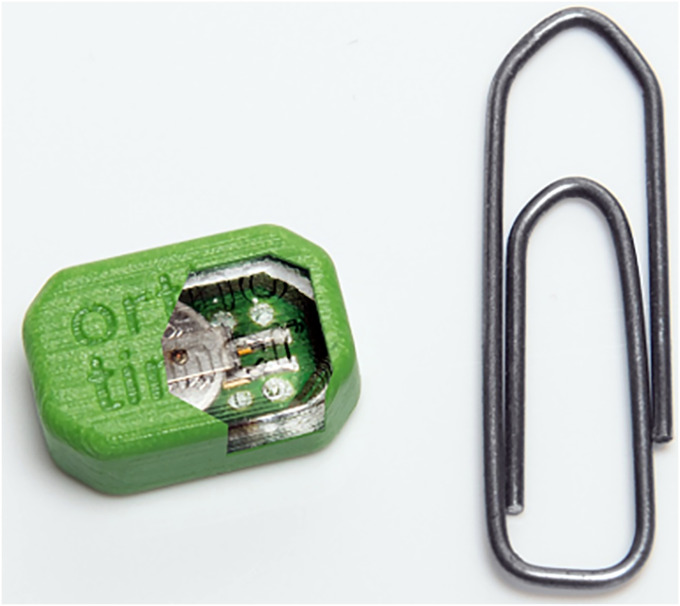
The benefit of protective bracing after rotator cuff reconstruction has been debated for many years, although immobilization compliance has never been assessed objectively to date. In a previous study, compliance with the wearing of an abduction brace was measured for the first time with use of temperature-sensitive sensors. The purpose of the present follow-up study was to assess the effect of immobilization compliance on tendon-healing after rotator cuff repair.
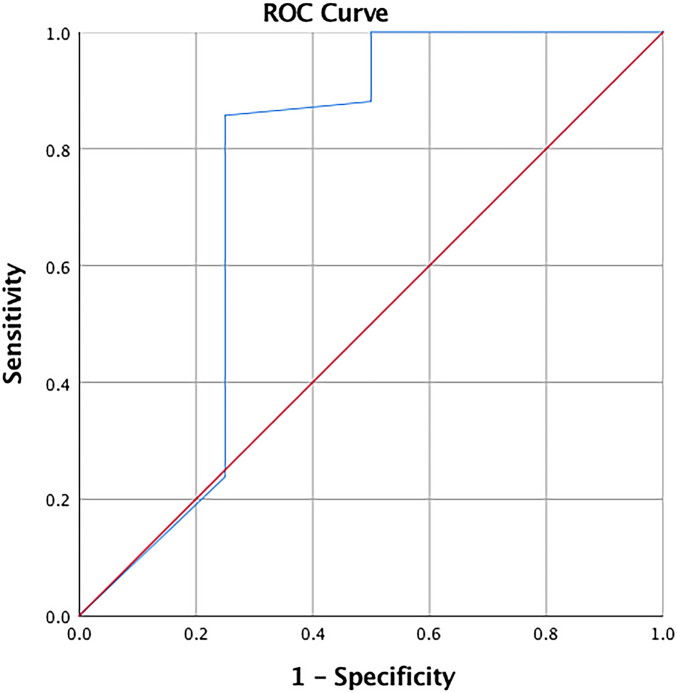
The clinical and radiographic outcomes for 46 consecutive patients with objectively assessed abduction brace wearing compliance after arthroscopic repair of a superior rotator cuff tear were prospectively analyzed. Rotator cuff integrity was examined with ultrasound. Clinical outcomes were assessed with the relative Constant-Murley score (RCS), the Subjective Shoulder Value (SSV), and pain and patient satisfaction ratings. Receiver operating characteristic (ROC) curves were used to determine the optimal cutoff value of abduction brace compliance for discriminating between shoulders that will and will not have a retear and the association of compliance with the failure of rotator cuff repair.
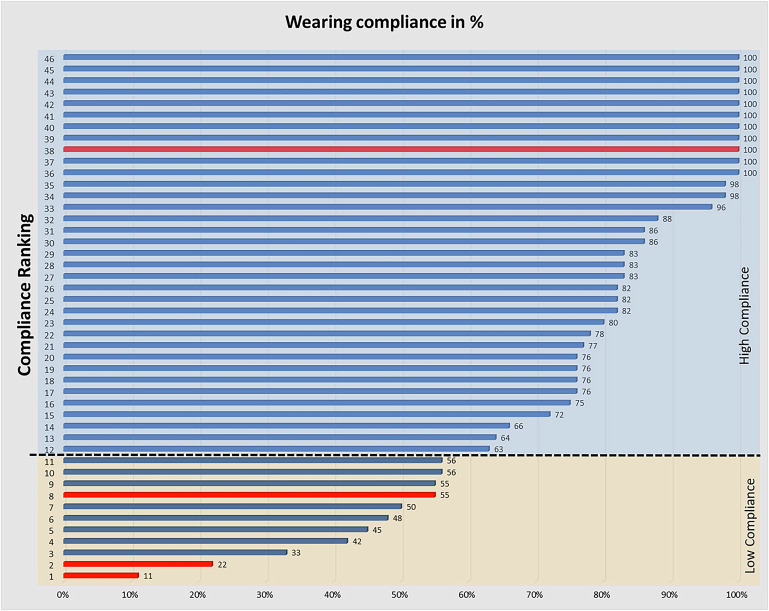
After a mean duration of follow-up of 20 ± 9 months, the odds ratio for having a rotator cuff repair failure was 13-fold higher for patients with a compliance rate of <60% (p = 0.037). The retear rate was 3% (1 of 35 patients) in the high-compliance cohort (≥60% compliance) and 27% (3 of 11) in the low-compliance cohort (<60% compliance) (p = 0.037). No differences in RCS, SSV, pain, or postoperative patient satisfaction were observed between patients with ≥60% compliance and those with <60% compliance.
Patients with a compliance rate of <60% had a 13-fold increase in the risk of rotator cuff retear. The 2 patients with the lowest compliance rates (11% and 22%) both had retears. Due to the small sample size, no final conclusions can be drawn regarding the influence of immobilization compliance on tendon-healing after rotator cuff repair. These findings justify a prospective trial with a larger cohort to confirm or disprove the value of compliance with abduction bracing.
Therapeutic Level II. See Instructions for Authors for a complete description of levels of evidence.
肩袖重建术后保护性支具的益处多年来一直存在争议,尽管迄今为止固定依从性从未得到客观评估。在之前的一项研究中,首次使用温度敏感传感器测量了外展支具佩戴的依从性。本随访研究的目的是评估固定依从性对肩袖修复术后肌腱愈合的影响。
对46例经关节镜修复肩袖上肌腱撕裂后客观评估外展支具佩戴依从性的连续患者的临床和影像学结果进行前瞻性分析。用超声检查肩袖完整性。用相对Constant-Murley评分(RCS)、主观肩关节评分(SSV)以及疼痛和患者满意度评分评估临床结果。采用受试者操作特征(ROC)曲线确定外展支具依从性的最佳截断值,以区分肩袖是否会再次撕裂以及依从性与肩袖修复失败的相关性。
平均随访20±9个月后,依从率<60%的患者肩袖修复失败的优势比高13倍(p = 0.037)。高依从性队列(依从率≥60%)的再撕裂率为3%(35例患者中的1例),低依从性队列(依从率<60%)的再撕裂率为27%(11例中的3例)(p = 0.037)。依从率≥60%的患者与依从率<60%的患者在RCS、SSV、疼痛或术后患者满意度方面未观察到差异。
依从率<60%的患者肩袖再撕裂风险增加13倍。依从率最低的2例患者(分别为11%和22%)均发生了再撕裂。由于样本量小,关于固定依从性对肩袖修复术后肌腱愈合的影响无法得出最终结论。这些发现证明有必要进行一项有更大队列的前瞻性试验,以证实或反驳外展支具依从性的价值。
治疗性二级。有关证据水平的完整描述,请参阅作者指南。