Zhao Yiying, Zhu Susu, Zhang Chu, Feng Xuping, Feng Lei, He Yong
College of Biosystems Engineering and Food Science, Zhejiang University 866 Yuhangtang Road Hangzhou 310058 China
RSC Adv. 2018 Jan 3;8(3):1337-1345. doi: 10.1039/c7ra05954j. eCollection 2018 Jan 2.
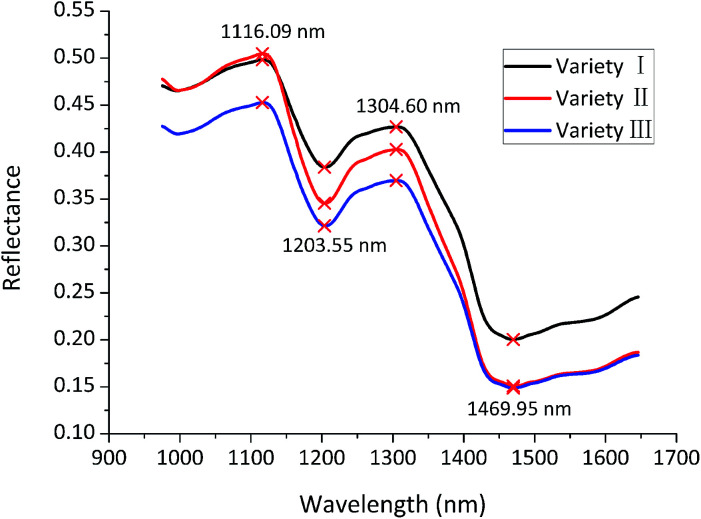
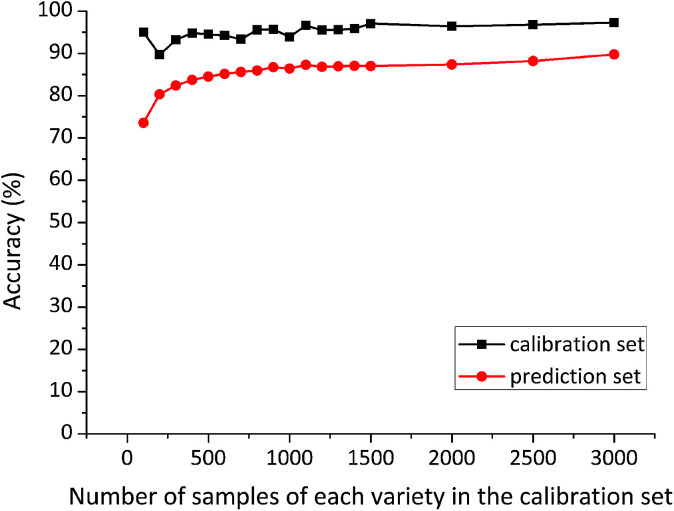
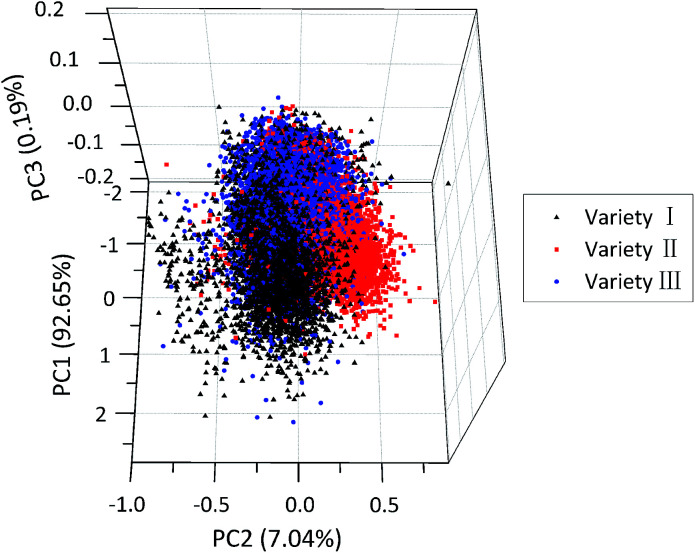
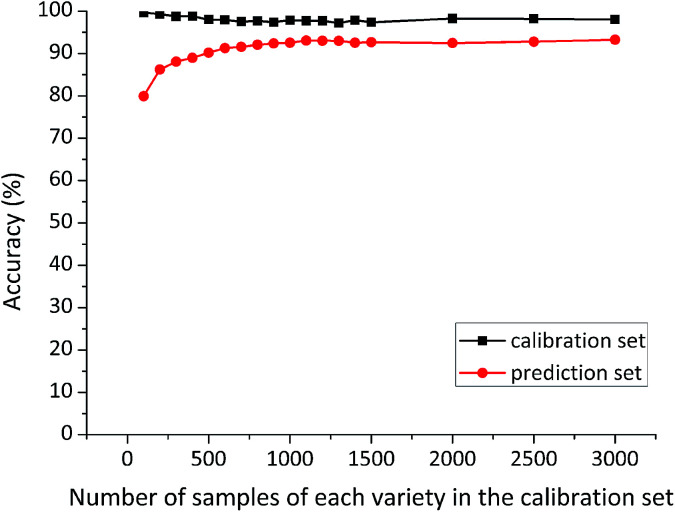
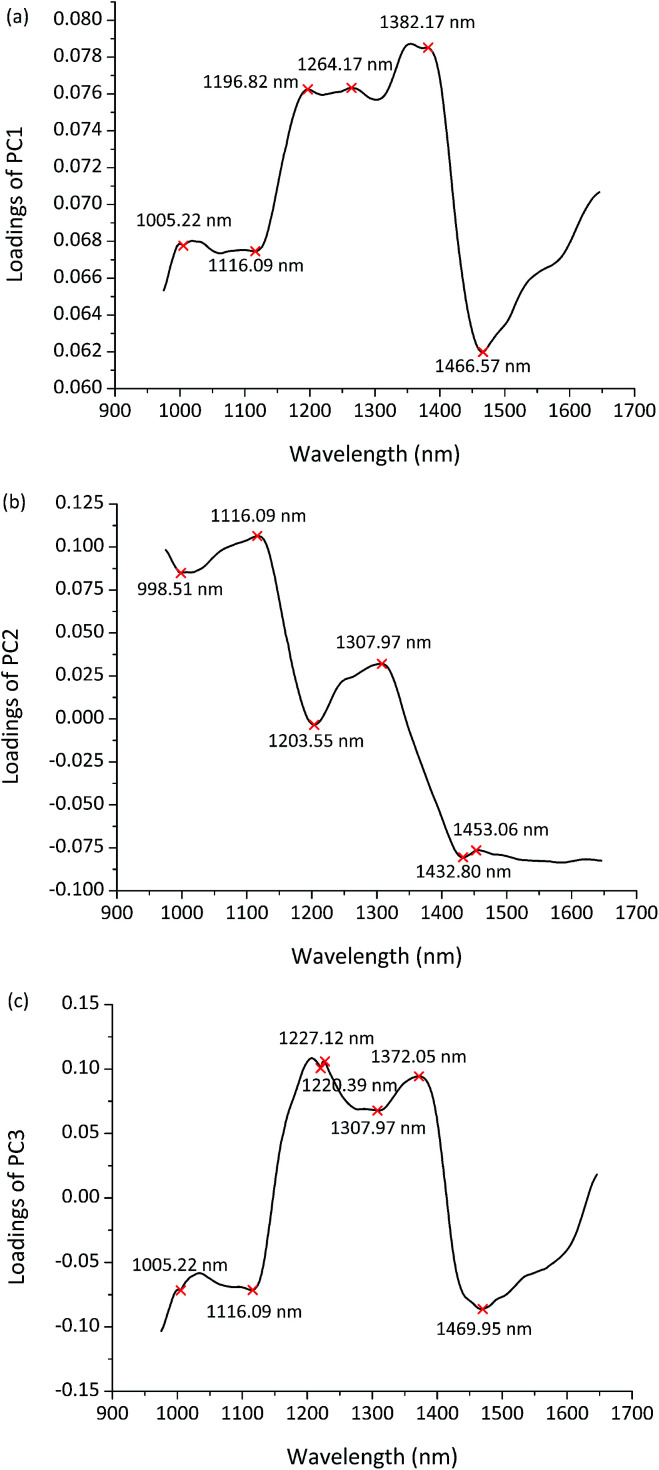
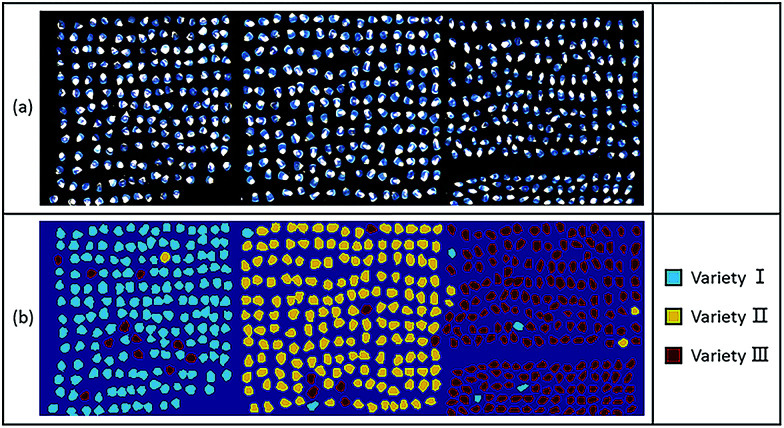
Seed variety classification is important for assessing variety purity and increasing crop yield. A hyperspectral imaging system covering the spectral range of 874-1734 nm was applied for variety classification of maize seeds. A total of 12 900 maize seeds including 3 different varieties were evaluated. Spectral data of 975.01-1645.82 nm were extracted and preprocessed. Discriminant models were developed using a radial basis function neural network (RBFNN). The influence of calibration sample size on classification accuracy was studied. Results showed that with the expansion of calibration sample size, calibration accuracy varied slightly, but prediction accuracy changed from the increasing form to the stable form. Accordingly, the optimal size of the calibration set was determined. Optimal wavelength selection was conducted by loading of principal components (PCs). The RBFNN model developed on optimal wavelengths with the optimal size of the calibration set obtained satisfactory results, with calibration accuracy of 93.85% and prediction accuracy of 91.00%. Visualization of classification map of seed varieties was achieved by applying this RBFNN model on the average spectra of each sample. Besides, the procedure to determine the optimal sample quantity proposed in this study was verified by support vector machine (SVM). The overall results indicated that hyperspectral imaging was a potential technique for variety classification of maize seeds, and would help to develop a real-time detection system for maize seeds as well as other crop seeds.
种子品种分类对于评估品种纯度和提高作物产量至关重要。采用一个覆盖874 - 1734 nm光谱范围的高光谱成像系统对玉米种子进行品种分类。共评估了包括3个不同品种的12900粒玉米种子。提取并预处理了975.01 - 1645.82 nm的光谱数据。使用径向基函数神经网络(RBFNN)建立判别模型。研究了定标样本大小对分类精度的影响。结果表明,随着定标样本大小的扩大,定标精度变化不大,但预测精度从上升形式变为稳定形式。据此确定了定标集的最佳大小。通过主成分(PC)加载进行最佳波长选择。在具有定标集最佳大小的最佳波长上建立的RBFNN模型取得了满意的结果,定标精度为93.85%,预测精度为91.00%。通过将该RBFNN模型应用于每个样本的平均光谱,实现了种子品种分类图的可视化。此外,本研究中提出的确定最佳样本数量的程序通过支持向量机(SVM)得到了验证。总体结果表明,高光谱成像技术是一种用于玉米种子品种分类的潜在技术,有助于开发玉米种子以及其他作物种子的实时检测系统。