Byun Jinuk, Kim Kwang Hawn, Kim Byung Keun, Chang Ji Woong, Cho Sung Ki, Kim Jae Jeong
School of Chemical and Biological Engineering, Seoul National University Gwanak-ro 1, Gwanak-gu Seoul 08826 Republic of Korea
School of Chemical Engineering, Kumoh National Institute of Technology 61 Daehak-ro Gumi Gyeongbuk 39177 Republic of Korea
RSC Adv. 2019 Nov 21;9(65):37895-37900. doi: 10.1039/c9ra06842b. eCollection 2019 Nov 19.
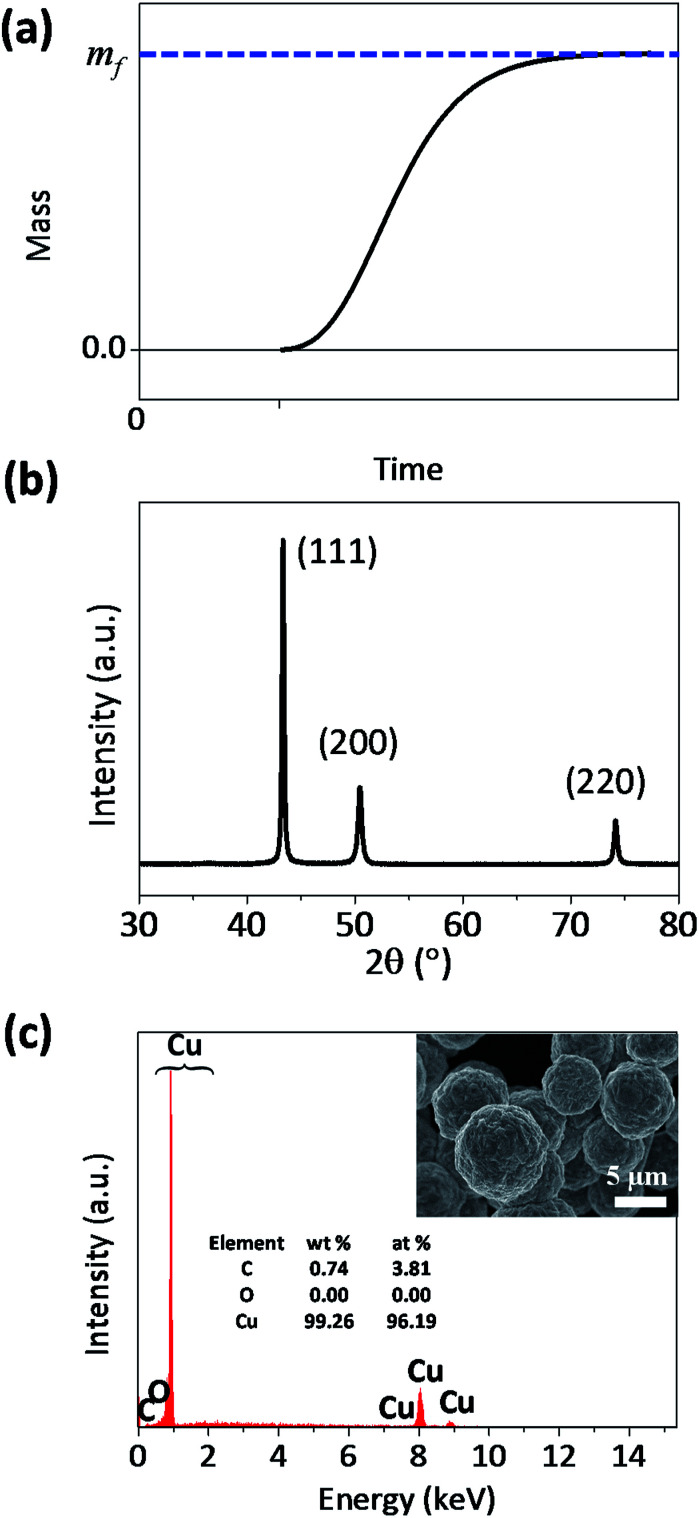
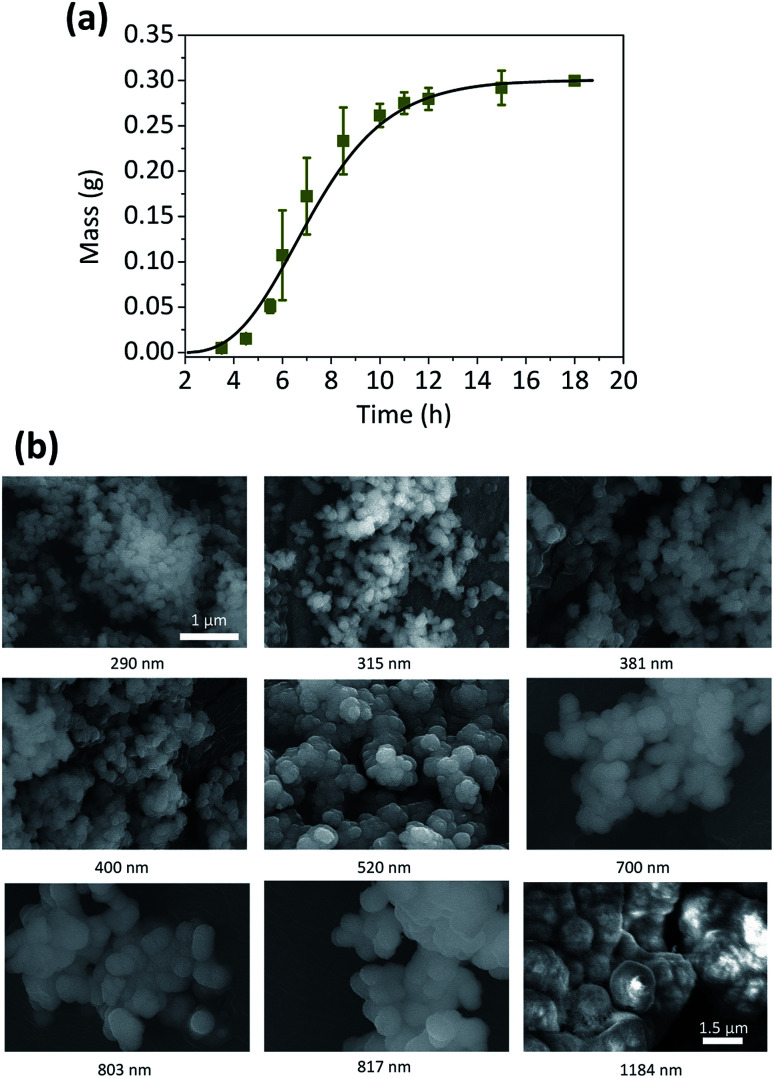
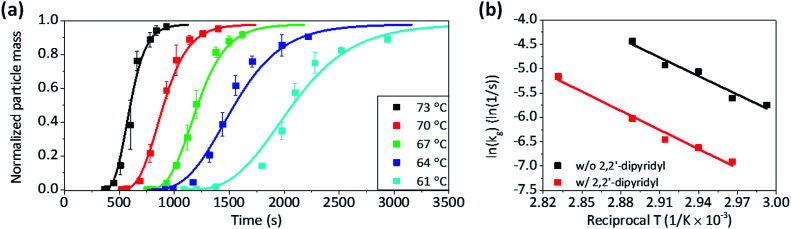
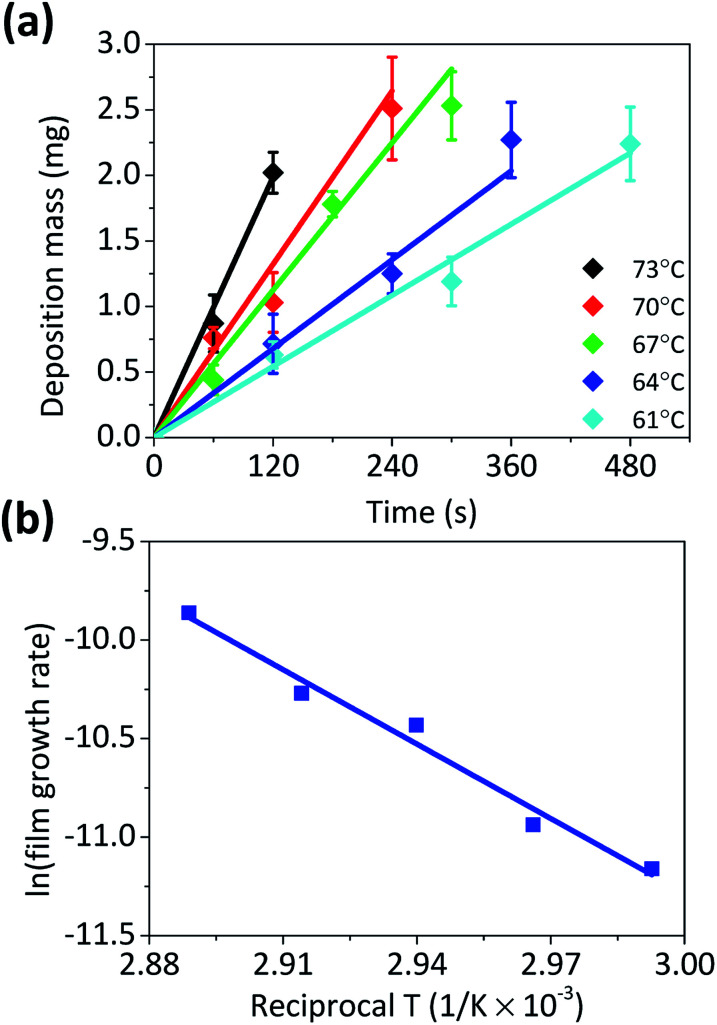
The growth kinetics of copper microparticles was analysed by using the gravimetric method. The copper microparticles were synthesized in aqueous solution containing cupric ion and HCHO under various conditions (temperature, additive) and the total mass was monitored during the synthesis. The relation between the total mass and time was formularized using heterogeneous and pseudo-first order reaction kinetics of the autocatalytic surface growth of copper with a modification of the Finke-Watzky kinetic model. Fitting of theoretical curves to the experimental results with various temperatures provided the rate constants of the surface growth, and the reaction activation energy was found from the Arrhenius plot to be 105.4 kJ mol. The obtained value was validated by comparing it with one from copper film growth. Its change was observed with the addition of 2,2'-dipyridyl during synthesis.
采用重量法分析了铜微粒的生长动力学。在含有铜离子和HCHO的水溶液中,在各种条件(温度、添加剂)下合成铜微粒,并在合成过程中监测总质量。利用铜自催化表面生长的非均相和准一级反应动力学,对Finke-Watzky动力学模型进行修正,将总质量与时间的关系公式化。将理论曲线与不同温度下的实验结果进行拟合,得到了表面生长的速率常数,并通过Arrhenius图得到反应活化能为105.4 kJ/mol。通过与铜膜生长的值进行比较,验证了所得值。在合成过程中加入2,2'-联吡啶后观察到了其变化。