Chen Yangui, Li Xiaoxia, Xiao Hong, Xiao Jinpeng, Li Bo, Chen Xiaoyan, Wang Yong, Cheng Du, Shuai Xintao
PCFM Lab of Ministry of Education, School of Materials Science and Engineering, Sun Yat-Sen University Guangzhou 510275 China
HEC Pharma Co., Ltd. Dongguan 523871 China.
RSC Adv. 2018 Jan 9;8(4):2082-2091. doi: 10.1039/c7ra12620d. eCollection 2018 Jan 5.
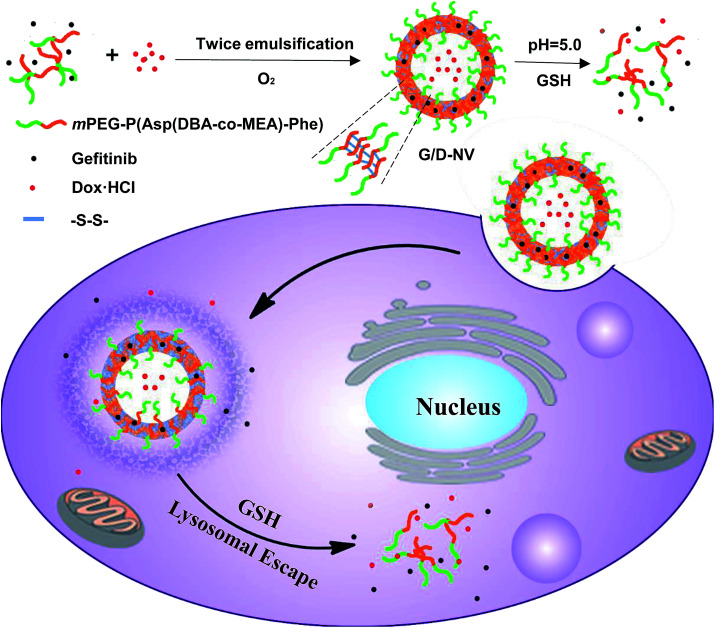
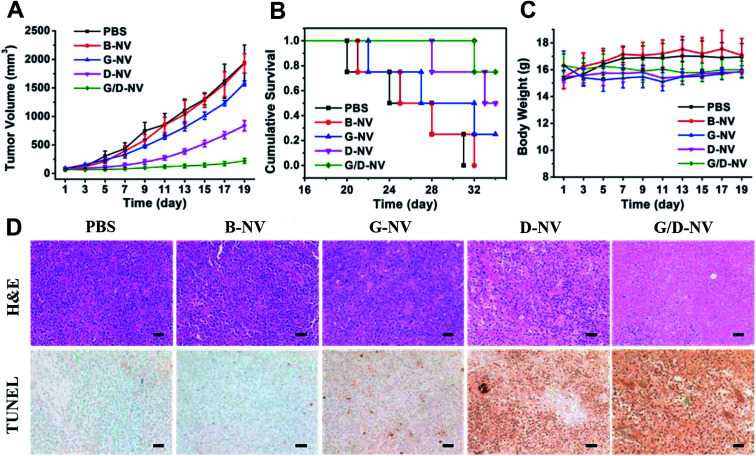
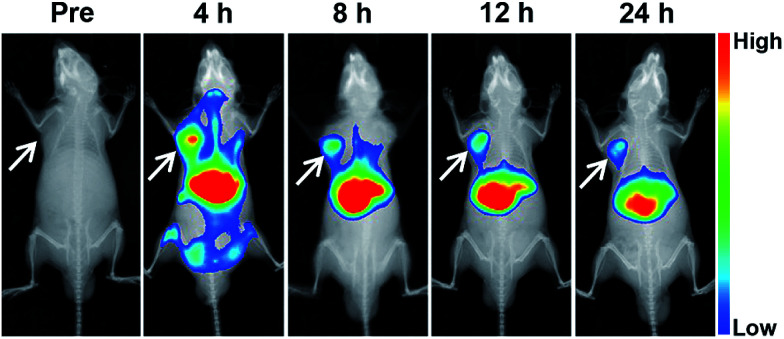
Owing to the complexity of tumorgenesis, combination therapy has proven to be a viable strategy for cancer treatment in recent years. However, the delivery and site-specific release of different therapeutic agents remain a major challenge in combination therapy. In this study, a polymeric nanovesicle based on a copolymer of polyethylene glycol and a polypeptide derivative was introduced as a vector to simultaneously deliver hydrophobic gefitinib and hydrophilic doxorubicin hydrochloride for multi-target combination therapy. The vesicle incorporating the two drugs exhibited prominent pH/reduction sensitivities to trigger the release of gefitinib and doxorubicin inside cancer cells. The two drugs co-delivered by the polymeric nanovesicle exhibited a joint anticancer effect both and . In particular, a remarkable therapeutic effect was demonstrated in animal studies using a mouse N2a neuroblastoma model. This study reveals the potential of reduction and pH dual-responsive nanovesicles bearing gefitinib and doxorubicin as an effective nano-medicine for cancer treatment.
由于肿瘤发生的复杂性,近年来联合治疗已被证明是一种可行的癌症治疗策略。然而,不同治疗药物的递送和位点特异性释放仍然是联合治疗中的一个主要挑战。在本研究中,引入了一种基于聚乙二醇和多肽衍生物共聚物的聚合物纳米囊泡作为载体,以同时递送疏水性吉非替尼和亲水性盐酸多柔比星用于多靶点联合治疗。包载这两种药物的囊泡对pH/还原具有显著敏感性,可触发吉非替尼和多柔比星在癌细胞内释放。由聚合物纳米囊泡共同递送的两种药物在体内和体外均表现出联合抗癌作用。特别是,在使用小鼠N2a神经母细胞瘤模型的动物研究中显示出显著的治疗效果。本研究揭示了携带吉非替尼和多柔比星的还原和pH双重响应纳米囊泡作为一种有效的癌症治疗纳米药物的潜力。