Centre for Inflammation and Tissue Repair, UCL Respiratory, University College London, London, UK.
University College London Hospitals NHS Foundation Trust, London, UK.
Respir Res. 2022 May 11;23(1):118. doi: 10.1186/s12931-022-02026-5.
Currently the only available therapies for fibrotic Interstitial Lung Disease are administered systemically, often causing significant side effects. Inhaled therapy could avoid these but to date there is no evidence that drug can be effectively delivered to distal, fibrosed lung. We set out to combine mass spectrometry and histopathology with rapid sample acquisition using transbronchial cryobiopsy to determine whether an inhaled drug can be delivered to fibrotic, distal lung parenchyma in participants with Interstitial Lung Disease.
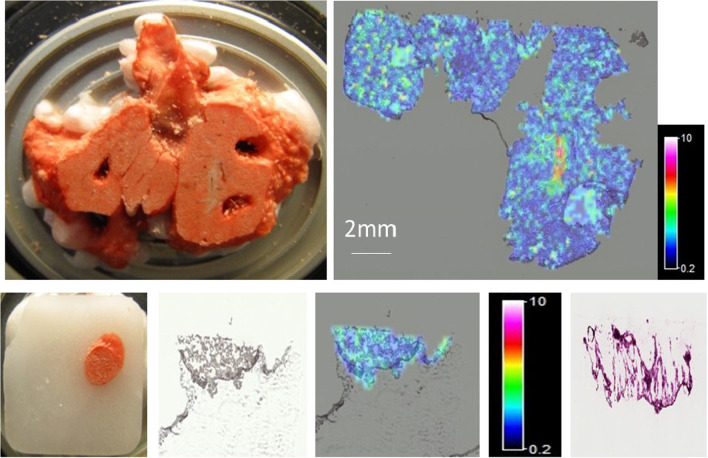
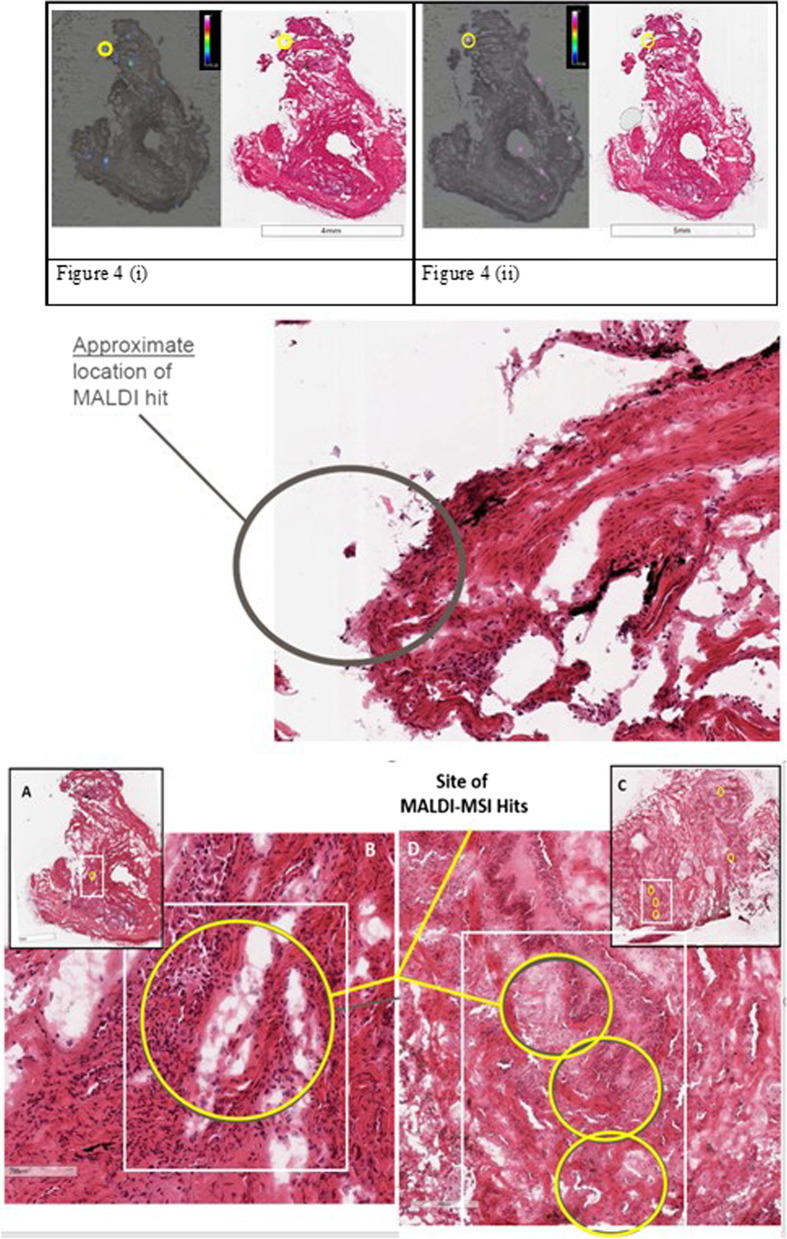
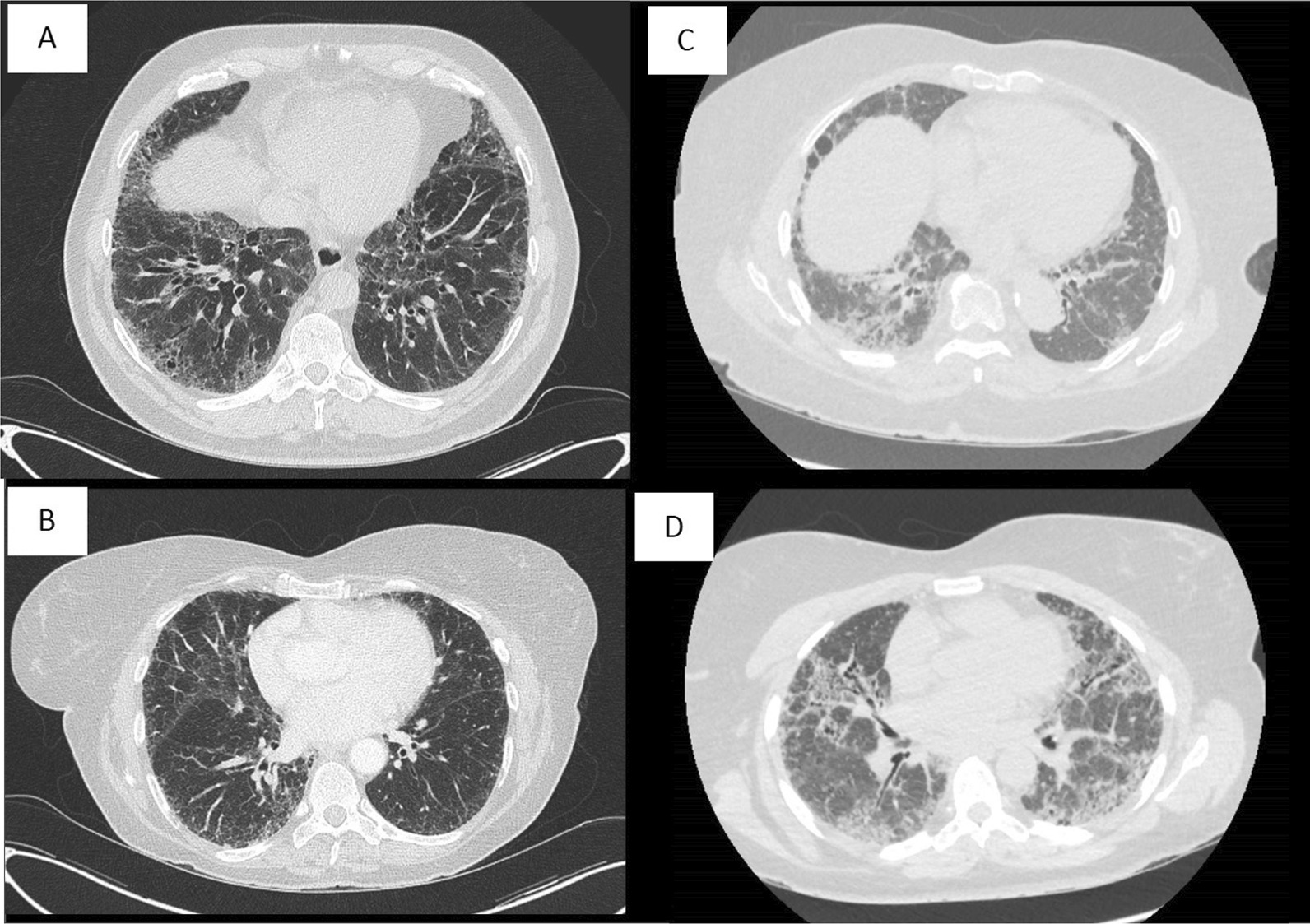
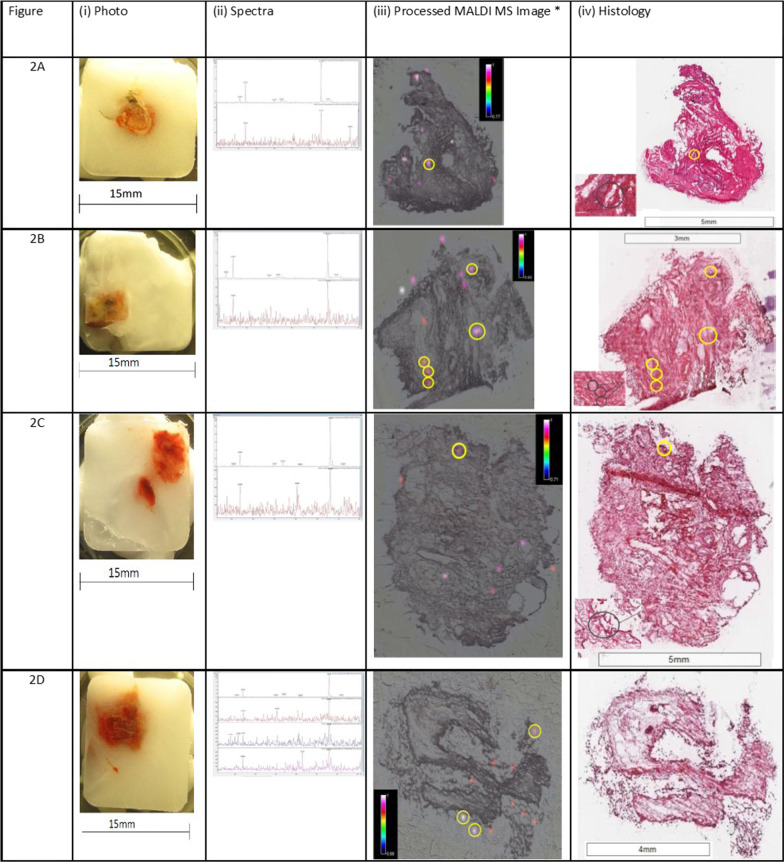
Patients with radiologically and multidisciplinary team confirmed fibrotic Interstitial Lung Disease were eligible for this study. Transbronchial cryobiopsies and endobronchial biopsies were taken from five participants, with Interstitial Lung Disease, within 70 min of administration of a single dose of nebulised ipratropium bromide. Thin tissue cryosections were analysed by Matrix Assisted Laser Desorption/Ionization-Mass Spectrometry imaging and correlated with histopathology. The remainder of the cryobiopsies were homogenised and analysed by Liquid Chromatography-tandem Mass Spectrometry.
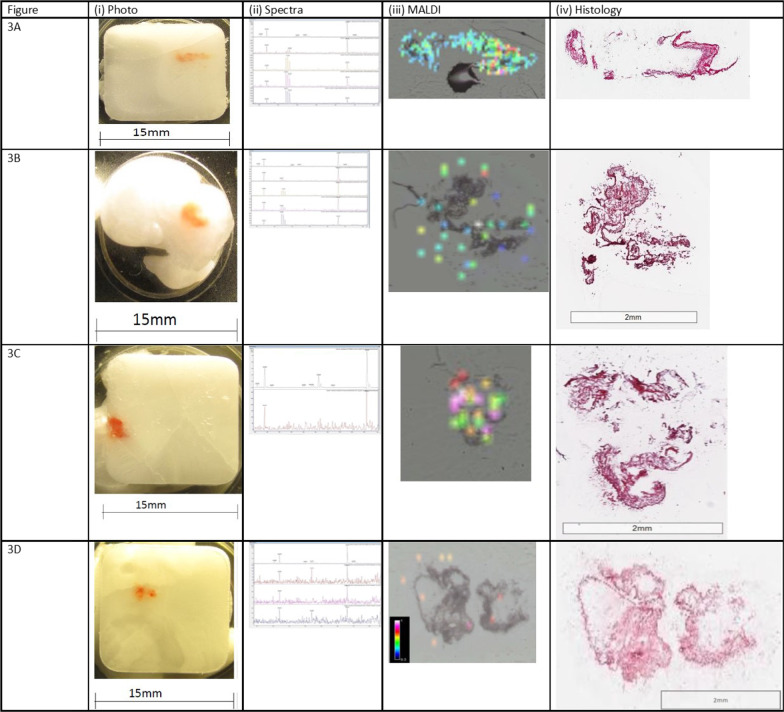
Drug was detected in proximal and distal lung samples from all participants. Fibrotic regions were identified in research samples of four of the five participants. Matrix Assisted Laser Desorption/Ionization-Mass Spectrometry imaging showed co-location of ipratropium with fibrotic regions in samples from three participants.
In this proof of concept study, using mass spectrometry, we demonstrate for the first-time that an inhaled drug can deposit in distal fibrotic lung parenchyma in patients with Interstitial Lung Disease. This suggests that drugs to treat pulmonary fibrosis could potentially be administered by the inhaled route. Trial registration A prospective clinical study approved by London Camden and Kings Cross Research Ethics Committee and registered on clinicaltrials.gov (NCT03136120).
目前,纤维化间质性肺疾病唯一可用的治疗方法是全身给药,这常常会导致严重的副作用。吸入疗法可以避免这些副作用,但迄今为止,尚无证据表明药物可以有效地递送到远端纤维化的肺部。我们旨在结合质谱和组织病理学以及使用经支气管冷冻活检快速获取样本,以确定吸入药物是否可以递送到间质性肺疾病患者的纤维化、远端肺实质中。
本研究纳入了经放射学和多学科团队确认的纤维化间质性肺疾病患者。在给予单剂量雾化异丙托溴铵后 70 分钟内,对 5 名间质性肺疾病患者进行经支气管冷冻活检和支气管内活检。使用基质辅助激光解吸/电离 - 质谱成像分析薄组织冷冻切片,并与组织病理学相关联。冷冻活检的其余部分进行匀浆并通过液相色谱 - 串联质谱分析。
所有参与者的近端和远端肺样本中均检测到药物。在五名参与者中的四名研究样本中发现了纤维化区域。基质辅助激光解吸/电离 - 质谱成像显示,在来自三名参与者的样本中,异丙托溴铵与纤维化区域存在共定位。
在这项概念验证研究中,我们首次使用质谱法证明,吸入药物可以沉积在间质性肺疾病患者的远端纤维化肺实质中。这表明治疗肺纤维化的药物可能可以通过吸入途径给药。
伦敦卡姆登和国王十字研究伦理委员会批准的前瞻性临床研究,并在 clinicaltrials.gov 上注册(NCT03136120)。