College of Health Solutions, Arizona State University, Phoenix, AZ, United States.
School of Life Sciences, Arizona State University, Tempe, AZ, United States.
PeerJ. 2022 May 6;10:e13227. doi: 10.7717/peerj.13227. eCollection 2022.
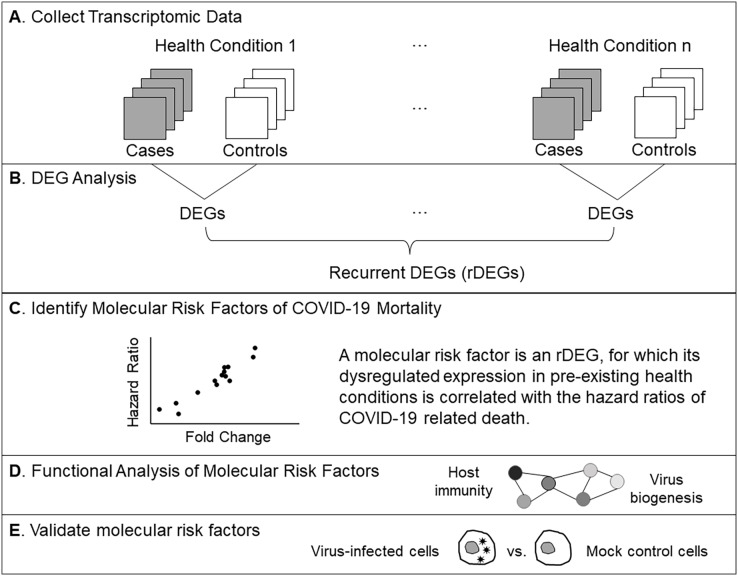
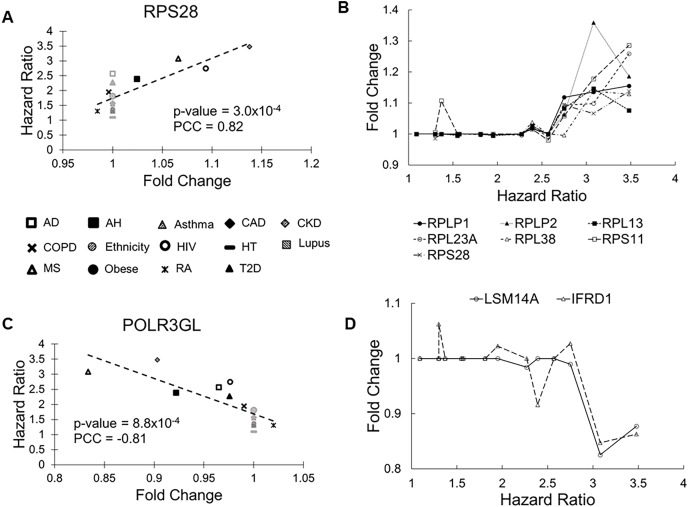
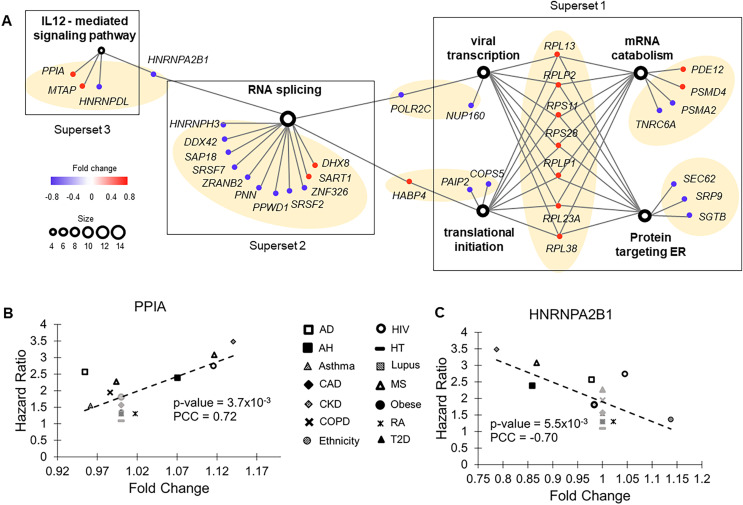
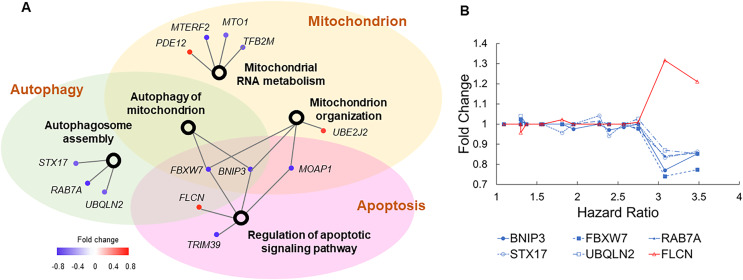
COVID-19 can be life-threatening to individuals with chronic diseases. To prevent severe outcomes, it is critical that we comprehend pre-existing molecular abnormalities found in common health conditions that predispose patients to poor prognoses. In this study, we focused on 14 pre-existing health conditions for which increased hazard ratios of COVID-19 mortality have been documented. We hypothesized that dysregulated gene expression in these pre-existing health conditions were risk factors of COVID-19 related death, and the magnitude of dysregulation (measured by fold change) were correlated with the severity of COVID-19 outcome (measured by hazard ratio). To test this hypothesis, we analyzed transcriptomics data sets archived before the pandemic in which no sample had COVID-19. For a given pre-existing health condition, we identified differentially expressed genes by comparing individuals affected by this health condition with those unaffected. Among genes differentially expressed in multiple health conditions, the fold changes of 70 upregulated genes and 181 downregulated genes were correlated with hazard ratios of COVID-19 mortality. These pre-existing dysregulations were molecular risk factors of severe COVID-19 outcomes. These genes were enriched with endoplasmic reticulum and mitochondria function, proinflammatory reaction, interferon production, and programmed cell death that participate in viral replication and innate immune responses to viral infections. Our results suggest that impaired innate immunity in pre-existing health conditions is associated with increased hazard of COVID-19 mortality. The discovered molecular risk factors are potential prognostic biomarkers and targets for therapeutic intervention.
COVID-19 可能对患有慢性病的个体构成生命威胁。为了防止出现严重后果,我们必须了解常见健康状况中预先存在的分子异常,这些异常使患者预后不良。在这项研究中,我们关注了 14 种预先存在的健康状况,这些健康状况与 COVID-19 死亡率的危险比增加有关。我们假设这些预先存在的健康状况中的基因表达失调是 COVID-19 相关死亡的危险因素,并且失调的幅度(通过倍数变化测量)与 COVID-19 结局的严重程度(通过危险比测量)相关。为了验证这一假设,我们分析了大流行前存档的转录组数据集,其中没有样本患有 COVID-19。对于给定的预先存在的健康状况,我们通过比较受该健康状况影响的个体与未受影响的个体来确定差异表达的基因。在多个健康状况中差异表达的基因中,70 个上调基因和 181 个下调基因的倍数变化与 COVID-19 死亡率的危险比相关。这些预先存在的失调是严重 COVID-19 结局的分子危险因素。这些基因与内质网和线粒体功能、促炎反应、干扰素产生和程序性细胞死亡有关,这些过程参与病毒复制和对病毒感染的固有免疫反应。我们的结果表明,预先存在的健康状况中的固有免疫受损与 COVID-19 死亡率的增加有关。发现的分子危险因素是潜在的预后生物标志物和治疗干预靶点。