Glaria A, Soulé S, Hallali N, Ojo W-S, Mirjolet M, Fuks G, Cornejo A, Allouche J, Dupin J C, Martinez H, Carrey J, Chaudret B, Delpech F, Lachaize S, Nayral C
LPCNO, Université de Toulouse, CNRS, INSA, UPS 135 Avenue de Rangueil 31077 Toulouse France
Institut des Sciences Analytiques et de Physico-Chimie pour l'Environnement et les Matériaux, Université de Pau et des Pays de l'Adour, Hélioparc 2 av. Président Angot F-64053 Pau France.
RSC Adv. 2018 Sep 17;8(56):32146-32156. doi: 10.1039/c8ra06075d. eCollection 2018 Sep 12.
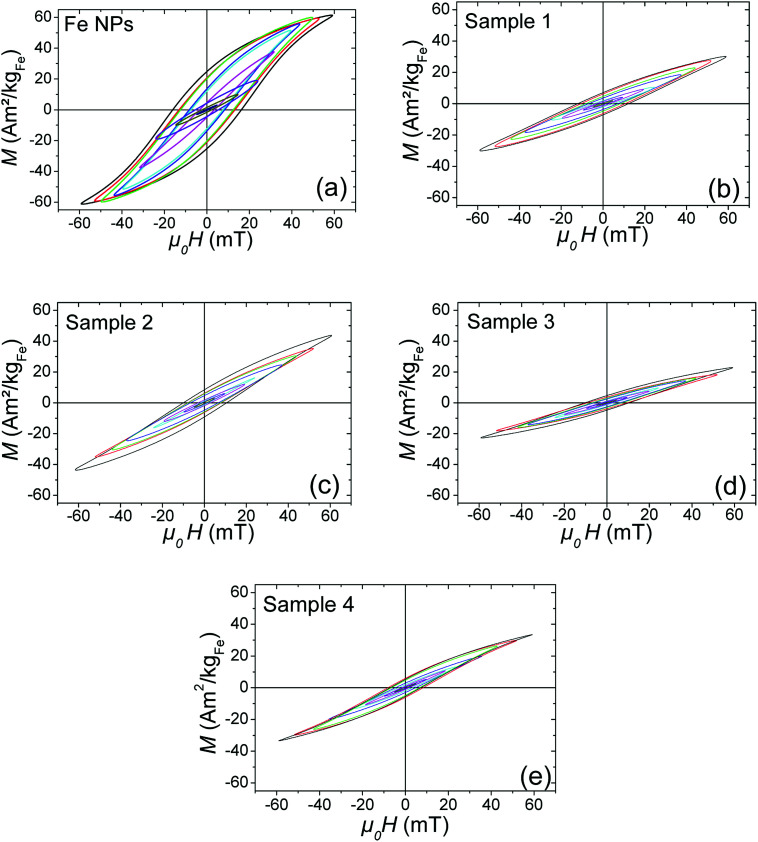
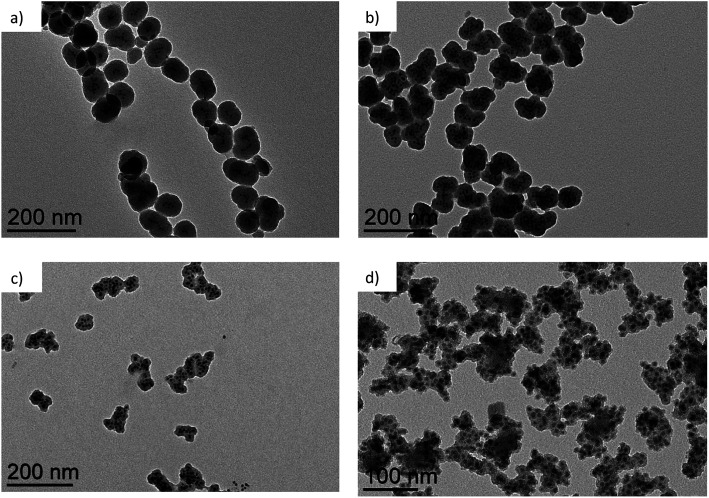
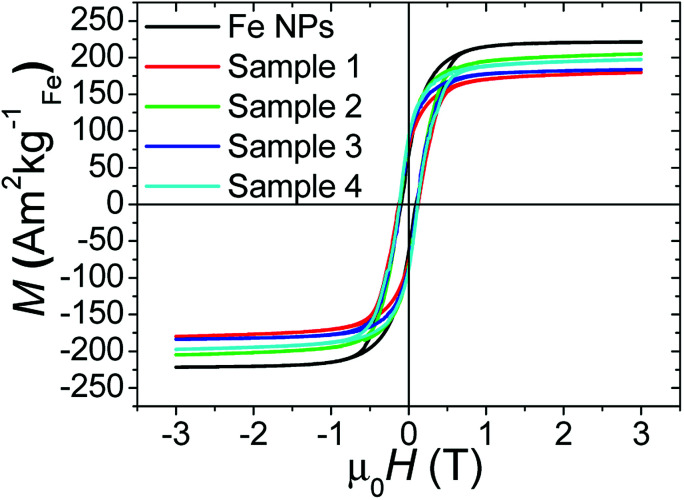
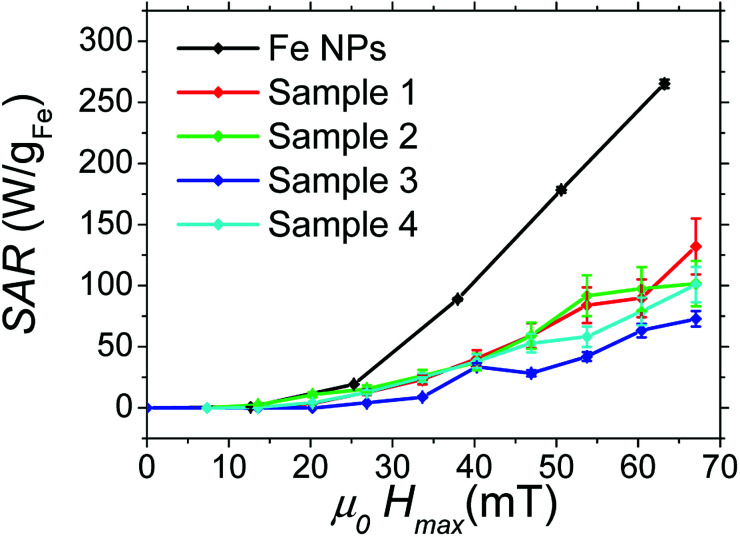
This work provides a detailed study on the synthesis and characterization of silica coated iron nanoparticles (NPs) by coupling Transmission Electronic Microscopy (TEM), X-ray Photoelectron Spectroscopy (XPS) and magnetic measurements. Remarkably, iron NPs (of 9 nm of mean diameter) have been embedded in silica without any alteration of the magnetization of the iron cores, thanks to an original protocol of silica coating in non alcoholic medium. Tuning the synthesis parameters (concentration of reactants and choice of solvent), different sizes of Fe@SiO composites can be obtained with different thicknesses of silica. The magnetization of these objects is fully preserved after 24 h of water exposure thanks to a thick (14 nm) silica layer, opening thus new perspectives for biomedical applications. Hyperthermia measurements have been compared between Fe and Fe@SiO NPs, evidencing the self-organization of the free Fe NPs when a large amplitude magnetic field is applied. This phenomenon induces an increase of heating power which is precluded when the Fe cores are immobilised in silica. High-frequency hysteresis loop measurements allowed us to observe for the first time the increase of the ferrofluid susceptibility and remanence which are the signature of the formation of Fe NPs chains.
这项工作通过结合透射电子显微镜(TEM)、X射线光电子能谱(XPS)和磁性测量,对二氧化硅包覆铁纳米颗粒(NPs)的合成与表征进行了详细研究。值得注意的是,由于在非酒精介质中采用了原始的二氧化硅包覆方案,平均直径为9纳米的铁纳米颗粒已被嵌入二氧化硅中,而铁芯的磁化并未发生任何改变。通过调整合成参数(反应物浓度和溶剂选择),可以获得不同尺寸且二氧化硅厚度不同的Fe@SiO复合材料。由于有一层厚(14纳米)的二氧化硅层,这些物体在暴露于水24小时后其磁化仍能完全保持,从而为生物医学应用开辟了新的前景。对铁纳米颗粒和Fe@SiO纳米颗粒的热疗测量结果进行了比较,结果表明,当施加大幅度磁场时,游离铁纳米颗粒会发生自组织。这种现象会导致加热功率增加,而当铁芯固定在二氧化硅中时则不会出现这种情况。高频磁滞回线测量使我们首次观察到铁磁流体的磁化率和剩磁增加,这是铁纳米颗粒链形成的特征。