Basu Aalok, Bhayye Sagar, Kundu Sonia, Das Aatryee, Mukherjee Arup
Division of Pharmaceutical and Fine Chemical Technology, Department of Chemical Technology, University of Calcutta 92 A.P.C. Road Kolkata 700009 West Bengal India
Dr. B.C. Roy College of Pharmacy and Allied Health Sciences Bidhannagar Durgapur 713206 West Bengal India.
RSC Adv. 2018 Aug 31;8(54):30717-30724. doi: 10.1039/c8ra04637a. eCollection 2018 Aug 30.
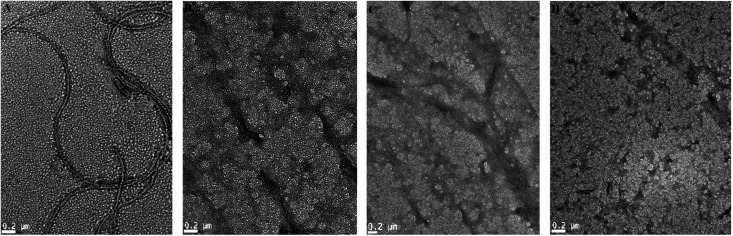
Protein misfolding and fibrillation are the fundamental traits in degenerative diseases like Alzheimer's, Parkinsonism, and diabetes mellitus. Bioactives such as flavonoids and terpenoids from plant sources are known to express protective effects against an array of diseases including diabetes, Alzheimer's and obesity. Andrographolide (AG), a labdane diterpenoid is prescribed widely in the Indian and Chinese health care systems for classical efficacy against a number of degenerative diseases. This work presents an in depth study on the effects of AG on protein fibrillating pathophysiology. Thioflavin T fluorescence spectroscopy and DLS results indicated concentration dependent inhibition of human serum albumin (HSA) fibrillation. The results were confirmed by electron microscopy studies. HSA fibril formations were markedly reduced in the presence of AG. Fluorescence studies and UV-Vis experiments confirmed further that AG molecularly interacts with HSA at site. molecular docking studies revealed hydrogen bonding and hydrophobic interactions with HSA in the native state. Thus AG interacts with HSA, stabilizes the native protein structure and inhibits fibrillation. The results demonstrated that the compound possesses anti-amyloidogenic properties and can be promising against some human degenerative diseases.
蛋白质错误折叠和纤维化是阿尔茨海默病、帕金森症和糖尿病等退行性疾病的基本特征。已知来自植物源的生物活性物质如黄酮类化合物和萜类化合物对包括糖尿病、阿尔茨海默病和肥胖症在内的一系列疾病具有保护作用。穿心莲内酯(AG),一种半日花烷二萜,在印度和中国的医疗保健系统中被广泛用于治疗多种退行性疾病的经典疗效。这项工作对AG对蛋白质纤维化病理生理学的影响进行了深入研究。硫黄素T荧光光谱和动态光散射结果表明,AG对人血清白蛋白(HSA)纤维化具有浓度依赖性抑制作用。电子显微镜研究证实了这些结果。在AG存在下,HSA纤维形成明显减少。荧光研究和紫外可见实验进一步证实,AG在分子水平上与HSA相互作用。分子对接研究揭示了与天然状态下HSA的氢键和疏水相互作用。因此,AG与HSA相互作用,稳定天然蛋白质结构并抑制纤维化。结果表明,该化合物具有抗淀粉样蛋白生成特性,有望对抗某些人类退行性疾病。