Guangdong Provincial Key Laboratory of Colorectal and Pelvic Floor Diseases, the Sixth Affiliated Hospital, Sun Yat-sen University, Guangzhou, Guangdong, 510655, PR China.
Department of Radiation Oncology, the Sixth Affiliated Hospital, Sun Yat-sen University, Guangzhou, Guangdong, 510655, PR China.
Nat Commun. 2022 May 12;13(1):2638. doi: 10.1038/s41467-022-30303-w.
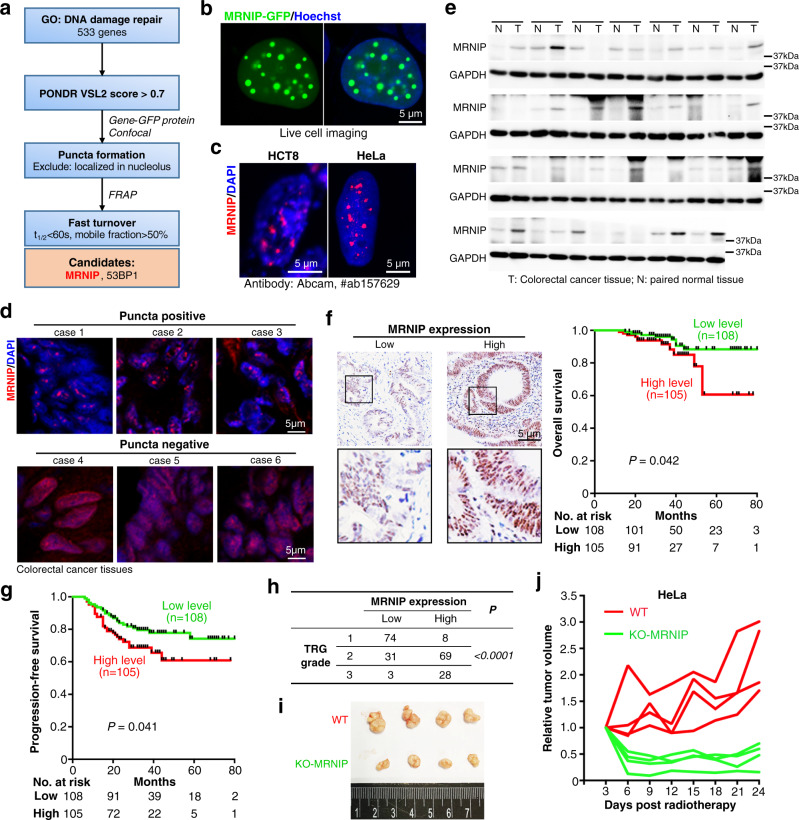
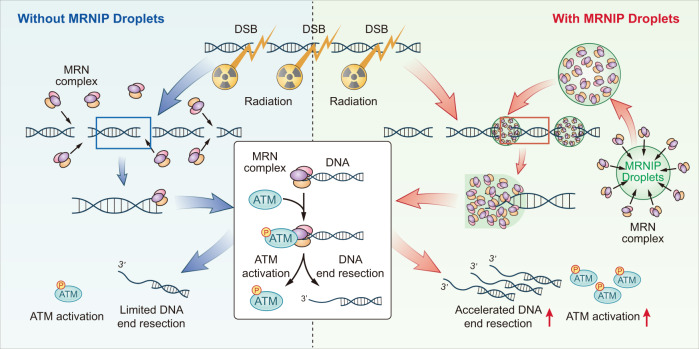
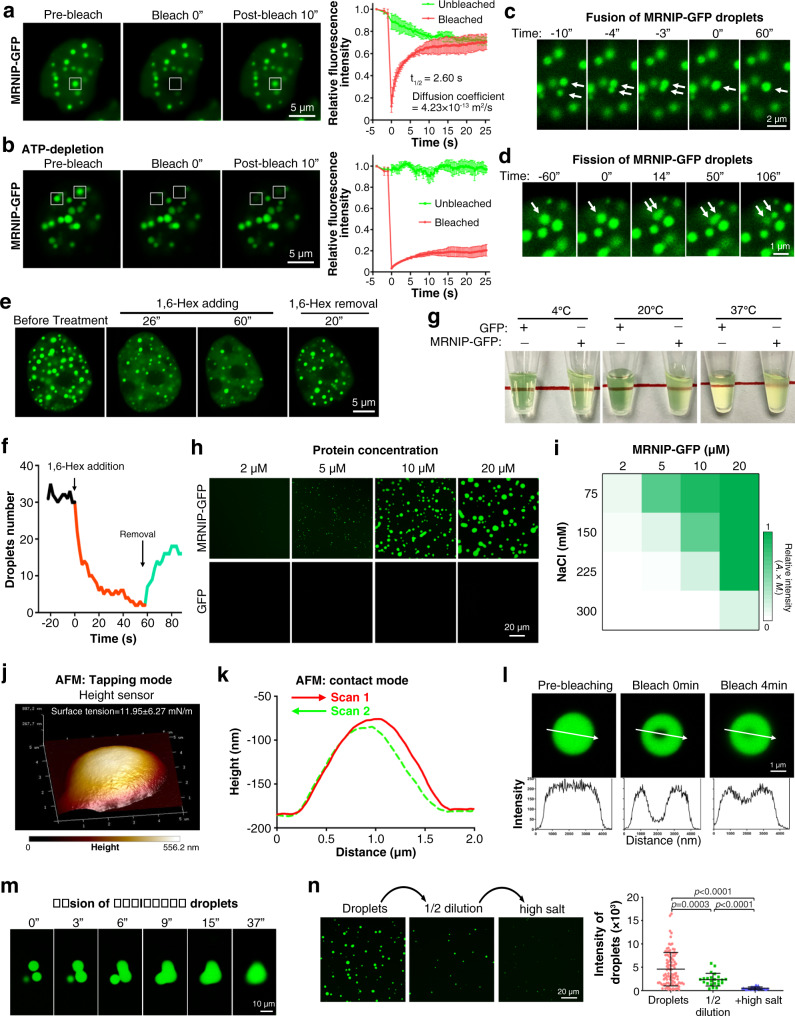
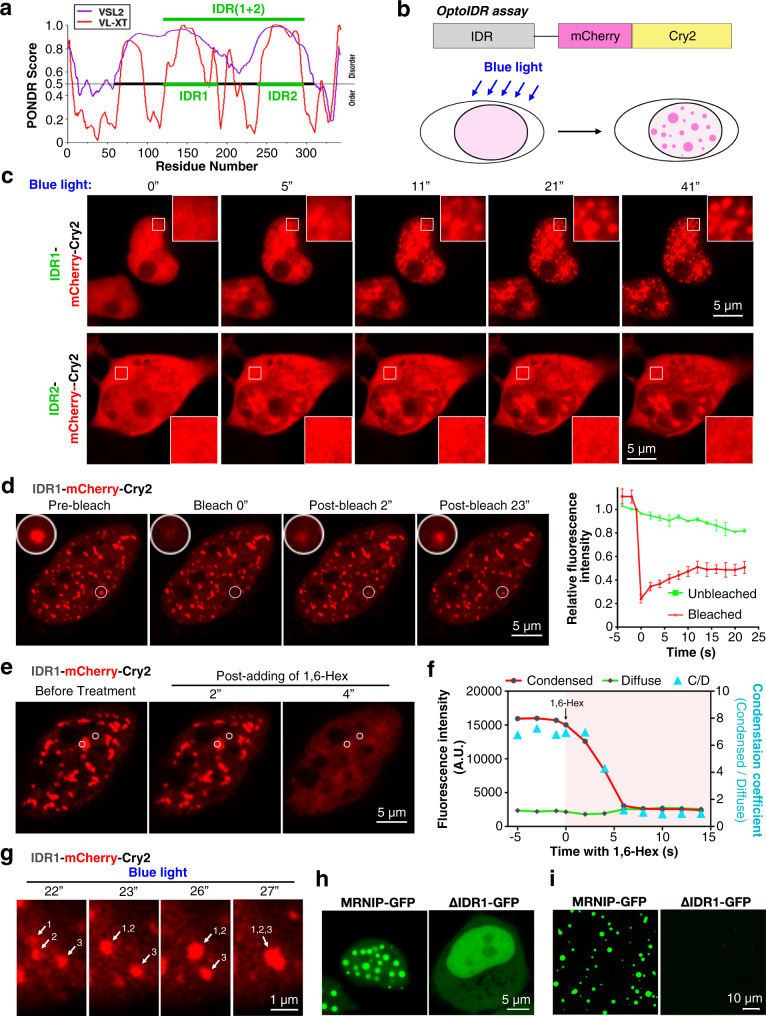
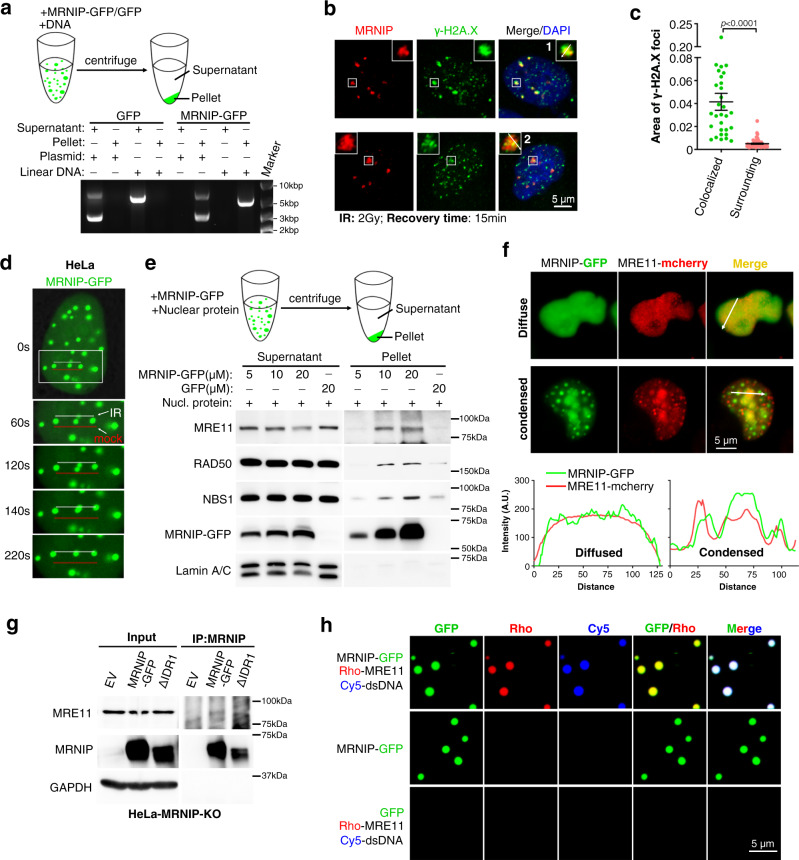
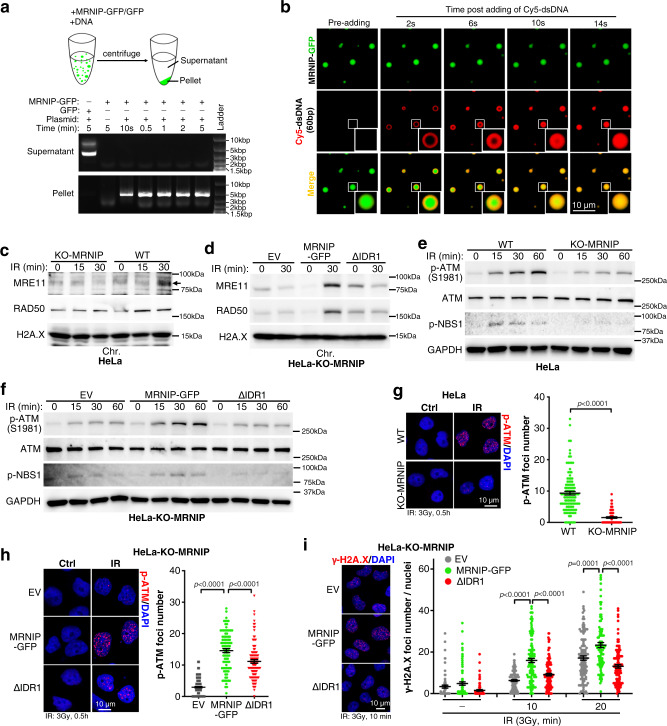
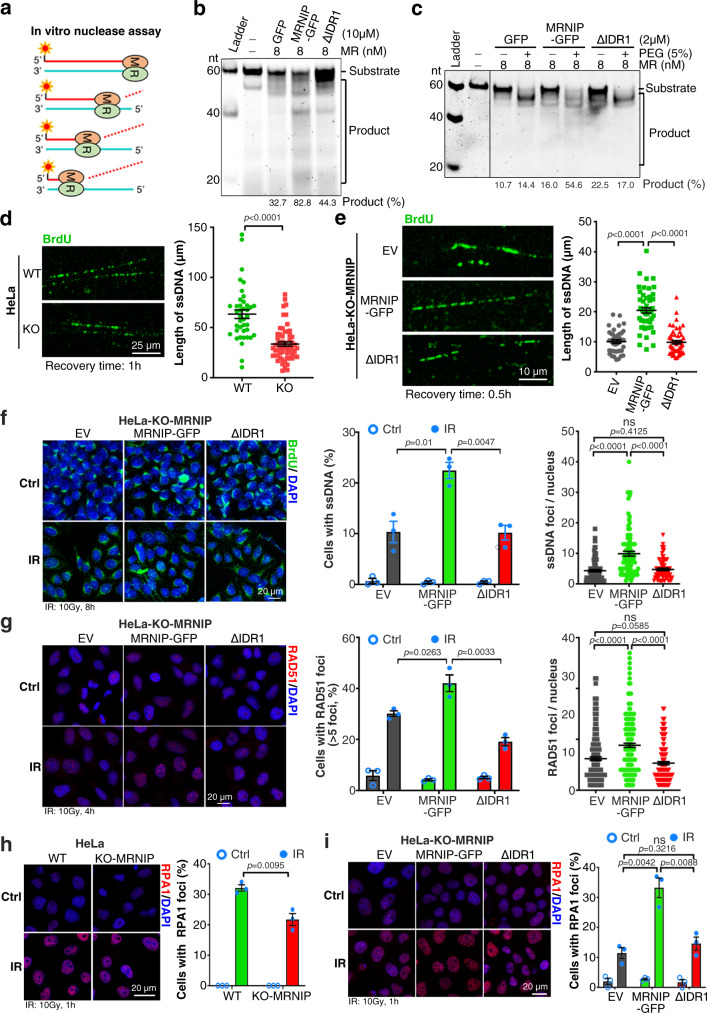
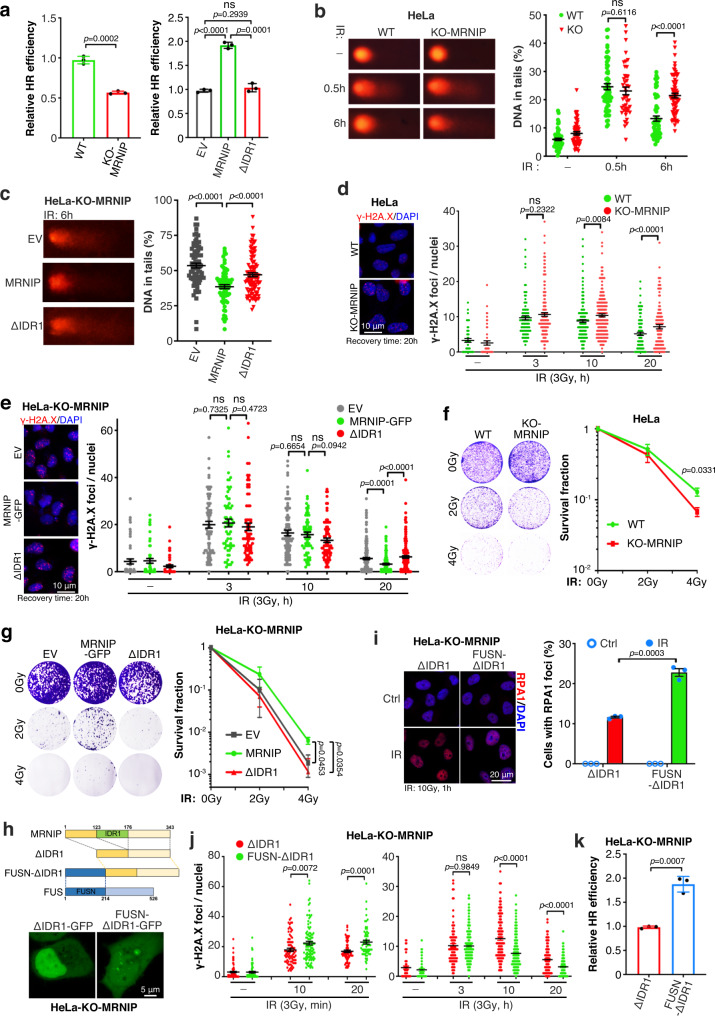
The rapid recognition of DNA double-strand breaks (DSBs) by the MRE11/RAD50/NBS1 (MRN) complex is critical for the initiation of DNA damage response and DSB end resection. Here, we show that MRN complex interacting protein (MRNIP) forms liquid-like condensates to promote homologous recombination-mediated DSB repair. The intrinsically disordered region is essential for MRNIP condensate formation. Mechanically, the MRN complex is compartmentalized and concentrated into MRNIP condensates in the nucleus. After DSB formation, MRNIP condensates move to the damaged DNA rapidly to accelerate the binding of DSB by the concentrated MRN complex, therefore inducing the autophosphorylation of ATM and subsequent activation of DNA damage response signaling. Meanwhile, MRNIP condensates-enhanced MRN complex loading further promotes DSB end resection. In addition, data from xenograft models and clinical samples confirm a correlation between MRNIP and radioresistance. Together, these results reveal an important role of MRNIP phase separation in DSB response and the MRN complex-mediated DSB end resection.
MRE11/RAD50/NBS1(MRN)复合物对 DNA 双链断裂(DSB)的快速识别对于启动 DNA 损伤反应和 DSB 末端切除至关重要。在这里,我们表明,MRN 复合物相互作用蛋白(MRNIP)形成液态凝聚物以促进同源重组介导的 DSB 修复。固有无序区域对于 MRNIP 凝聚物的形成是必不可少的。在机械上,MRN 复合物被分隔并浓缩到核内的 MRNIP 凝聚物中。DSB 形成后,MRNIP 凝聚物迅速移动到受损 DNA 处,加速浓缩的 MRN 复合物与 DSB 的结合,从而诱导 ATM 的自磷酸化以及随后的 DNA 损伤反应信号的激活。同时,MRNIP 凝聚物增强的 MRN 复合物加载进一步促进了 DSB 末端切除。此外,异种移植模型和临床样本的数据证实了 MRNIP 与放射抗性之间存在相关性。总之,这些结果揭示了 MRNIP 相分离在 DSB 反应和 MRN 复合物介导的 DSB 末端切除中的重要作用。