Agricultural Biotechnology Research Center, Academia Sinica, Nankang Dist., Taipei, 115, Taiwan.
Biotechnology Center in Southern Taiwan, Academia Sinica, Guiren Dist., Tainan, 711, Taiwan.
Commun Biol. 2022 May 12;5(1):454. doi: 10.1038/s42003-022-03409-6.
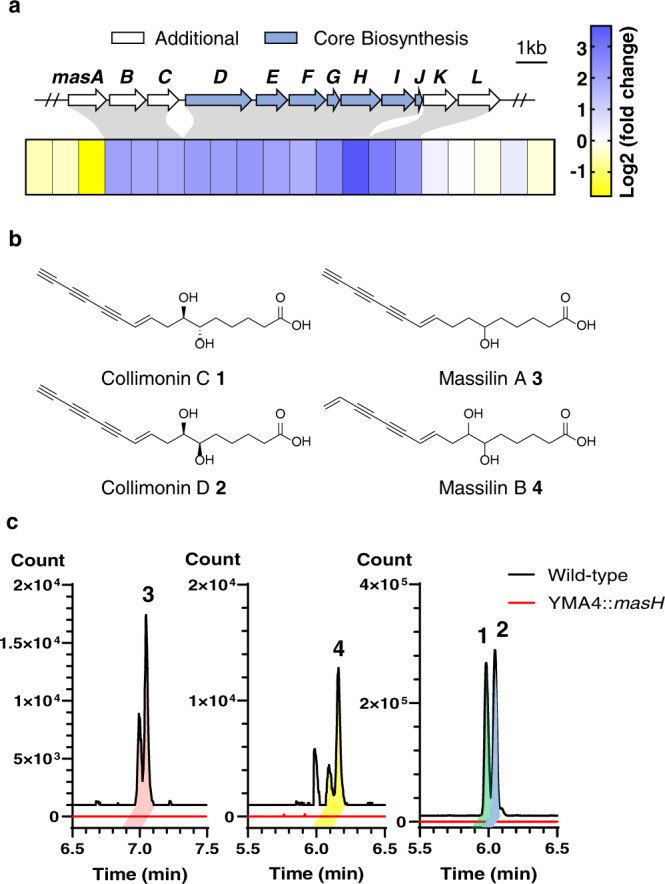
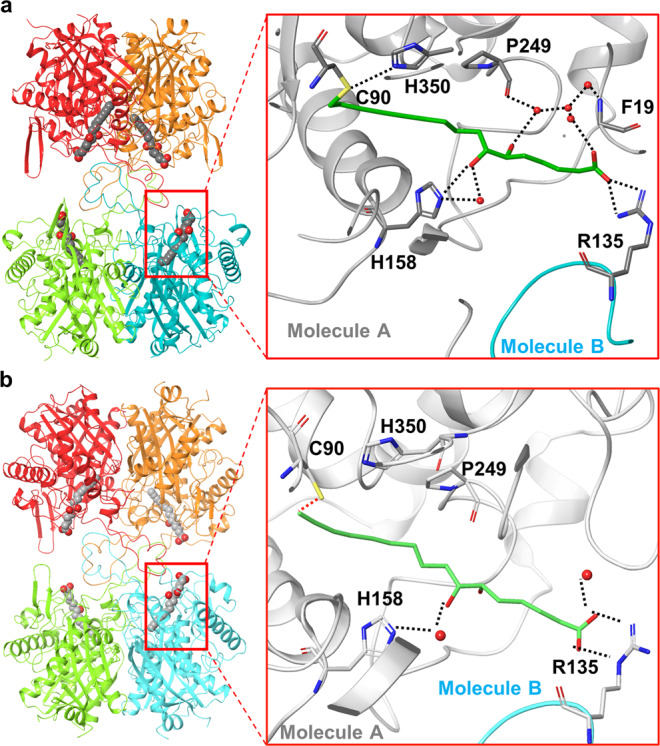
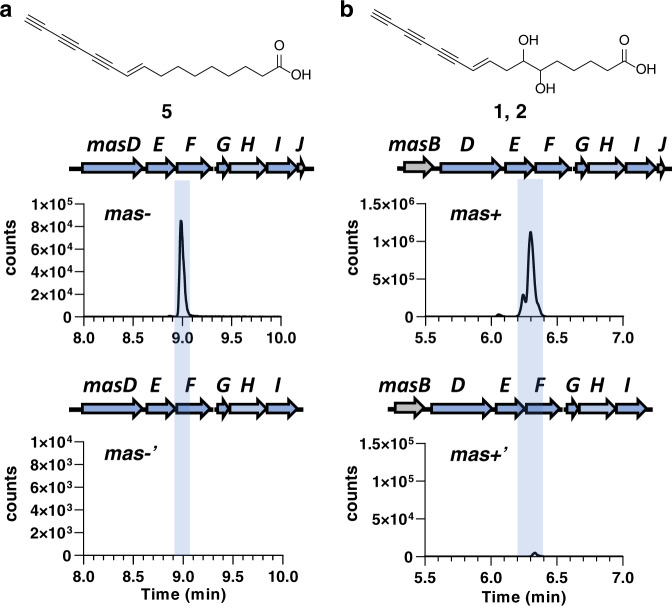
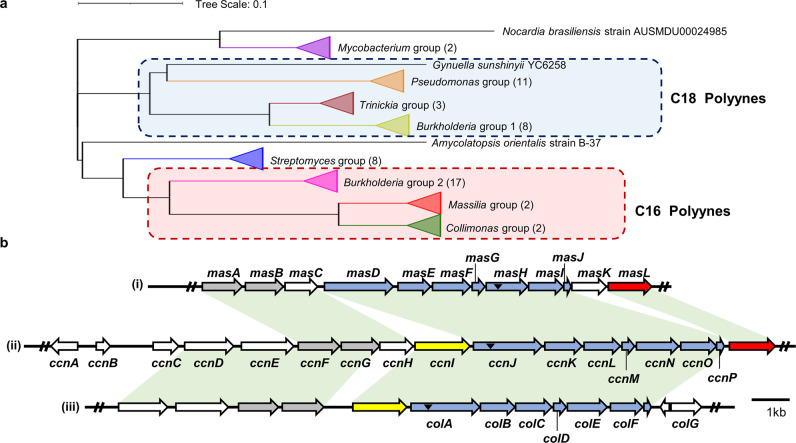
Bacterial polyynes are highly active natural products with a broad spectrum of antimicrobial activities. However, their detailed mechanism of action remains unclear. By integrating comparative genomics, transcriptomics, functional genetics, and metabolomics analysis, we identified a unique polyyne resistance gene, masL (encoding acetyl-CoA acetyltransferase), in the biosynthesis gene cluster of antifungal polyynes (massilin A 1, massilin B 2, collimonin C 3, and collimonin D 4) of Massilia sp. YMA4. Crystallographic analysis indicated that bacterial polyynes serve as covalent inhibitors of acetyl-CoA acetyltransferase. Moreover, we confirmed that the bacterial polyynes disrupted cell membrane integrity and inhibited the cell viability of Candida albicans by targeting ERG10, the homolog of MasL. Thus, this study demonstrated that acetyl-CoA acetyltransferase is a potential target for developing antifungal agents.
细菌聚炔是具有广谱抗菌活性的高活性天然产物。然而,其详细的作用机制仍不清楚。通过整合比较基因组学、转录组学、功能遗传学和代谢组学分析,我们在 Massilia sp. YMA4 中抗真菌聚炔(massilin A1、massilin B2、collimonin C3 和 collimonin D4)生物合成基因簇中鉴定出一个独特的聚炔抗性基因 masL(编码乙酰辅酶 A 乙酰转移酶)。晶体学分析表明,细菌聚炔是乙酰辅酶 A 乙酰转移酶的共价抑制剂。此外,我们通过针对 ERG10(MasL 的同源物)证实了细菌聚炔通过靶向 ERG10 破坏细胞膜完整性并抑制白色念珠菌的细胞活力。因此,本研究表明乙酰辅酶 A 乙酰转移酶是开发抗真菌药物的潜在靶点。