Department of Medical Oncology, "METAXA" Memorial Piraeus Cancer Hospital, Mpotasi 51, 185 37, Piraeus, Greece.
2nd Department of Pathology, National and Kapodistrian University of Athens, University General Hospital "Attikon", Athens, Greece.
Support Care Cancer. 2022 Aug;30(8):6973-6984. doi: 10.1007/s00520-022-07096-1. Epub 2022 May 12.
Patients with active cancer have a 4-sevenfold increased risk for venous thromboembolism (VTE) especially during systematic anticancer treatment. Simultaneously, surgery is an additional risk factor.
The Metaxas's Hospital THromboprophylaxis program in Oncological & Surgical Patients (MeTHOS) is a prospective, phase IV, observational, non-interventional cohort study, aiming to record the thromboprophylaxis practice patterns in high-risk active cancer patients undergoing surgical and/or chemotherapy treatment.
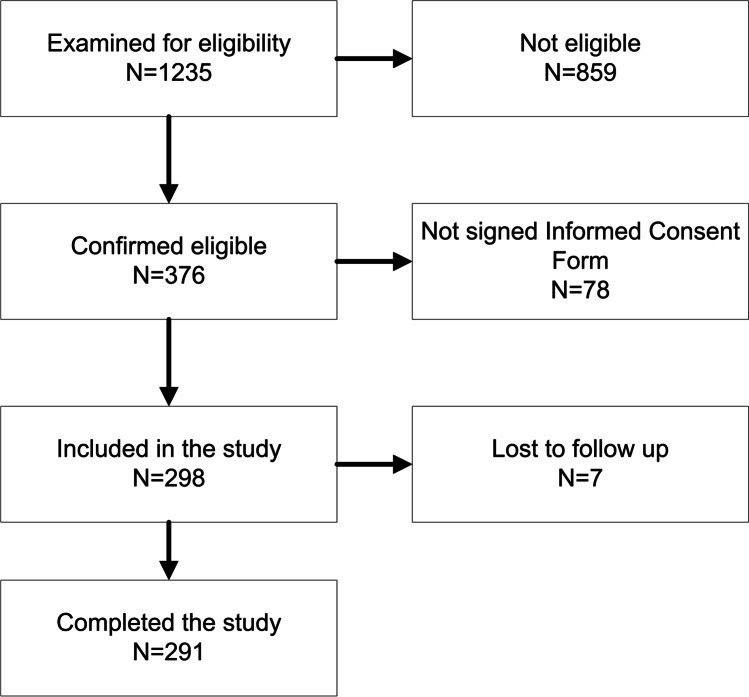
We are reporting results from 291 ambulatory patients (median age: 67 years, Q1-Q3: 59-73 years, 54.6% males) who received anti-neoplastic treatment and administered thromboprophylaxis. 59.8% had cardiovascular disease (mostly hypertension), 76.6% were reported as having at least one comorbidity, while 27.5% and 15.8% accumulated two and three comorbidities, respectively. 94.9% of the patients were receiving highly thrombogenic agents such as platinum-based agents, 5-FU, immunotherapy, antiangiogenics/anti-VEGF, or erythropoietin. 26.5% of the patients were initially surgically treated. In terms of anticoagulation, all patients were treated with tinzaparin (fixed dose, 10,000 Anti-Xa IU, OD). The median anticoagulation duration was 6.2 months. Six thrombotic events were observed (2.06%, 95% CI: 0.76-4.43%): 5 were DVT, and one PE. With respect to safety, 7 bleeding events occurred (2.6%, 95% CI: 1.0-5.3%); 6 of them were minor.
Thromboprophylaxis with LMWH in patients with active cancer and high thrombotic burden was safe and effective. Intermediate dose of tinzaparin seems to be an appropriate agent for cancer-associated thromboprophylaxis management.
ClinicalTrials.gov: NCT04248348.
患有活动性癌症的患者发生静脉血栓栓塞症(VTE)的风险增加了 4-7 倍,尤其是在接受系统抗癌治疗期间。同时,手术也是一个额外的风险因素。
Metaxas 医院肿瘤和外科患者的血栓预防计划(MeTHOS)是一项前瞻性、四期、观察性、非干预性队列研究,旨在记录接受手术和/或化疗治疗的高危活动性癌症患者的血栓预防实践模式。
我们报告了 291 名接受抗肿瘤治疗并接受血栓预防的门诊患者的结果(中位年龄:67 岁,Q1-Q3:59-73 岁,54.6%为男性)。59.8%有心血管疾病(主要为高血压),76.6%报告有至少一种合并症,而 27.5%和 15.8%分别有两种和三种合并症。94.9%的患者正在接受高度血栓形成的药物,如铂类药物、5-FU、免疫疗法、抗血管生成/抗-VEGF 药物或促红细胞生成素。26.5%的患者最初接受手术治疗。在抗凝方面,所有患者均接受达肝素钠(固定剂量,10000 Anti-Xa IU,每天 1 次)治疗。抗凝的中位持续时间为 6.2 个月。观察到 6 例血栓事件(2.06%,95%CI:0.76-4.43%):5 例为 DVT,1 例为 PE。关于安全性,发生 7 例出血事件(2.6%,95%CI:1.0-5.3%):其中 6 例为轻微出血。
在具有高血栓形成负担的活动性癌症患者中使用低分子肝素进行血栓预防是安全有效的。中等剂量的达肝素钠似乎是癌症相关血栓预防管理的合适药物。
ClinicalTrials.gov:NCT04248348。