Lipman Jon, Fergusson Lee, Bonshek Anna, Schneider Robert H
Institute for Vedic Architecture, Maharishi International University, Fairfield, IA, USA.
Professor, Maharishi Vedic Research Institute, Gold Coast, AU-QLD, Australia.
Glob Adv Health Med. 2022 Apr 27;11:2164957X221077084. doi: 10.1177/2164957X221077084. eCollection 2022.
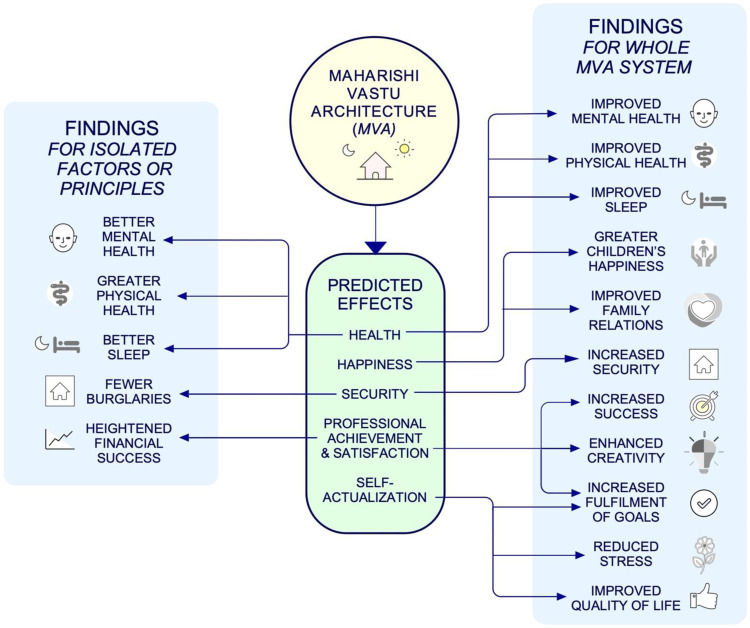
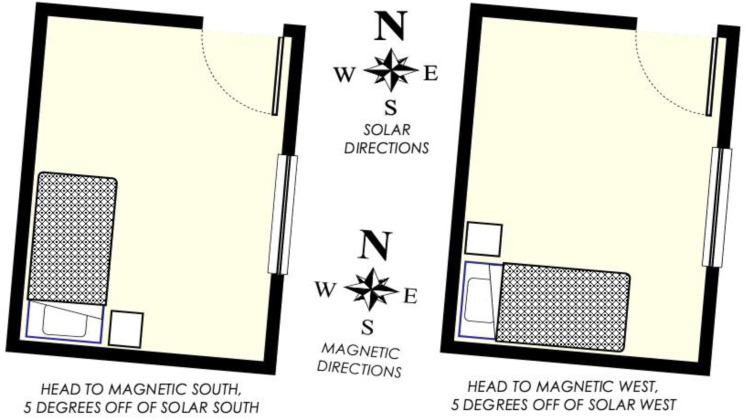
The evolution of healthcare from 18th-century reductionism to 21st-century postgenomic holism has been described in terms of systems medicine, and the impact of the built environment on human health is the focus of investigation and development, leading to the new specialty of evidence-based, therapeutic architecture. The traditional system of Vāstu architecture-a design paradigm for buildings which is proposed to promote mental and physical health-has been applied and studied in the West in the last 20 years, and features elements absent from other approaches. This review critically evaluates the theory and research of a well-developed, standardized form of Vāstu-Maharishi Vastu® architecture (MVA). MVA's principles include development of the architect's consciousness, universal recommendations for building orientation, siting, and dimensions; placement of key functions; and occupants' head direction when sleeping or performing tasks. The effects of isolated Vāstu elements included in MVA are presented. However, the full value of MVA, documented as a systematic, globally applicable practice, is in the effect of its complete package, and thus this review of MVA includes evaluating the experience of living and working in MVA buildings.
The published medical and health-related literature was systematically surveyed for research on factors related to isolated principles applied in MVA as well as on the complete system.
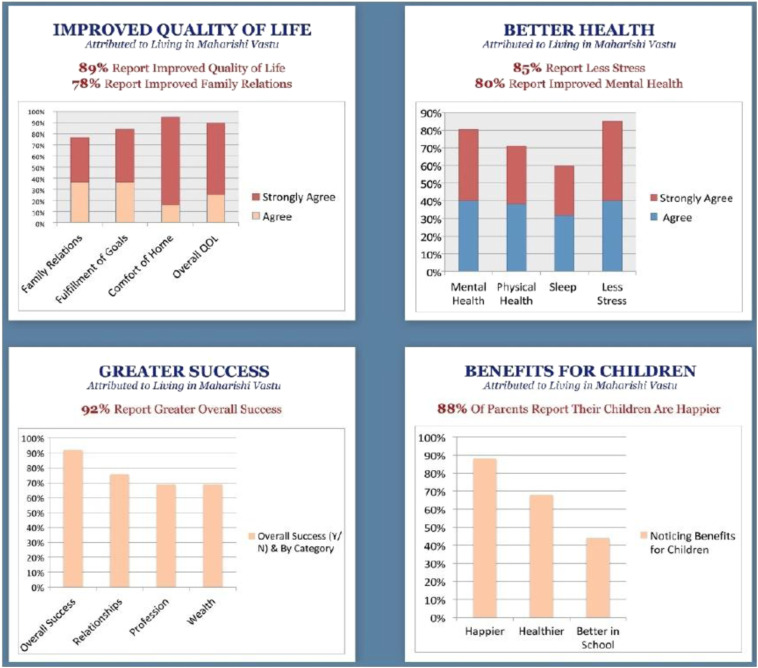
Published research suggests that incorporating MVA principles into buildings correlates with significant improvements in occupants' physical and mental health and quality of life: better sleep, greater happiness of children, and the experience of heightened sense of security and reduced stress. The frequency of burglaries, a social determinant of health, also correlates. Potential neurophysiological mechanisms are described.
Findings suggest that MVA offers an actionable approach for managing a key social determinant of health by using architectural design as preventive medicine and in public health.
医疗保健从18世纪的还原论发展到21世纪的后基因组整体论,已被用系统医学的术语进行描述,建筑环境对人类健康的影响是研究与发展的重点,由此产生了循证治疗性建筑这一新专业。传统的吠陀建筑体系——一种旨在促进身心健康的建筑设计范式——在过去20年里已在西方得到应用和研究,其具有其他方法所没有的元素。本综述批判性地评估了一种完善、标准化的吠陀建筑形式——玛赫西吠陀建筑(MVA)的理论与研究。MVA的原则包括培养建筑师的意识、关于建筑朝向、选址和尺寸的通用建议;关键功能的布局;以及居住者睡眠或执行任务时的头部方向。文中介绍了MVA中孤立的吠陀元素的影响。然而,MVA作为一种系统的、全球适用的实践,其全部价值在于其完整体系的效果,因此本对MVA的综述包括评估在MVA建筑中生活和工作的体验。
系统检索已发表的医学及与健康相关的文献,以查找与MVA中应用的孤立原则以及完整体系相关因素的研究。
已发表的研究表明,将MVA原则融入建筑与居住者的身心健康及生活质量的显著改善相关:睡眠更好、儿童更快乐,以及安全感增强和压力减轻的体验。盗窃发生率作为健康的社会决定因素之一,也与之相关。文中描述了潜在的神经生理机制。
研究结果表明,MVA通过将建筑设计用作预防医学和公共卫生手段,为管理健康的关键社会决定因素提供了一种可行的方法。