Sun Hui, Zhang Ai-Hua, Song Qi, Fang Heng, Liu Xing-Yuan, Su Jing, Yang Le, Yu Meng-Die, Wang Xi-Jun
National Chinmedomics Research Center, Sino-America Chinmedomics Technology Collaboration Center, National TCM Key Laboratory of Serum Pharmacochemistry, Laboratory of Metabolomics, Chinmedomics Research Center of TCM State Administration, Department of Pharmaceutical Analysis, Heilongjiang University of Chinese Medicine Heping Road 24 Harbin China
State Key Laboratory of Quality Research in Chinese Medicine, Macau University of Science and Technology Avenida Wai Long Taipa Macau.
RSC Adv. 2018 Oct 31;8(64):36831-36839. doi: 10.1039/c8ra06553e. eCollection 2018 Oct 26.
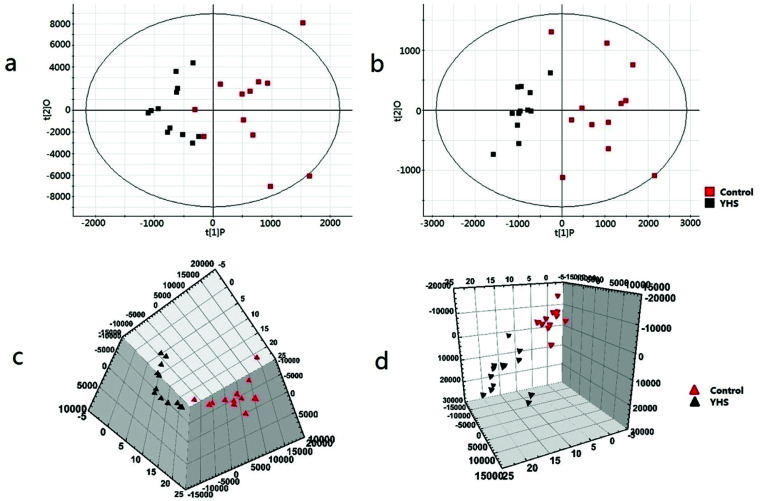
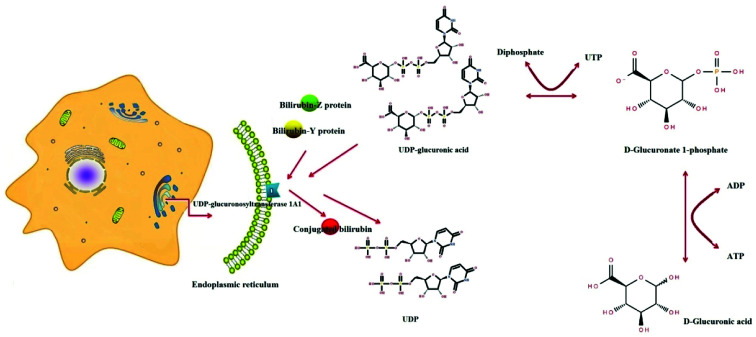
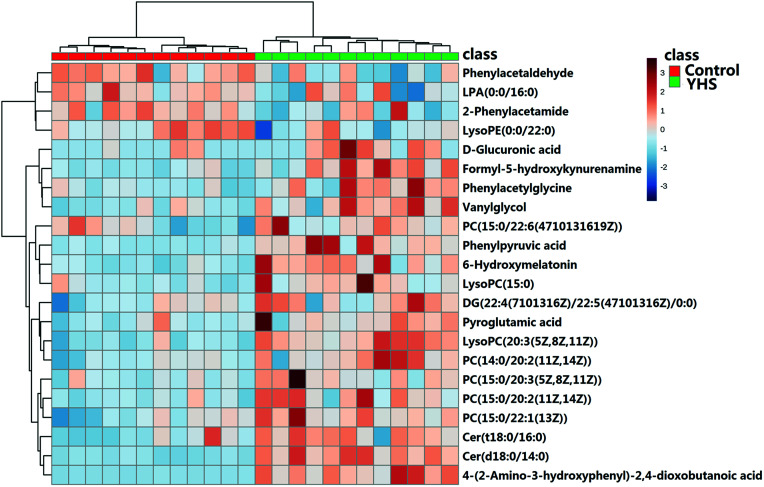
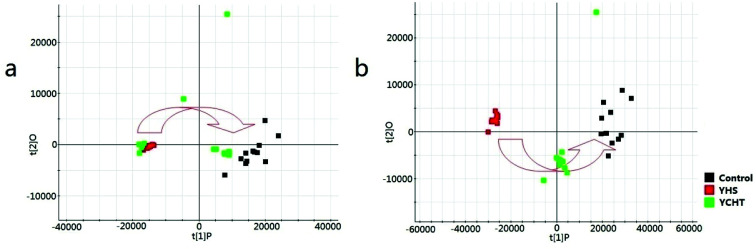
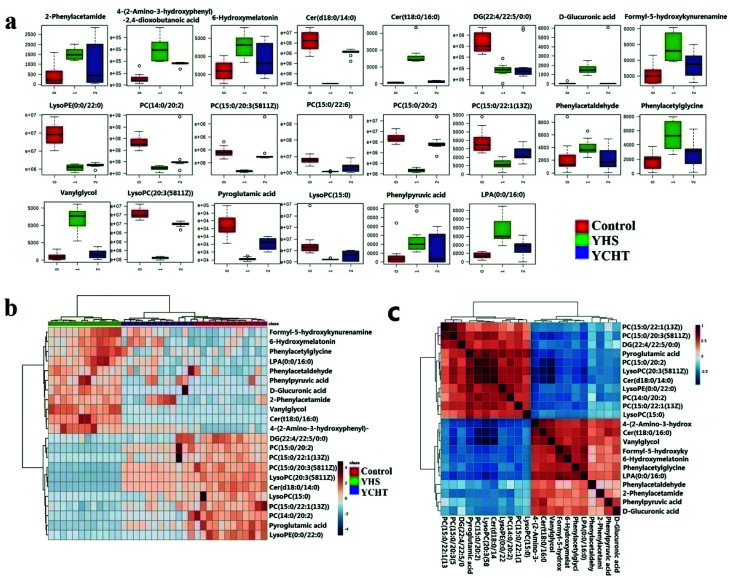
Yinchenhao Tang (YCHT), a classic traditional Chinese medicine (TCM) formulae, plays an important role in the treatment of Yang Huang syndrome (YHS). With the emergence of new biomarkers of YHS uncovered metabonomics, the underlying functional mechanisms are still not clear. Functional metabolomics aims at converting biomarkers derived from metabonomics into disease mechanisms. Here, an integrated non-target metabolomics and IPA strategy were used to investigate the YCHT intervention on YHS. Our metabolomics study has shown that the potential protective effect of YCHT on YHS mice leads to significant changes in the metabolic profile by modulating the biomarkers and regulating the metabolic disorders. Twenty two differential metabolite biomarkers and fifteen involved metabolic pathways were correlated with the regulation of YCHT treatment on YHS. Functional metabolomics identified a core biomarker, d-glucuronic acid in pentose and glucuronate interconversion pathways, which was directly related to the target prediction of UDP-glucuronosyltransferase 1A1 and eventually leaded to a series of disturbances. In conclusion, this study shows that functional metabolomics can discover metabolic pathways as promising targets.
茵陈蒿汤(YCHT)是一种经典的中药方剂,在阳黄证(YHS)的治疗中发挥着重要作用。随着代谢组学发现了YHS的新生物标志物,其潜在的功能机制仍不清楚。功能代谢组学旨在将代谢组学衍生的生物标志物转化为疾病机制。在此,采用综合非靶向代谢组学和IPA策略研究YCHT对YHS的干预作用。我们的代谢组学研究表明,YCHT对YHS小鼠的潜在保护作用通过调节生物标志物和调节代谢紊乱导致代谢谱发生显著变化。22种差异代谢生物标志物和15条涉及的代谢途径与YCHT治疗对YHS的调节相关。功能代谢组学确定了一个核心生物标志物,即戊糖和葡糖醛酸相互转化途径中的d-葡萄糖醛酸,它与尿苷二磷酸葡萄糖醛酸基转移酶1A1的靶标预测直接相关,并最终导致一系列紊乱。总之,本研究表明功能代谢组学可以发现有前景的代谢途径作为靶点。