State Key Laboratory of Medical Neurobiology, MOE Frontiers Center for Brain Science, Department of Pharmacology, School of Basic Medical Sciences, Institutes of Brain Science, Fudan University, Shanghai 200032, China.
School of Public Health, Fudan University, Shanghai 200032, China.
Int J Mol Sci. 2022 Apr 21;23(9):4599. doi: 10.3390/ijms23094599.
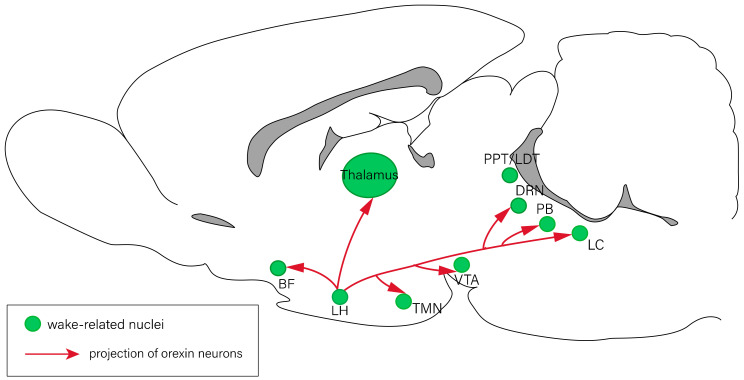
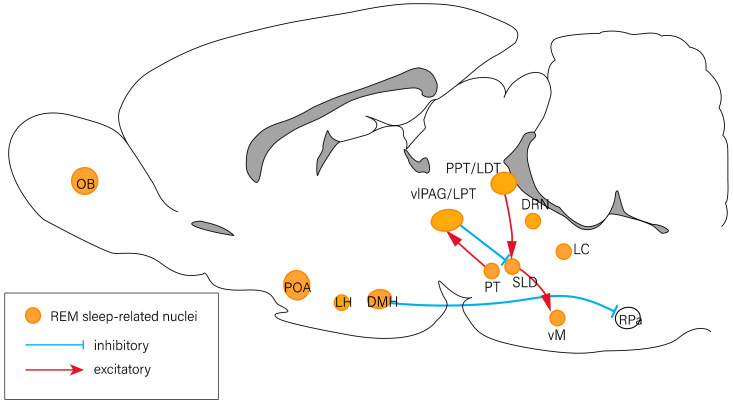
Sleep and wakefulness are basic behavioral states that require coordination between several brain regions, and they involve multiple neurochemical systems, including neuropeptides. Neuropeptides are a group of peptides produced by neurons and neuroendocrine cells of the central nervous system. Like traditional neurotransmitters, neuropeptides can bind to specific surface receptors and subsequently regulate neuronal activities. For example, orexin is a crucial component for the maintenance of wakefulness and the suppression of rapid eye movement (REM) sleep. In addition to orexin, melanin-concentrating hormone, and galanin may promote REM sleep. These results suggest that neuropeptides play an important role in sleep-wake regulation. These neuropeptides can be divided into three categories according to their effects on sleep-wake behaviors in rodents and humans. (i) Galanin, melanin-concentrating hormone, and vasoactive intestinal polypeptide are sleep-promoting peptides. It is also noticeable that vasoactive intestinal polypeptide particularly increases REM sleep. (ii) Orexin and neuropeptide S have been shown to induce wakefulness. (iii) Neuropeptide Y and substance P may have a bidirectional function as they can produce both arousal and sleep-inducing effects. This review will introduce the distribution of various neuropeptides in the brain and summarize the roles of different neuropeptides in sleep-wake regulation. We aim to lay the foundation for future studies to uncover the mechanisms that underlie the initiation, maintenance, and end of sleep-wake states.
睡眠和觉醒是基本的行为状态,需要几个脑区的协调,它们涉及多个神经化学系统,包括神经肽。神经肽是一组由中枢神经系统的神经元和神经内分泌细胞产生的肽。与传统的神经递质一样,神经肽可以与特定的表面受体结合,随后调节神经元的活动。例如,食欲素是维持觉醒和抑制快速眼动(REM)睡眠的关键组成部分。除了食欲素外,黑色素浓缩激素和甘丙肽可能会促进 REM 睡眠。这些结果表明,神经肽在睡眠-觉醒调节中发挥着重要作用。这些神经肽可以根据它们在啮齿动物和人类睡眠-觉醒行为中的作用分为三类。(i)甘丙肽、黑色素浓缩激素和血管活性肠肽是促进睡眠的肽。值得注意的是,血管活性肠肽特别增加 REM 睡眠。(ii)食欲素和神经肽 S 已被证明能诱导觉醒。(iii)神经肽 Y 和 P 物质可能具有双向功能,因为它们既能产生觉醒作用,也能产生诱导睡眠的作用。本综述将介绍各种神经肽在大脑中的分布,并总结不同神经肽在睡眠-觉醒调节中的作用。我们旨在为未来的研究奠定基础,以揭示睡眠-觉醒状态的启动、维持和结束的机制。