Department of Chemical and Process Engineering, University of Strathclyde, 75 Montrose Street, Glasgow G1 1XJ, UK.
Department of Physics/Archie-West HPC, University of Strathclyde, 107 Rottenrow East, Glasgow G4 0NG, UK.
Int J Mol Sci. 2022 Apr 27;23(9):4832. doi: 10.3390/ijms23094832.
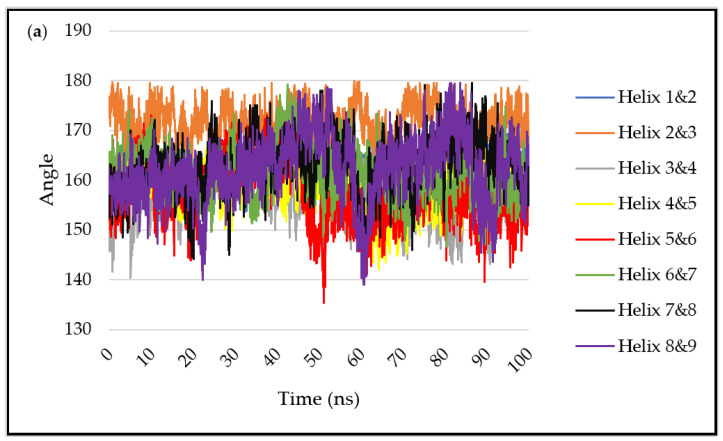
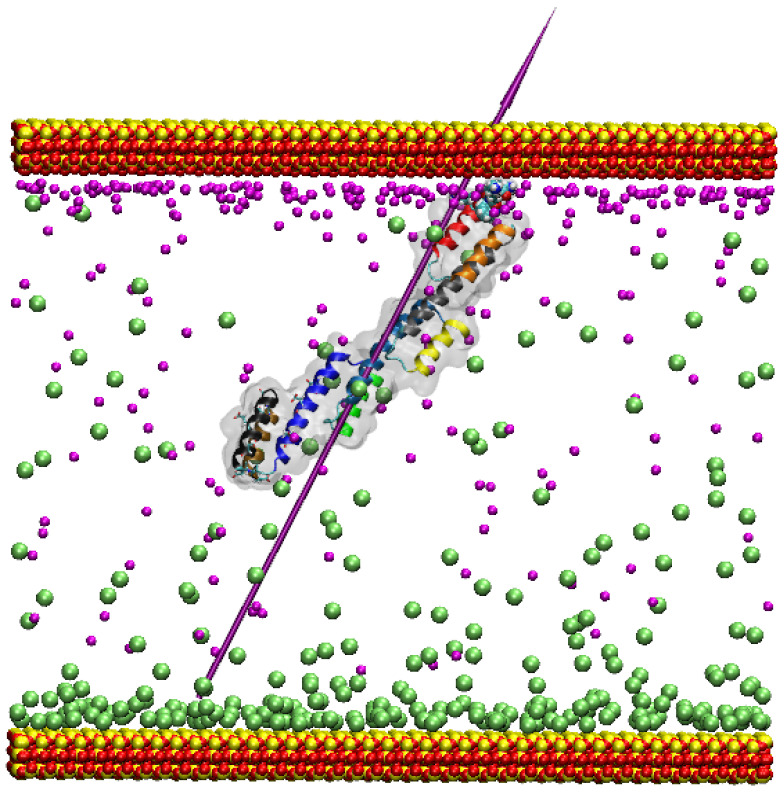
Staphylococcus protein A (SpA) is found in the cell wall of bacteria. Its ability to bind to the constant Fc regions of antibodies means it is useful for antibody extraction, and further integration with inorganic materials can lead to the development of diagnostics and therapeutics. We have investigated the adsorption of SpA on inorganic surface models such as experimentally relevant negatively charged silica, as well as positively charged and neutral surfaces, by use of fully atomistic molecular dynamics simulations. We have found that SpA, which is itself negatively charged at pH7, is able to adsorb on all our surface models. However, adsorption on charged surfaces is more specific in terms of protein orientation compared to a neutral Au (111) surface, while the protein structure is generally well maintained in all cases. The results indicate that SpA adsorption is optimal on the siloxide-rich silica surface, which is negative at pH7 since this keeps the Fc binding regions free to interact with other species in solution. Due to the dominant role of electrostatics, the results are transferable to other inorganic materials and pave the way for new diagnostic and therapeutic designs where SpA might be used to conjugate antibodies to nanoparticles.
葡萄球菌蛋白 A(SpA)存在于细菌的细胞壁中。其与抗体恒定 Fc 区域结合的能力使其可用于抗体提取,进一步与无机材料结合可开发出诊断和治疗方法。我们使用全原子分子动力学模拟研究了 SpA 在实验相关的带负电荷的二氧化硅等无机表面模型,以及带正电荷和中性表面上的吸附情况。我们发现 SpA 在 pH7 时带负电荷,能够在所有表面模型上吸附。然而,与中性 Au(111)表面相比,带电荷表面上的吸附在蛋白质取向方面更具特异性,而在所有情况下蛋白质结构通常都能得到很好的保持。结果表明,SpA 在富硅氧烷的二氧化硅表面上的吸附最佳,在 pH7 时呈负电性,因为这使 Fc 结合区域保持自由,可与溶液中的其他物质相互作用。由于静电作用占主导地位,因此这些结果可转移到其他无机材料上,为使用 SpA 将抗体与纳米颗粒结合的新诊断和治疗设计铺平了道路。