Phoenix Epidemiology and Clinical Research Branch, National Institute of Diabetes and Digestive and Kidney Diseases, National Institutes of Health, 445 N 5th Street, Phoenix, AZ 85004, USA.
Cells. 2022 Apr 25;11(9):1446. doi: 10.3390/cells11091446.
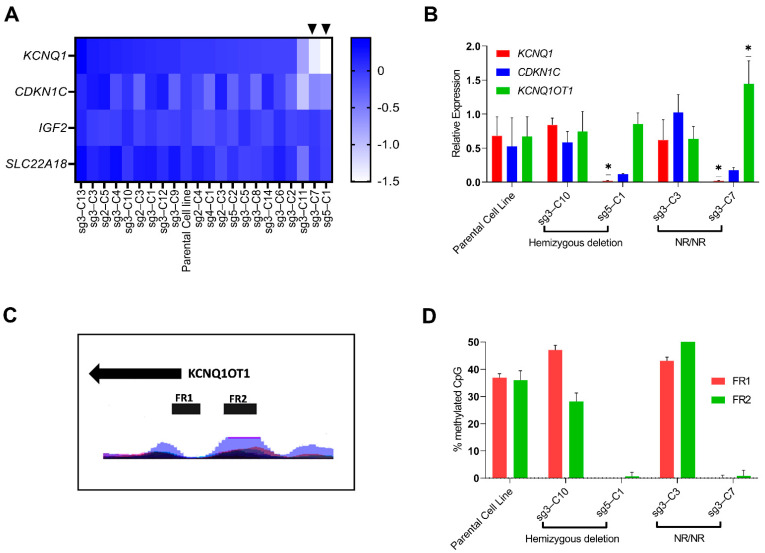
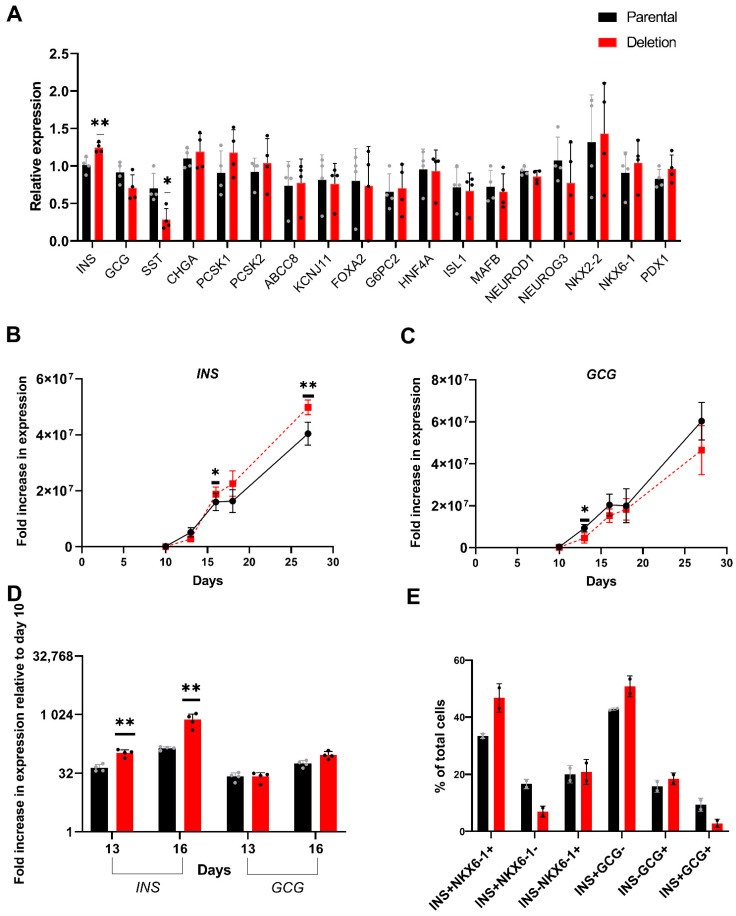
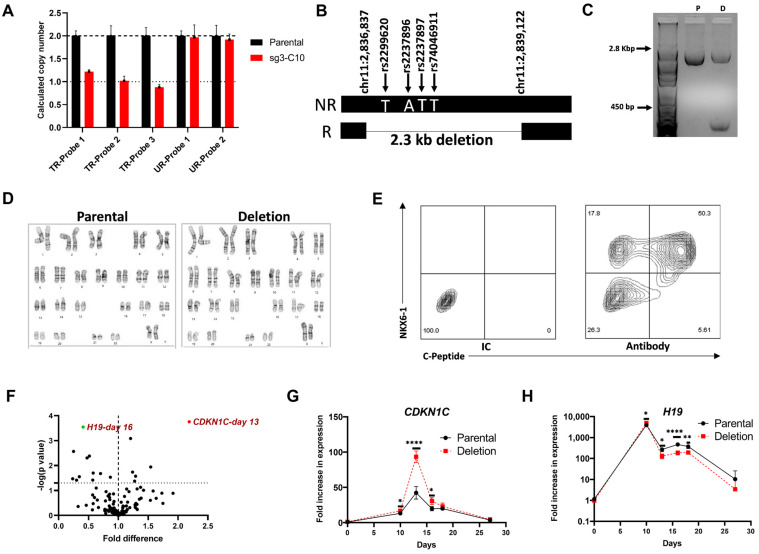
The top genetic association signal for type 2 diabetes (T2D) in Southwestern American Indians maps to intron 15 of , an imprinted gene. We aim to understand the biology whereby variation at this locus affects T2D specifically in this genomic background. To do so, we obtained human induced pluripotent stem cells (hiPSC) derived from American Indians. Using these iPSCs, we show that imprinting of and during pancreatic islet-like cell generation from iPSCs is consistent with known imprinting patterns in fetal pancreas and adult islets and therefore is an ideal model system to study this locus. In this report, we detail the use of allele-specific guide RNAs and CRISPR to generate isogenic hiPSCs that differ only at multiple T2D associated intronic SNPs at this locus which can be used to elucidate their functional effects. Characterization of these isogenic hiPSCs identified a few aberrant cell lines; namely cell lines with large hemizygous deletions in the putative functional region of and cell lines hypomethylated at the promoter. Comparison of an isogenic cell line with a hemizygous deletion to the parental cell line identified and as differentially expressed during the endocrine progenitor stage of pancreatic-islet development.
美国西南部印第安人 2 型糖尿病(T2D)的最高遗传关联信号映射到印迹基因 的内含子 15。我们旨在了解该基因座的变异如何专门在这种基因组背景下影响 T2D 的生物学机制。为此,我们获得了源自印第安人的人类诱导多能干细胞(hiPSC)。使用这些 iPSC,我们证明了在从 iPSC 生成胰岛样细胞时 的印迹与胎儿胰腺和成年胰岛中的已知印迹模式一致,因此是研究该基因座的理想模型系统。在本报告中,我们详细介绍了使用等位基因特异性向导 RNA 和 CRISPR 来生成仅在该基因座的多个 T2D 相关内含子 SNP 上存在差异的同基因 hiPSC,可用于阐明其功能影响。对这些同基因 hiPSC 的表征确定了一些异常细胞系;即,在 的假定功能区域中具有大片段杂合缺失的细胞系和 在启动子处低甲基化的细胞系。同基因细胞系与杂合缺失细胞系的比较鉴定出 在胰腺胰岛发育的内分泌前体细胞阶段差异表达。