Morse Ryan T, Ganju Rohit G, Gan Gregory N, Cao Ying, Neupane Prakash, Kakarala Kiran, Shnayder Yelizaveta, Lominska Christopher E
Department of Radiation Oncology, UNC Lineberger Comprehensive Cancer Center, University of North Carolina Hospital, Chapel Hill, NC 27514, USA.
Department of Radiation Oncology, Wellstar Health System, Marietta, GA 30067, USA.
Cancers (Basel). 2022 Apr 22;14(9):2094. doi: 10.3390/cancers14092094.
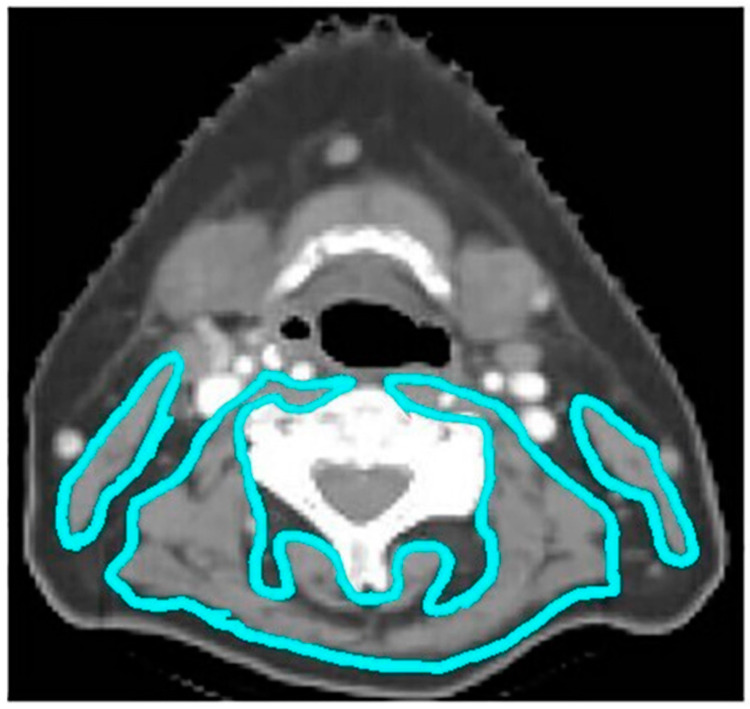
This study was performed to identify treatment related toxicities in older adults undergoing concurrent chemoradiotherapy for head and neck cancer and nutritional and skeletal muscle measures that might identify frailty. Imaging analysis was done with the following skeletal muscle measurements: skeletal muscle index (SMI), skeletal muscle density (SMD), and skeletal muscle gauge (SMG). Patients were dichotomized by age into younger (<70 years old, 221 patients) and older age groups (≥70 years old, 51 patients). Low SMI was more common in older patients (86.7%) compared to younger patients (51.7%, p < 0.01), as were low SMD (57.8% vs. 37.3%, p = 0.012) and low SMG (76.1% vs. 44.2%, p < 0.01), despite having similar BMIs (27.3 kg/m2 versus 27.7 kg/m2, p = 0.71). Older patients were significantly more likely to experience chemotherapy toxicity than younger patients (54.9% versus 32.3%, p < 0.01). On multivariate analysis age (p < 0.01), current smoking status (p < 0.01), and low SMI (p < 0.01) remained as significant predictors for missed chemotherapy cycles or discontinuation. Older patients were more likely to require ≥5-day radiation breaks than younger patients (27.5% versus 8.6%, p < 0.01). On multivariate analysis, age (p < 0.01), low albumin status (p = 0.03), and low SMI (p = 0.04) were identified as predictors of prolonged radiation treatment breaks. Based on the results of our study, sarcopenia may be used as an additional marker for frailty alongside traditional performance status scales.
本研究旨在确定接受头颈部癌同步放化疗的老年患者中与治疗相关的毒性反应,以及可能识别虚弱的营养和骨骼肌指标。通过以下骨骼肌测量进行影像分析:骨骼肌指数(SMI)、骨骼肌密度(SMD)和骨骼肌厚度(SMG)。患者按年龄分为较年轻组(<70岁,221例患者)和老年组(≥70岁,51例患者)。与较年轻患者(51.7%,p<0.01)相比,低SMI在老年患者中更为常见(86.7%),低SMD(57.8%对37.3%,p = 0.012)和低SMG(76.1%对44.2%,p<0.01)也是如此,尽管两组的体重指数相似(分别为27.3kg/m²和27.7kg/m²,p = 0.71)。老年患者比年轻患者更易出现化疗毒性反应(54.9%对32.3%,p<0.01)。多因素分析显示,年龄(p<0.01)、当前吸烟状态(p<0.01)和低SMI(p<0.01)仍是化疗周期遗漏或化疗中断的显著预测因素。老年患者比年轻患者更有可能需要≥5天的放疗中断(27.5%对8.6%,p<0.01)。多因素分析确定,年龄(p<0.01)、低白蛋白状态(p = 0.03)和低SMI(p = 0.04)是放疗中断延长的预测因素。根据我们的研究结果,肌肉减少症可作为虚弱的额外标志物,与传统的体能状态量表一起使用。