Makimoto Atsushi
Department of Laboratory Medicine, Tokyo Metropolitan Children's Medical Center, 2-8-29, Musashidai, Fuchu 183-8561, Tokyo, Japan.
Department of Hematology/Oncology, Tokyo Metropolitan Children's Medical Center, 2-8-29, Musashidai, Fuchu 183-8561, Tokyo, Japan.
Cancers (Basel). 2022 May 2;14(9):2270. doi: 10.3390/cancers14092270.
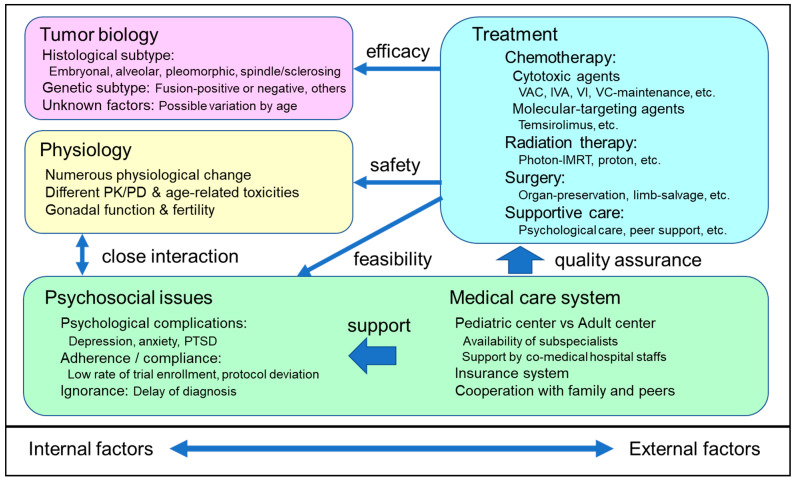
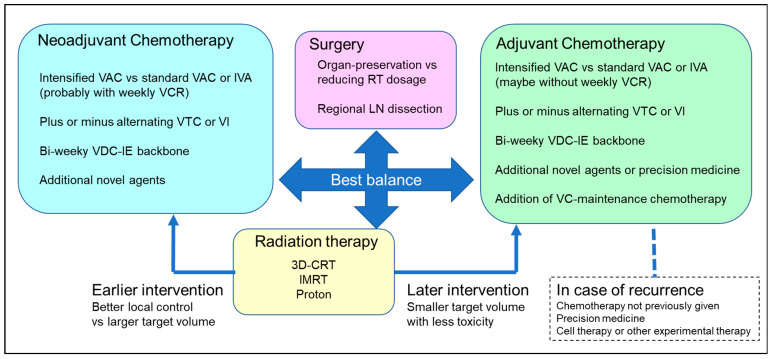
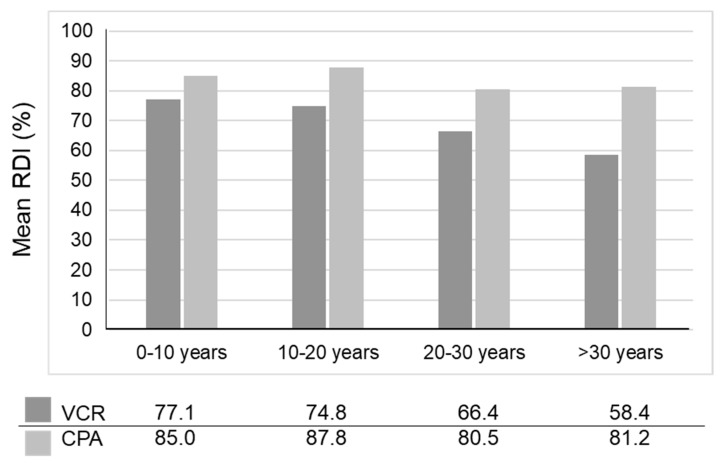
Rhabdomyosarcoma (RMS) is the most common form of soft tissue sarcoma in children, but can also develop in adolescents and young adults (AYA). The mainstay of treatment is multi-agent chemotherapy, ideally with concomitant local treatment, including surgical resection and/or radiation therapy. Although most treatment decisions for RMS in AYA are based on scientific evidence accumulated through clinical studies of pediatric RMS, treatment outcomes are significantly inferior in AYA patients than in children. Factors responsible for the significantly poor outcomes in AYA are tumor biology, the physiology specific to the age group concerned, refractoriness to multimodal treatments, and various psychosocial and medical care issues. The present review aims to examine the various issues involved in the treatment and care of AYA patients with RMS, discuss possible solutions, and provide an overview of the literature on the topic with several observations from the author's own experience. Clinical trials for RMS in AYA are the best way to develop an optimal treatment. However, a well-designed clinical trial requires a great deal of time and resources, especially when targeting such a rare population. Until clinical trials are designed and implemented, and their findings duly analyzed, we must provide the best possible practice for RMS treatment in AYA patients based on our own expertise in manipulating the dosage schedules of various chemotherapeutic agents and administering local treatments in a manner appropriate for each patient. Precision medicine based on state-of-the-art cancer genomics will also form an integral part of this personalized approach. In the current situation, the only way to realize such a holistic treatment approach is to integrate new developments and findings, such as gene-based diagnostics and treatments, with older, fundamental evidence that can be selectively applied to individual cases.
横纹肌肉瘤(RMS)是儿童软组织肉瘤最常见的形式,但也可发生于青少年和青年(AYA)。治疗的主要方法是多药化疗,理想情况下应同时进行局部治疗,包括手术切除和/或放射治疗。尽管AYA患者RMS的大多数治疗决策是基于小儿RMS临床研究积累的科学证据,但AYA患者的治疗结果明显比儿童差。AYA患者预后显著较差的因素包括肿瘤生物学、该年龄组特有的生理学、对多模式治疗的难治性以及各种心理社会和医疗护理问题。本综述旨在探讨AYA患者RMS治疗和护理中涉及的各种问题,讨论可能的解决方案,并结合作者自身经验的一些观察结果概述该主题的文献。针对AYA患者RMS的临床试验是制定最佳治疗方案的最佳途径。然而,精心设计的临床试验需要大量时间和资源,尤其是针对如此罕见的人群时。在设计和实施临床试验并对其结果进行适当分析之前,我们必须根据自己在调整各种化疗药物剂量方案和以适合每个患者的方式进行局部治疗方面的专业知识,为AYA患者的RMS治疗提供尽可能最佳的实践。基于最先进癌症基因组学的精准医学也将成为这种个性化方法的一个组成部分。在当前情况下,实现这种整体治疗方法的唯一途径是将基于基因的诊断和治疗等新进展和新发现与可选择性应用于个别病例的更古老的基础证据相结合。