Oregon Medical Research Center, Portland, OR, USA.
Icahn School of Medicine at Mount Sinai Medical Center, New York, NY, USA.
Am J Clin Dermatol. 2022 May;23(3):365-383. doi: 10.1007/s40257-022-00683-2. Epub 2022 May 14.
For adolescent patients (aged ≥ 12 to < 18 years) with uncontrolled moderate-to-severe atopic dermatitis (AD), 16 weeks of treatment with dupilumab resulted in substantial clinical benefit compared with placebo, with an acceptable safety profile. However, long-term data on the approved dose regimens of dupilumab in adolescents with AD are lacking.
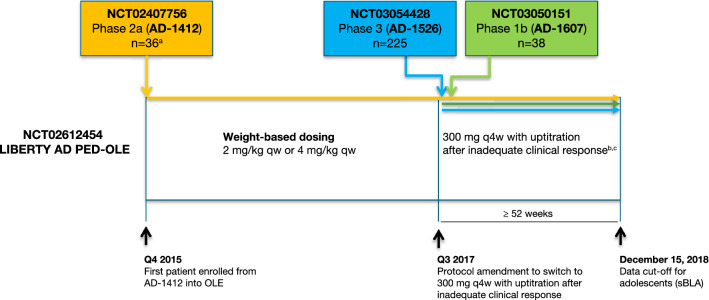
This open-label extension study (LIBERTY AD PED-OLE, NCT02612454) reports the long-term safety, efficacy, and pharmacokinetics of dupilumab in adolescents with moderate-to-severe AD who had participated in dupilumab parent trials.
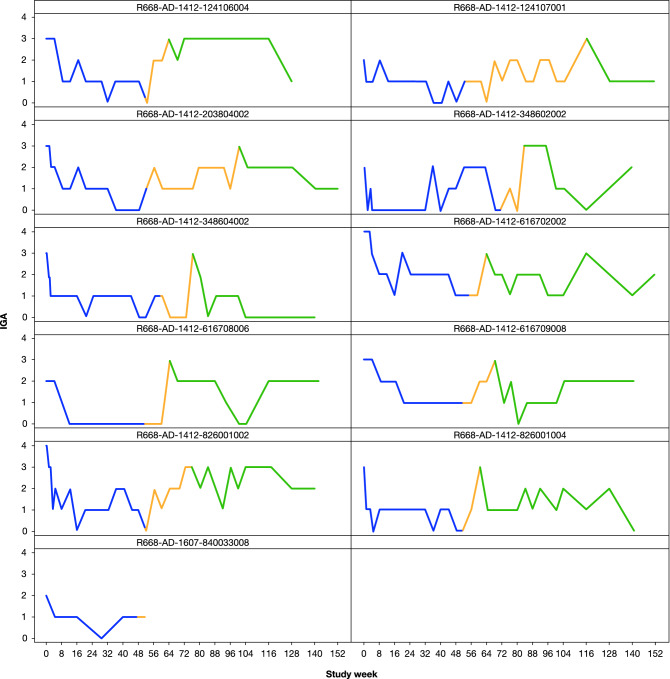
Patients enrolled under the original study protocol received subcutaneous dupilumab according to a weight-based regimen (2 or 4 mg/kg every week). Following protocol amendment, patients were switched to subcutaneous dupilumab 300 mg every 4 weeks (q4w) irrespective of weight, and newly enrolled patients were started on dupilumab 300 mg q4w. Patients with an inadequate clinical response (Investigator's Global Assessment [IGA] score of 0/1 was not reached) to the q4w regimen could be uptitrated to the approved dupilumab dose regimens of 200 or 300 mg every 2 weeks (body weight < 60 or ≥ 60 kg, respectively). Patients whose IGA score of 0/1 was maintained continuously for a 12-week period after week 40 were discontinued from dupilumab, monitored for relapse, and re-initiated on dupilumab if required.
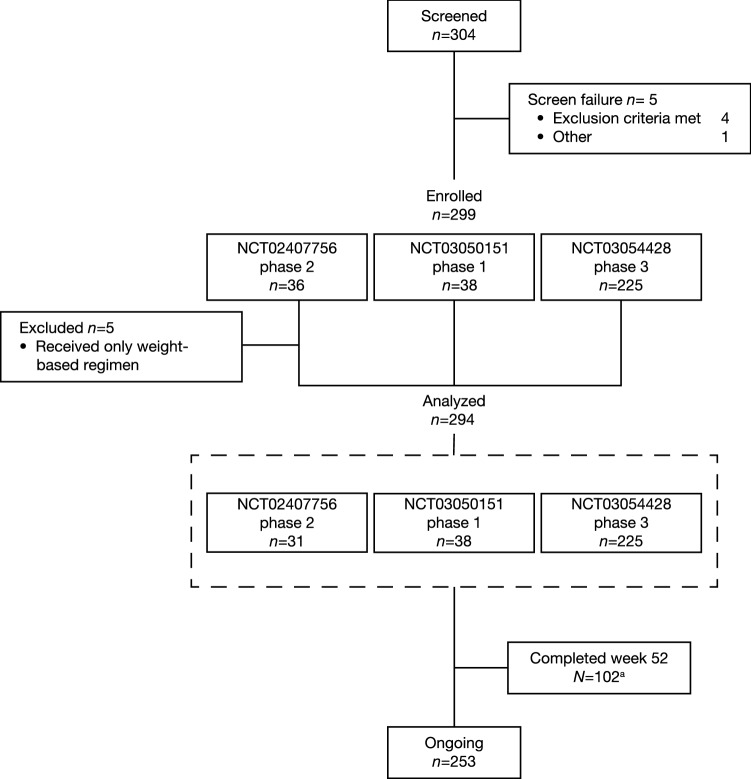
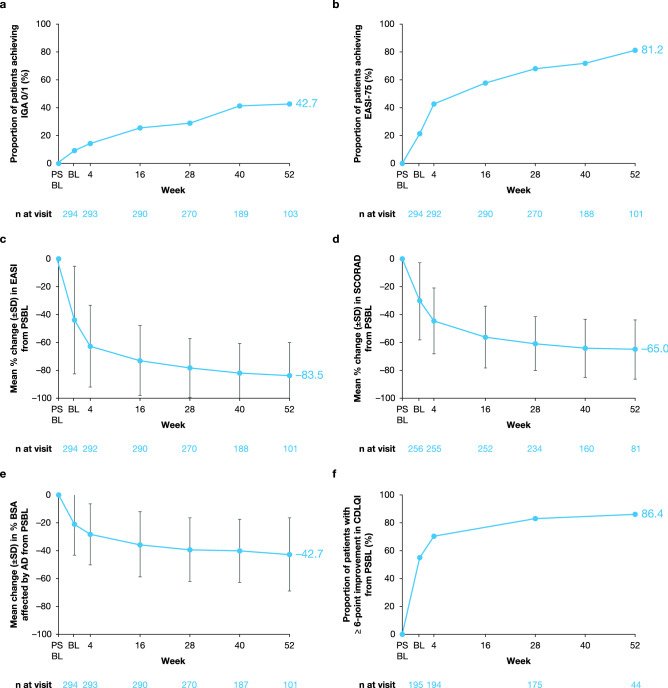
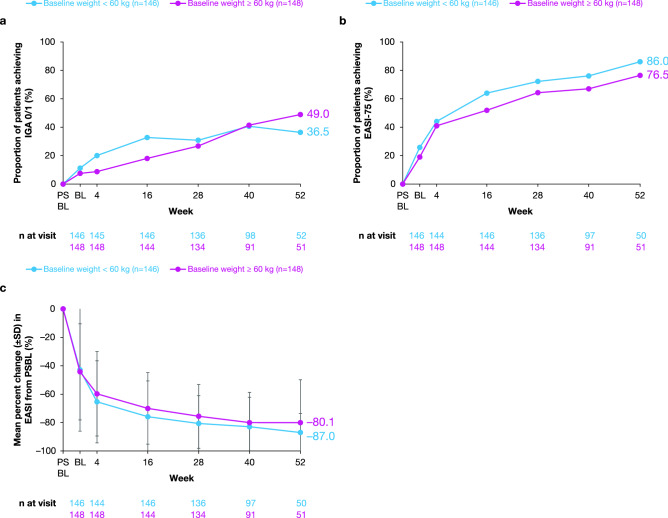
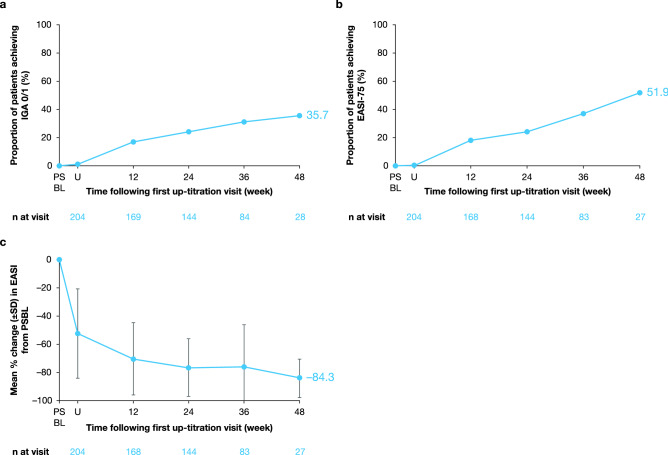
Data for 294 patients (mean age 14.7 years) were analyzed, 102 (34.7%) of whom had completed the 52-week visit at the database lock. The dupilumab long-term safety profile was comparable to that seen in adults and consistent with the known safety profile. Most treatment-emergent adverse events were mild/moderate. By week 52, 42.7% of patients had an IGA score of 0/1 (clear/almost clear), and 93.1%, 81.2%, and 56.4%, respectively, had at least a 50%, 75%, or 90% improvement in Eczema Area and Severity Index (EASI). Most (70.9%) patients required uptitration to the approved dupilumab dose regimen. The proportions of uptitrated patients with an IGA score of 0/1 or 75% improvement in EASI increased over time, reaching 35.7% and 51.9%, respectively, 48 weeks after the first uptitration visit. By week 52, 29.4% of patients had clear/almost clear skin sustained for 12 weeks and had stopped medication; 56.7% relapsed and were subsequently re-initiated on treatment, with a mean time to re-initiation of 17.5 (± standard deviation 17.3) weeks.
Consistent with results seen with short-term treatment, long-term treatment with dupilumab showed an acceptable safety profile while providing incremental clinical benefit with continued treatment over time. The high proportion of patients who needed uptitration because of inadequate response to q4w dosing supports the q2w dose regimen as optimal for this age group. Finally, the majority of patients who stopped medication after having clear/almost clear skin sustained over 12 weeks experienced disease recurrence, suggesting the need for continued dupilumab dosing to maintain efficacy.
ClinicalTrials.gov Identifiers: NCT02612454, NCT02407756, NCT03054428, and NCT03050151.
Video abstract: What is the long-term safety and efficacy profile in adolescents with moderate-to-severe atopic dermatitis treated with the approved dupilumab dose regimen? (MP4 40,966 KB).
对于未得到控制的中重度特应性皮炎(AD)青少年患者(年龄≥12 岁至<18 岁),与安慰剂相比,16 周的dupilumab 治疗可带来显著的临床获益,安全性状况可接受。然而,在青少年 AD 患者中批准剂量方案的长期数据仍然缺乏。
这项开放标签扩展研究(LIBERTY AD PED-OLE,NCT02612454)报告了中重度 AD 青少年患者在接受 dupilumab 双亲试验后,长期使用 dupilumab 的安全性、疗效和药代动力学。
根据体重为基础的方案(每 2 或 4mg/kg,每周一次),按原始研究方案入组的患者接受皮下注射 dupilumab。在方案修订后,患者被转换为每四周皮下注射 300mg dupilumab(q4w),无论体重如何,新入组的患者开始接受 dupilumab 300mg q4w。对于 q4w 方案应答不足的患者(研究者整体评估[IGA]评分 0/1 未达到),可以增加剂量至批准的 dupilumab 剂量方案,即每两周 200 或 300mg(体重<60 或≥60kg)。如果患者在第 40 周后连续 12 周 IGA 评分维持在 0/1,则停止使用 dupilumab,监测复发情况,如果需要,则重新开始使用 dupilumab。
对 294 名患者(平均年龄 14.7 岁)的数据进行了分析,其中 102 名(34.7%)患者在数据库锁定时完成了第 52 周的访视。dupilumab 的长期安全性与成人相似,与已知的安全性一致。大多数治疗时出现的不良事件为轻度/中度。到第 52 周时,42.7%的患者 IGA 评分达到 0/1(清除/几乎清除),93.1%、81.2%和 56.4%的患者分别有至少 50%、75%和 90%的改善,Eczema Area and Severity Index(EASI)。大多数(70.9%)患者需要增加剂量至批准的 dupilumab 剂量方案。随着时间的推移,IGA 评分达到 0/1 或 EASI 改善 75%的上调患者比例增加,在首次上调就诊后 48 周时分别达到 35.7%和 51.9%。到第 52 周时,29.4%的患者有 12 周的清除/几乎清除皮肤,并停止了药物治疗;56.7%的患者复发,随后重新开始治疗,重新开始治疗的平均时间为 17.5(±标准偏差 17.3)周。
与短期治疗结果一致,长期使用 dupilumab 显示出可接受的安全性,同时随着时间的推移提供了额外的临床获益。由于 q4w 剂量方案应答不足而需要增加剂量的患者比例很高,支持该年龄组使用 q2w 剂量方案。最后,大多数在有 12 周以上清除/几乎清除皮肤后停止药物治疗的患者都出现了疾病复发,这表明需要继续使用 dupilumab 来维持疗效。
ClinicalTrials.gov 标识符:NCT02612454、NCT02407756、NCT03054428 和 NCT03050151。
视频摘要:在接受批准的 dupilumab 剂量方案治疗的中重度特应性皮炎青少年患者中,长期安全性和疗效特征如何?(MP4 40,966KB)。