Osman Ahmed I, Fawzy Samer, Farghali Mohamed, El-Azazy Marwa, Elgarahy Ahmed M, Fahim Ramy Amer, Maksoud M I A Abdel, Ajlan Abbas Abdullah, Yousry Mahmoud, Saleem Yasmeen, Rooney David W
School of Chemistry and Chemical Engineering, Queen's University Belfast, David Keir Building, Stranmillis Road, Belfast, BT9 5AG Northern Ireland UK.
Graduate School of Animal and Food Hygiene, Obihiro University of Agriculture and Veterinary Medicine, Obihiro, Hokkaido 080-8555 Japan.
Environ Chem Lett. 2022;20(4):2385-2485. doi: 10.1007/s10311-022-01424-x. Epub 2022 May 7.
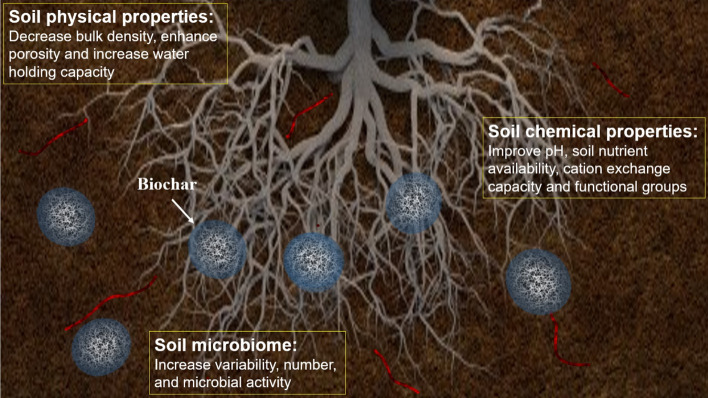
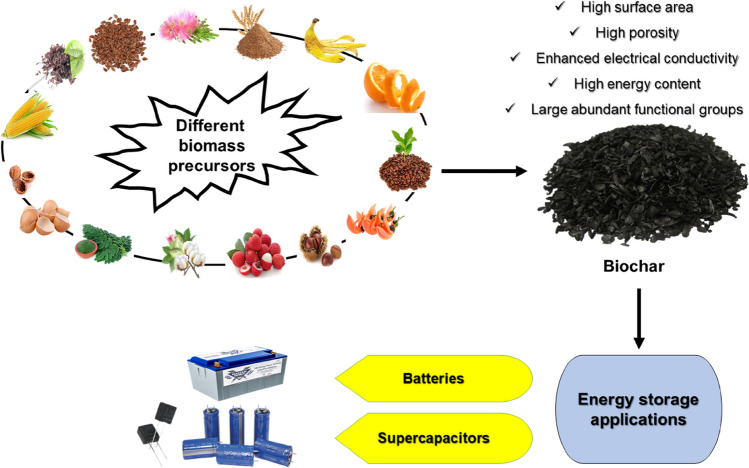
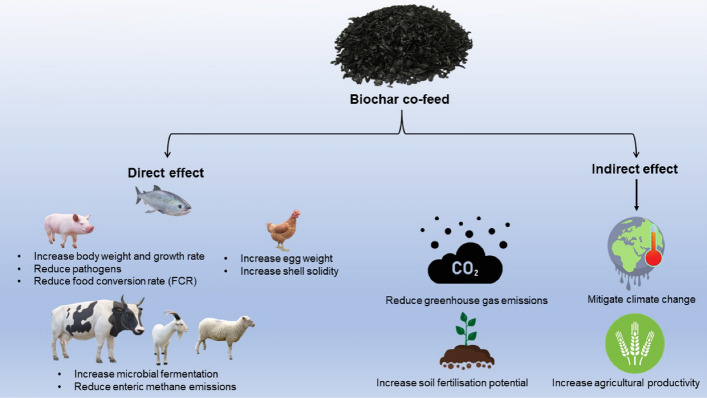
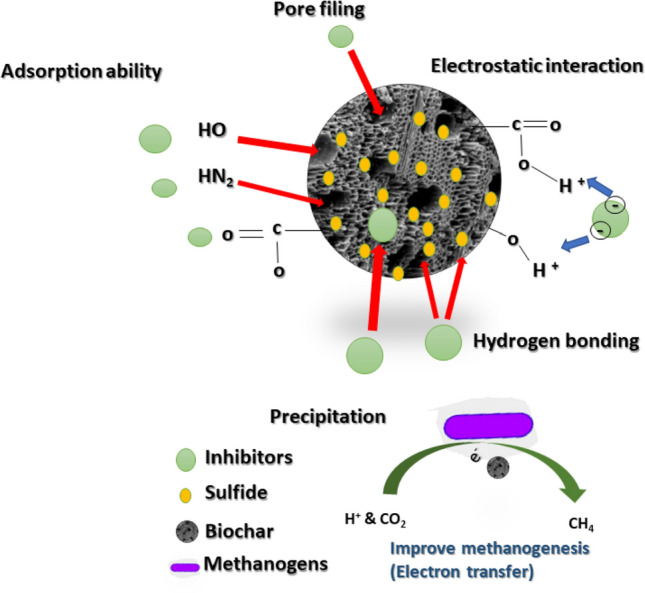
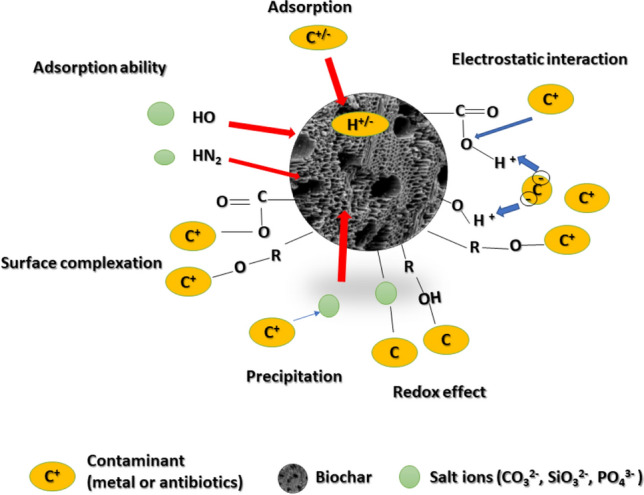
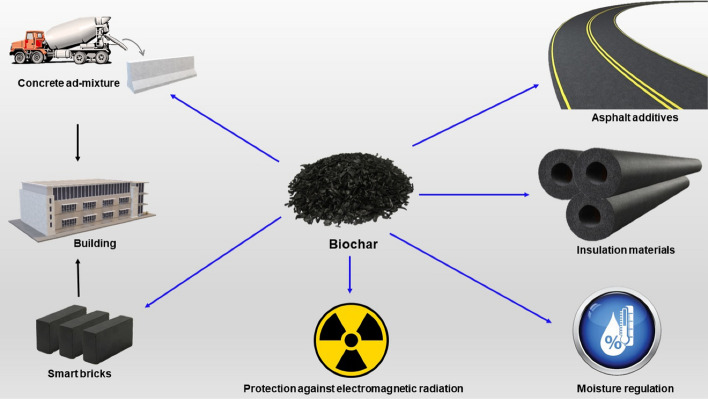
In the context of climate change and the circular economy, biochar has recently found many applications in various sectors as a versatile and recycled material. Here, we review application of biochar-based for carbon sink, covering agronomy, animal farming, anaerobic digestion, composting, environmental remediation, construction, and energy storage. The ultimate storage reservoirs for biochar are soils, civil infrastructure, and landfills. Biochar-based fertilisers, which combine traditional fertilisers with biochar as a nutrient carrier, are promising in agronomy. The use of biochar as a feed additive for animals shows benefits in terms of animal growth, gut microbiota, reduced enteric methane production, egg yield, and endo-toxicant mitigation. Biochar enhances anaerobic digestion operations, primarily for biogas generation and upgrading, performance and sustainability, and the mitigation of inhibitory impurities. In composts, biochar controls the release of greenhouse gases and enhances microbial activity. Co-composted biochar improves soil properties and enhances crop productivity. Pristine and engineered biochar can also be employed for water and soil remediation to remove pollutants. In construction, biochar can be added to cement or asphalt, thus conferring structural and functional advantages. Incorporating biochar in biocomposites improves insulation, electromagnetic radiation protection and moisture control. Finally, synthesising biochar-based materials for energy storage applications requires additional functionalisation.
在气候变化和循环经济的背景下,生物炭作为一种用途广泛的可回收材料,近年来在各个领域得到了广泛应用。在此,我们综述了基于生物炭的碳汇应用,涵盖农学、畜牧业、厌氧消化、堆肥、环境修复、建筑和储能等领域。生物炭的最终储存库是土壤、土木基础设施和垃圾填埋场。将传统肥料与生物炭作为养分载体相结合的生物炭基肥料在农学领域具有广阔前景。将生物炭用作动物饲料添加剂对动物生长、肠道微生物群、减少肠道甲烷排放、提高产蛋量以及减轻体内毒素等方面均有好处。生物炭可增强厌氧消化过程,主要用于提高沼气生产与升级、性能及可持续性,并减轻抑制性杂质的影响。在堆肥中,生物炭可控制温室气体排放并增强微生物活性。共混生物炭可改善土壤性质并提高作物生产力。原始生物炭和工程生物炭还可用于水和土壤修复以去除污染物。在建筑领域,生物炭可添加到水泥或沥青中,从而赋予结构和功能优势。将生物炭掺入生物复合材料可改善隔热、电磁辐射防护和湿度控制性能。最后,合成用于储能应用的生物炭基材料需要进行额外的功能化处理。