Martínez-Gómez Jesús, Atluri Tara A M, Rose Irving Jason, Holliday Aaliyah J, Strock Christopher F, Lynch Jonathan P, Miller William B, Stevenson Dennis Wm, Specht Chelsea D
Section of Plant Biology and the L.H. Bailey Hortorium, School of Integrative Plant Science, Cornell University, Ithaca, NY, United States.
Department of Plant Science, Pennsylvania State University, University Park, PA, United States.
Front Plant Sci. 2022 Apr 29;13:873505. doi: 10.3389/fpls.2022.873505. eCollection 2022.
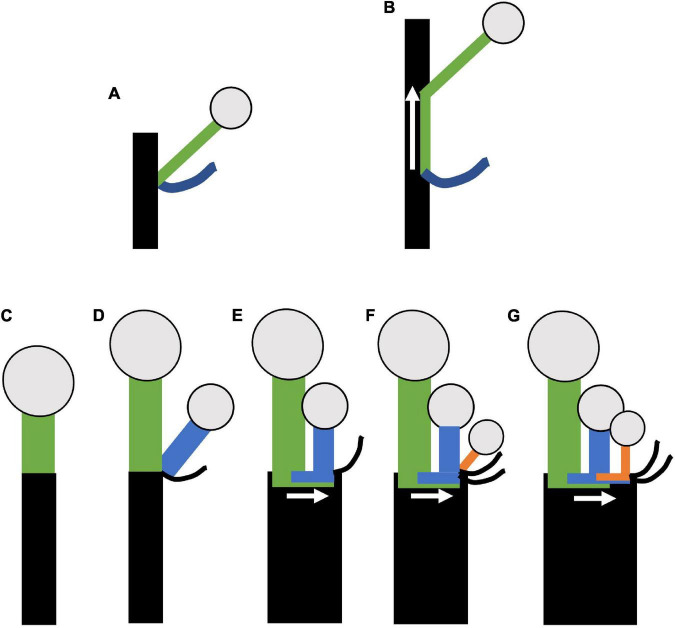
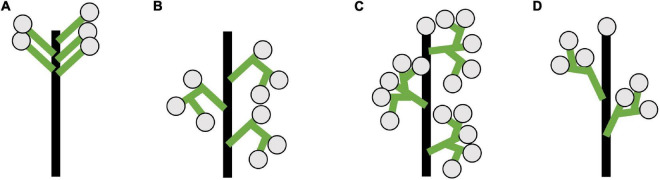
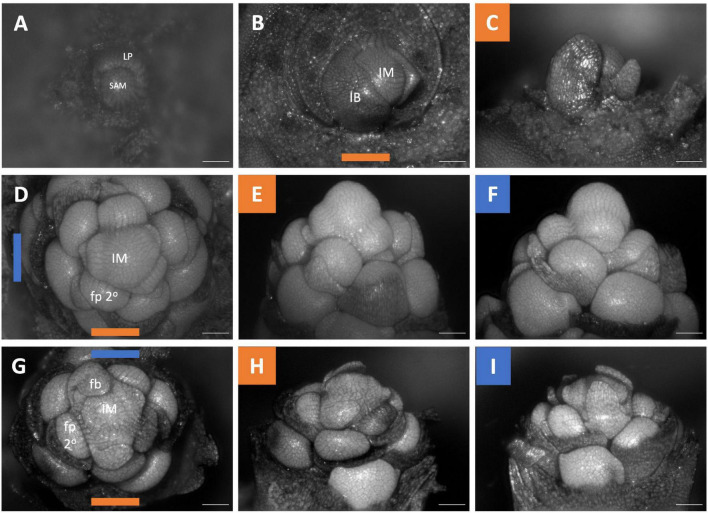
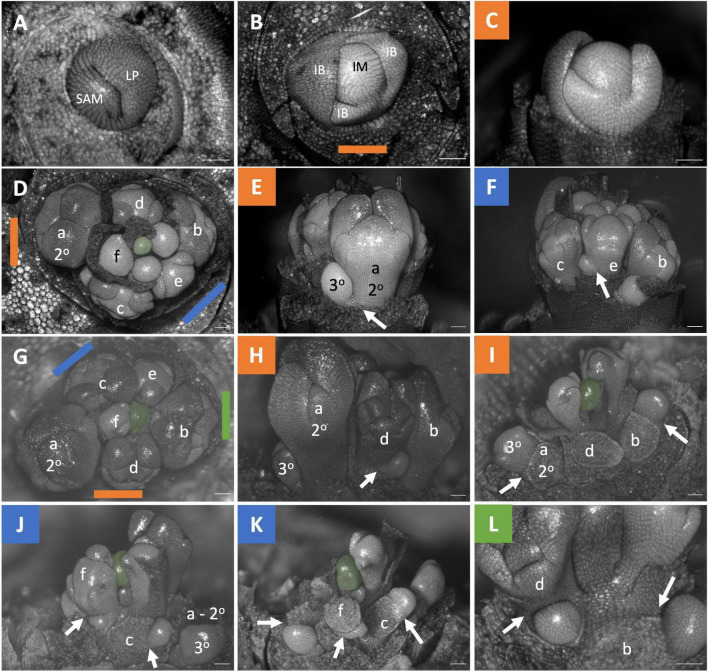
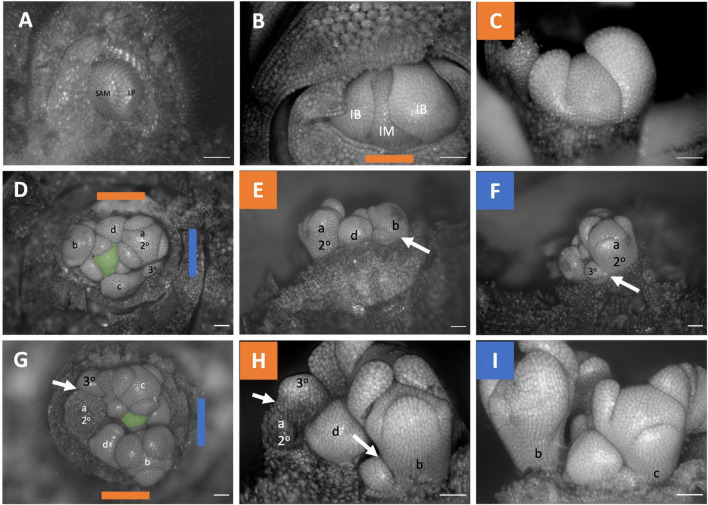
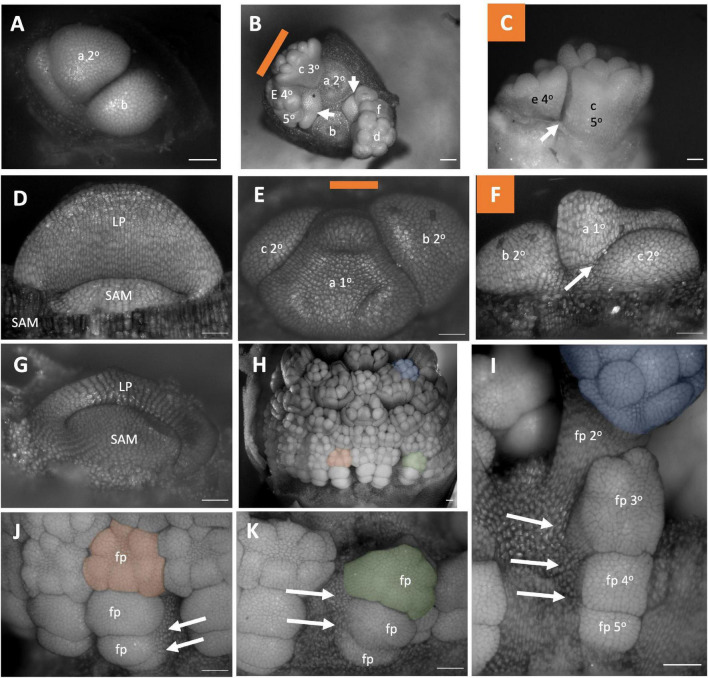
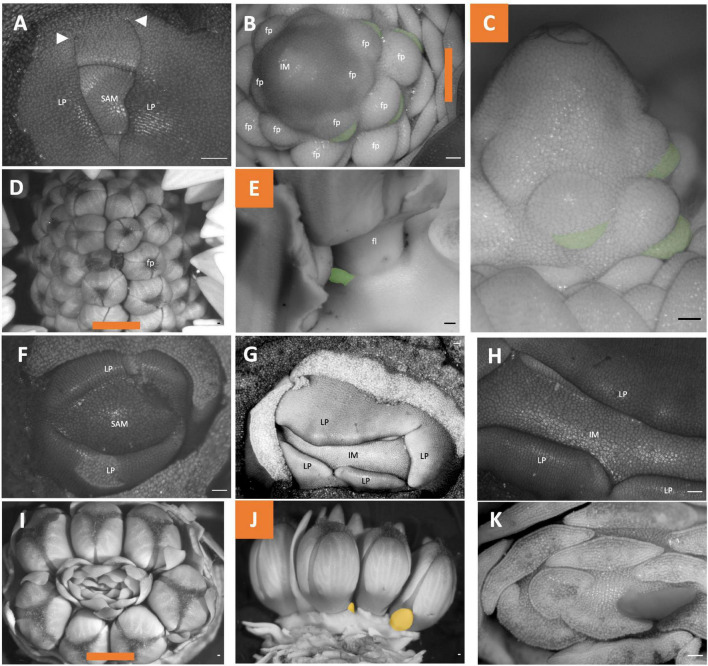
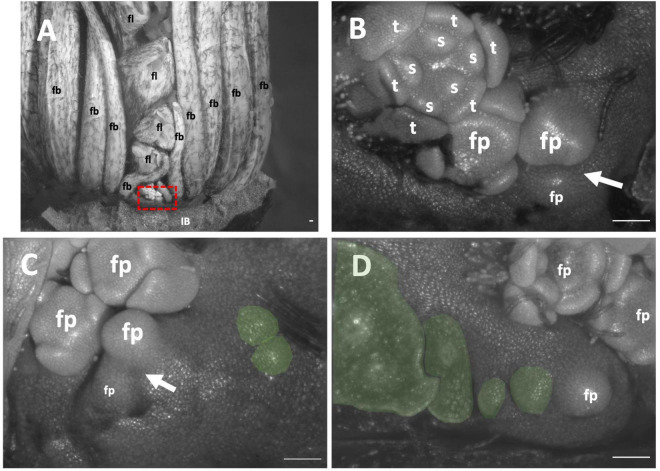
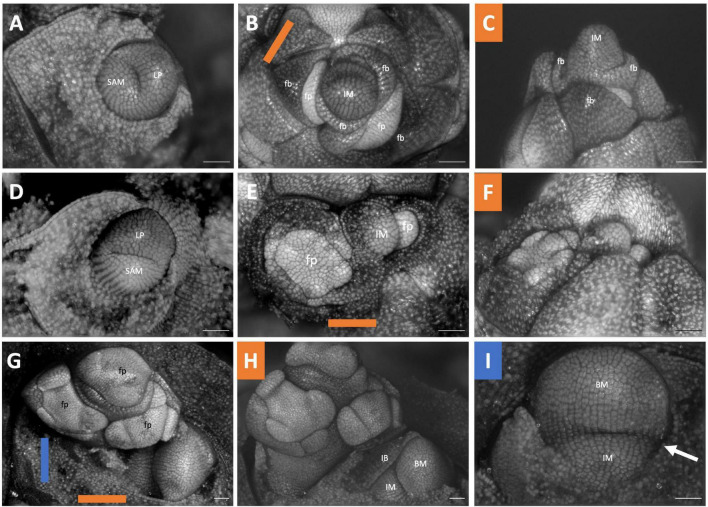
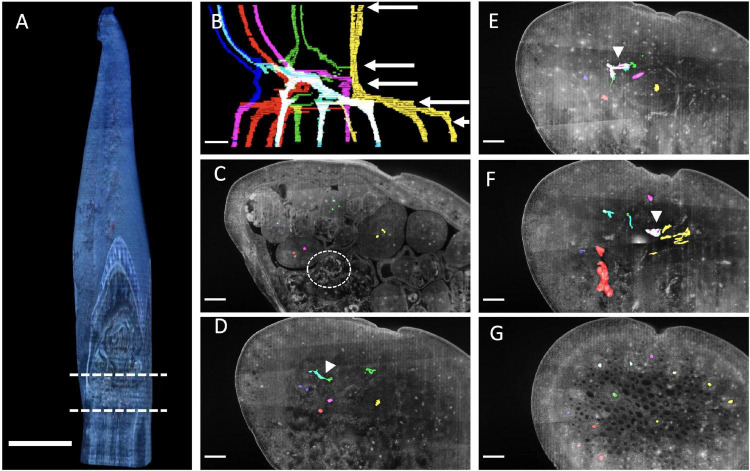
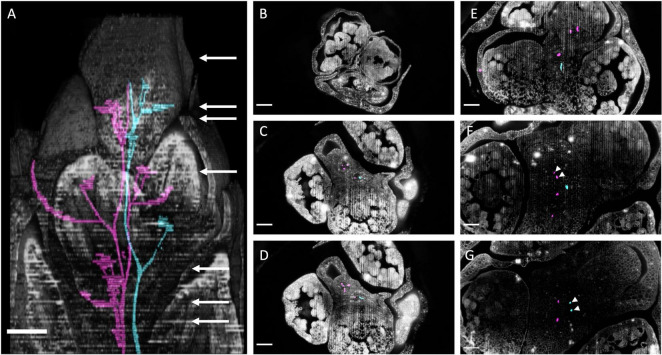
Inflorescence structure is very diverse and homoplasious, yet the developmental basis of their homoplasy is poorly understood. To gain an understanding of the degree of homology that these diverse structures share, we characterize the developmental morphology and anatomy of various umbellate inflorescences across the monocots and analyzed them in an evolutionary context. To characterize branching order, we characterized the developmental morphology of multiple inflorescences with epi-illumination, and vascular anatomy with Laser Ablation Tomography, a novel high-throughput method to reconstruct three-dimensional vasculature. We used these approaches to analyze the umbellate inflorescences in five instances of presumed homoplasy: in three members of the Amaryllidaceae; in three members of the Asparagaceae, including a putatively derived raceme in ; in (Alismataceae), in (Dioscoreaceae), and in umbellate structure in (Liliaceae). We compare these with racemes found in three members of the subfamily Scilliioideae (Asparagaceae). We find there are three convergent developmental programs that generate umbellate inflorescences in the monocots, bostryx-derived, cincinnus-derived and raceme-derived. Additionally, among the bostryx-derived umbellate inflorescence, there are three instances of parallel evolution found in the Amaryllidaceae, in two members of Brodiaeoideae (Asparagaceae), and , all of which share the same generative developmental program. We discuss the morphological modifications necessary to generate such complex and condensed structures and use these insights to describe a new variant of metatopy, termed horizontal concaulesence. We contextualize our findings within the broader literature of monocot inflorescence development, with a focus on synthesizing descriptive developmental morphological studies.
花序结构非常多样且具有同功性,但其同功性的发育基础却知之甚少。为了了解这些多样结构所共有的同源程度,我们对单子叶植物中各种伞状花序的发育形态和解剖结构进行了表征,并在进化背景下对其进行了分析。为了表征分支顺序,我们用落射照明法表征了多个花序的发育形态,并用激光消融断层扫描技术表征了维管解剖结构,这是一种用于重建三维脉管系统的新型高通量方法。我们使用这些方法分析了五个假定同功性实例中的伞状花序:在石蒜科的三个成员中;在天门冬科的三个成员中,包括一种假定的衍生总状花序;在泽泻科的中;在薯蓣科的中;以及在百合科的伞状结构中。我们将这些与绵枣儿亚科(天门冬科)三个成员中的总状花序进行了比较。我们发现有三种趋同的发育程序可在单子叶植物中产生伞状花序,即蝎尾状聚伞花序衍生型、单歧聚伞花序衍生型和总状花序衍生型。此外,在蝎尾状聚伞花序衍生的伞状花序中,在石蒜科、锦葵科(天门冬科)的两个成员以及中发现了三个平行进化的实例,它们都共享相同的生殖发育程序。我们讨论了产生这种复杂且密集结构所需的形态学修饰,并利用这些见解描述了一种新的后生变体,称为水平茎合生。我们将我们的研究结果置于单子叶植物花序发育的更广泛文献背景中,重点是综合描述性发育形态学研究。