Zirnstein E J, Möbius E, Zhang M, Bower J, Elliott H A, McComas D J, Pogorelov N V, Swaczyna P
Department of Astrophysical Sciences, Princeton University, Princeton, NJ 08544 USA.
Space Science Center and Department of Physics, University of New Hampshire, Durham, NH 03824 USA.
Space Sci Rev. 2022;218(4):28. doi: 10.1007/s11214-022-00895-2. Epub 2022 May 9.
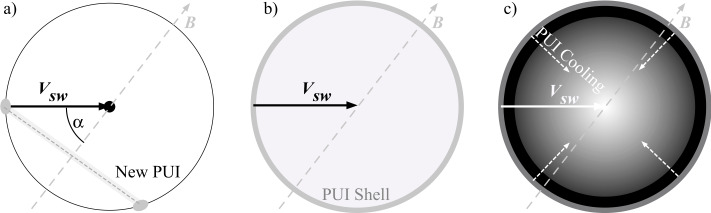
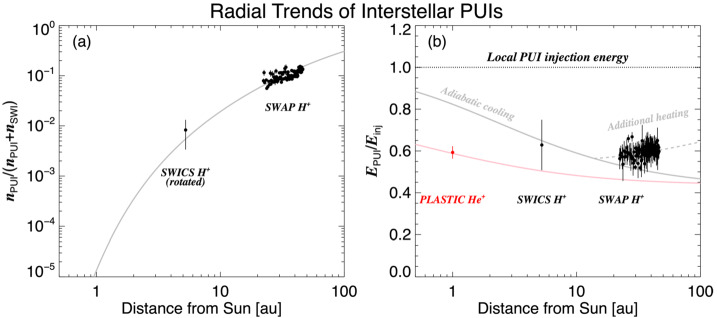
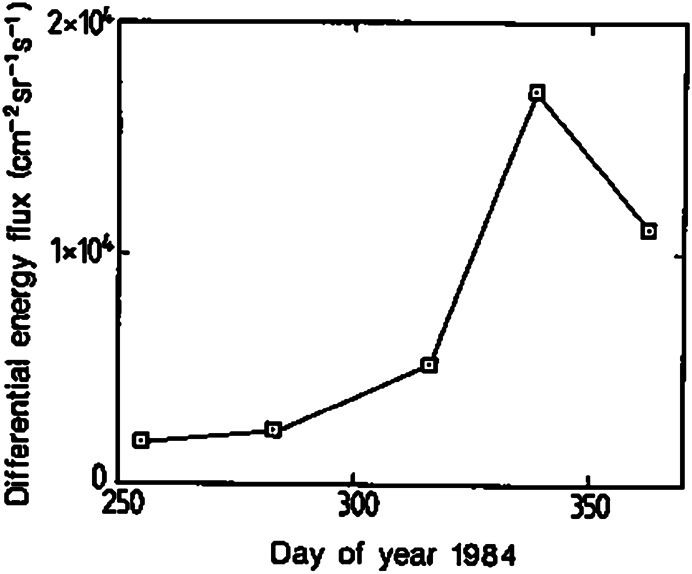
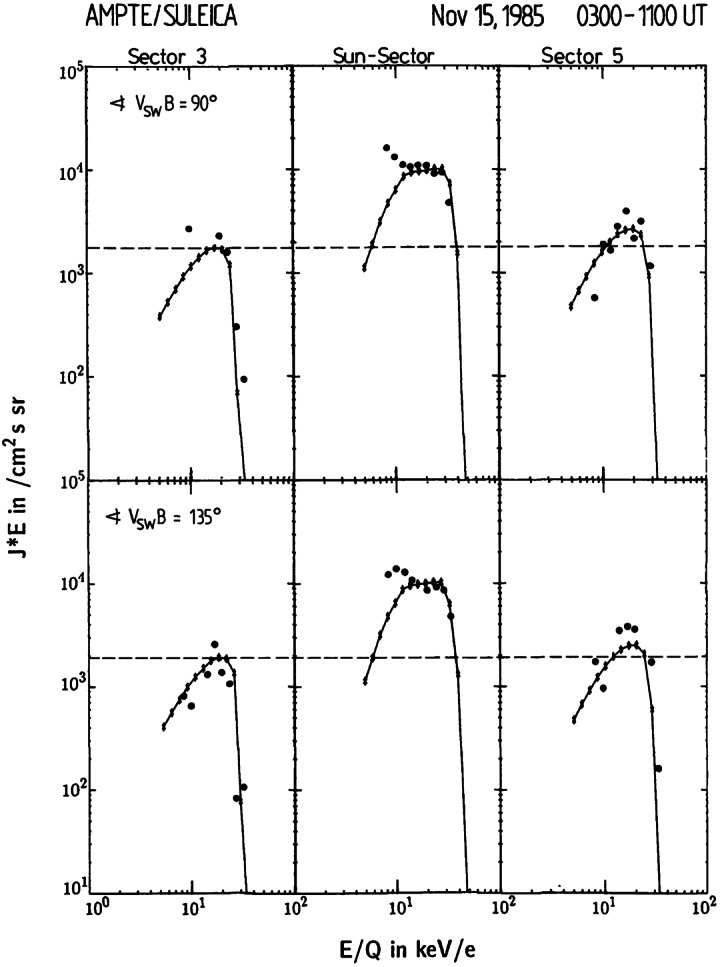
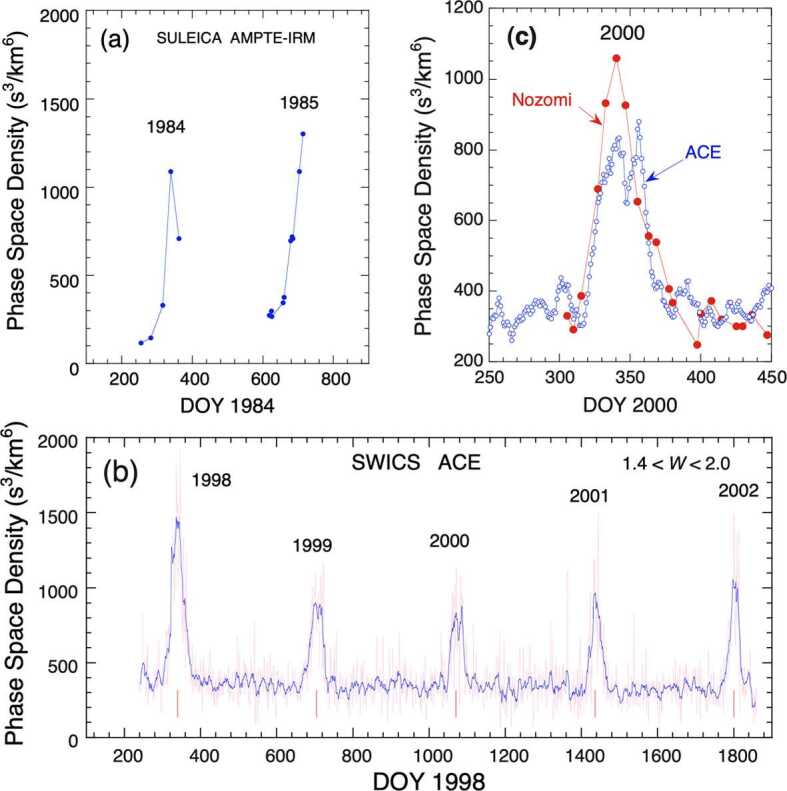
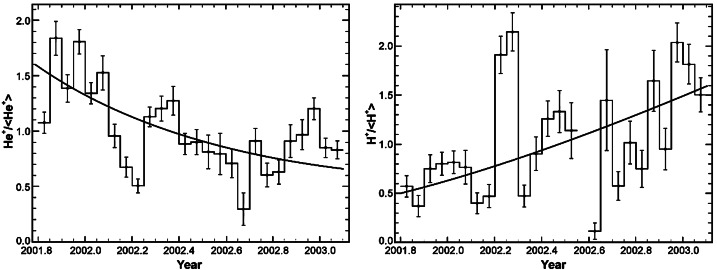
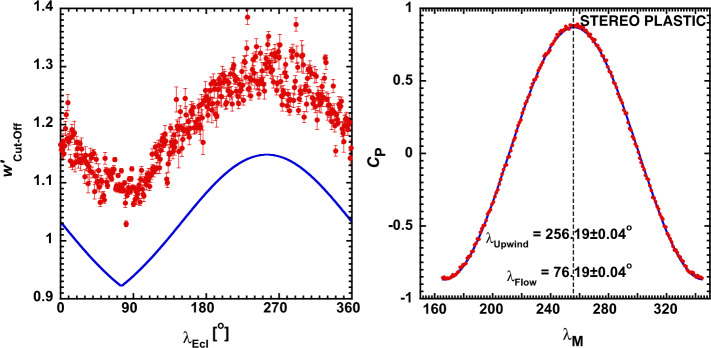
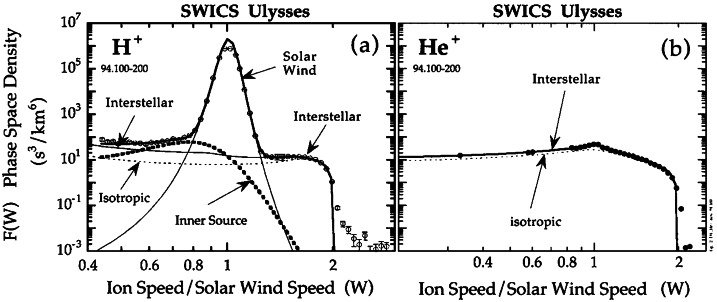
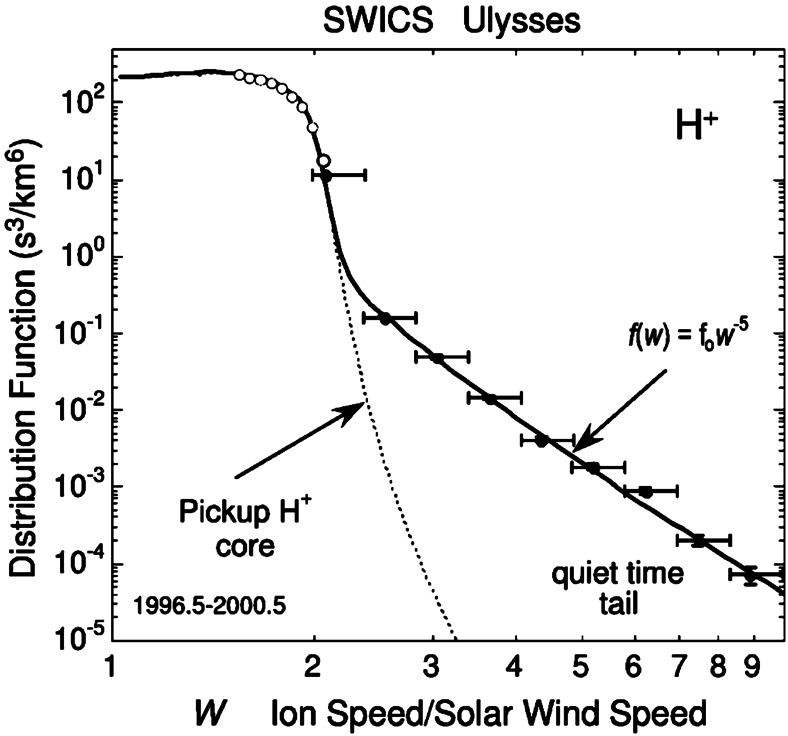
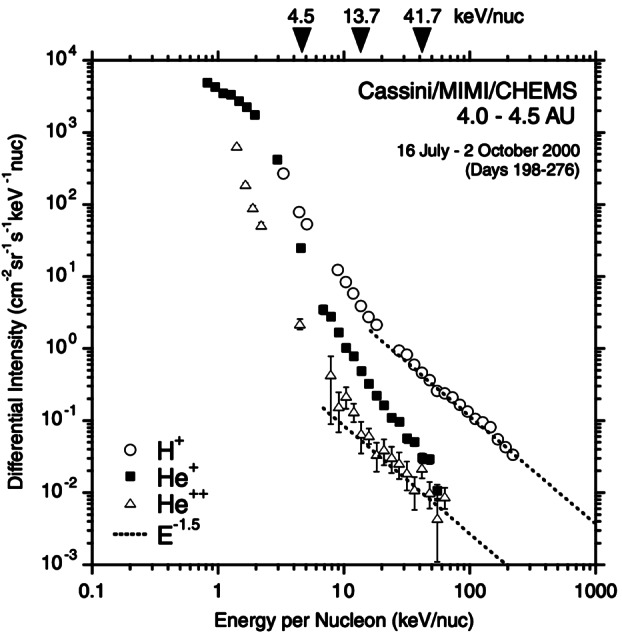
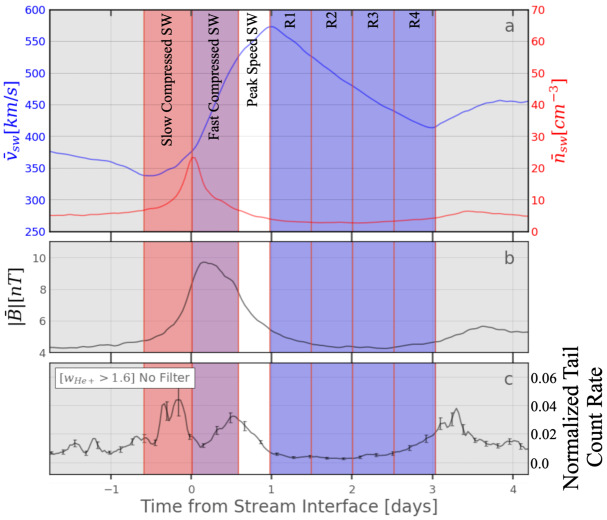
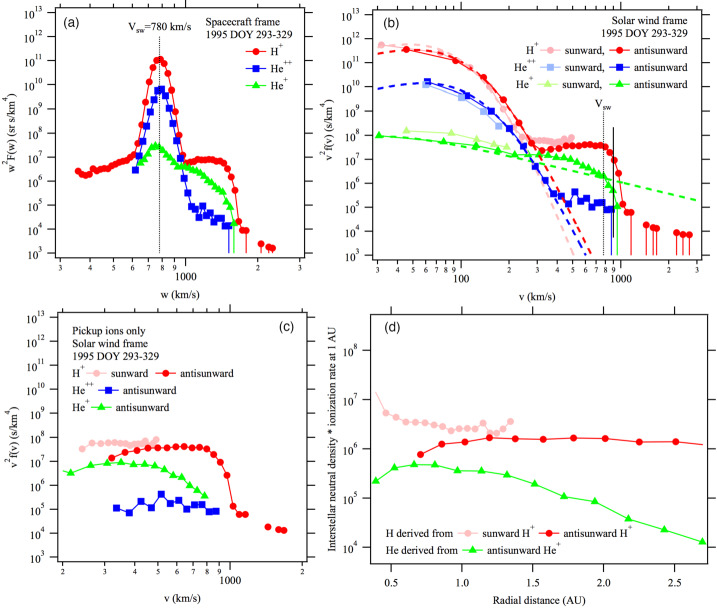
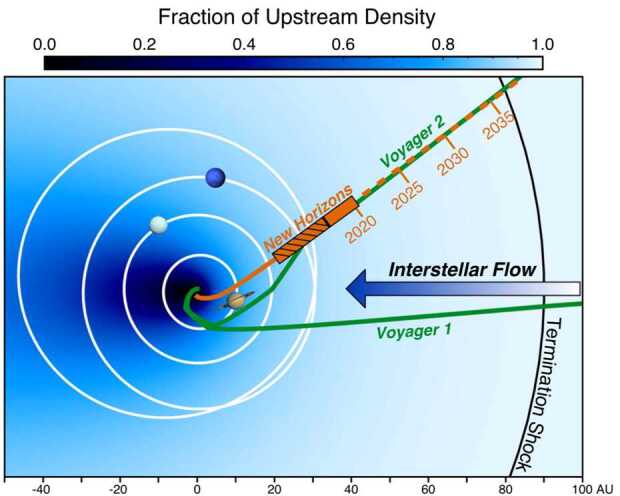
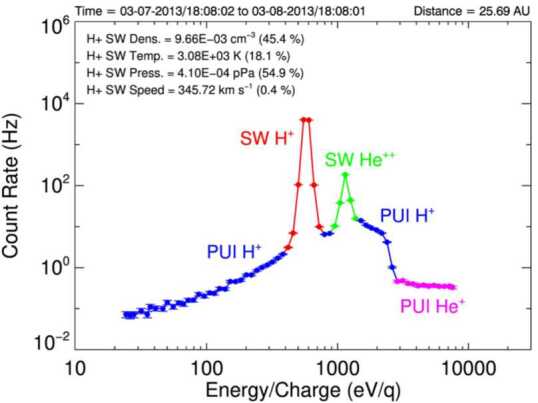
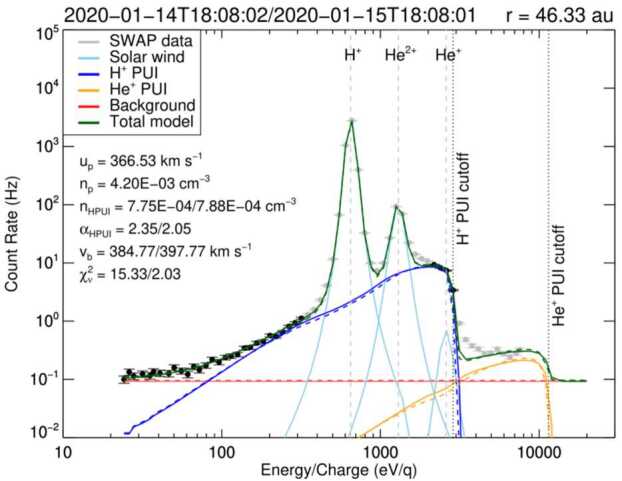
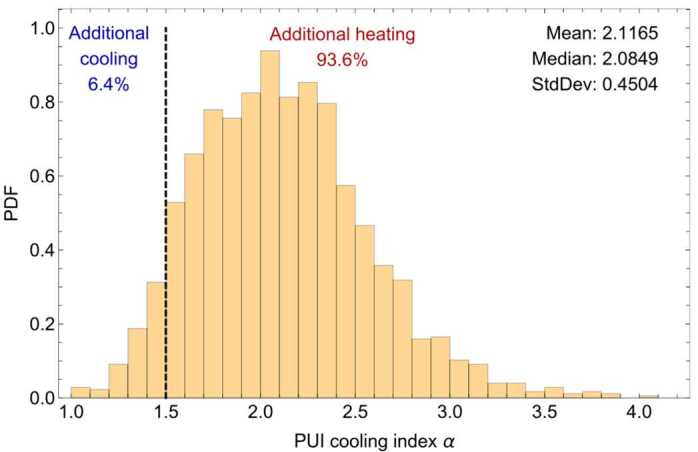
Interstellar pickup ions are an ubiquitous and thermodynamically important component of the solar wind plasma in the heliosphere. These PUIs are born from the ionization of the interstellar neutral gas, consisting of hydrogen, helium, and trace amounts of heavier elements, in the solar wind as the heliosphere moves through the local interstellar medium. As cold interstellar neutral atoms become ionized, they form an energetic ring beam distribution comoving with the solar wind. Subsequent scattering in pitch angle by intrinsic and self-generated turbulence and their advection with the radially expanding solar wind leads to the formation of a filled-shell PUI distribution, whose density and pressure relative to the thermal solar wind ions grows with distance from the Sun. This paper reviews the history of in situ measurements of interstellar PUIs in the heliosphere. Starting with the first detection in the 1980s, interstellar PUIs were identified by their highly nonthermal distribution with a cutoff at twice the solar wind speed. Measurements of the PUI distribution shell cutoff and the He focusing cone, a downwind region of increased density formed by the solar gravity, have helped characterize the properties of the interstellar gas from near-Earth vantage points. The preferential heating of interstellar PUIs compared to the core solar wind has become evident in the existence of suprathermal PUI tails, the nonadiabatic cooling index of the PUI distribution, and PUIs' mediation of interplanetary shocks. Unlike the Voyager and Pioneer spacecraft, New Horizon's Solar Wind Around Pluto (SWAP) instrument is taking the only direct measurements of interstellar PUIs in the outer heliosphere, currently out to from the Sun or halfway to the heliospheric termination shock.
星际拾取离子是日球层中太阳风等离子体普遍存在且在热力学上具有重要意义的组成部分。这些拾取离子源于星际中性气体的电离,星际中性气体由氢、氦以及微量的较重元素组成,当日球层穿过本地星际介质时,它们在太阳风中被电离。随着冷的星际中性原子被电离,它们形成了与太阳风一起共移的高能环形束分布。随后,由于固有湍流和自生湍流导致的俯仰角散射以及它们随径向扩展的太阳风的平流,导致形成了填充壳拾取离子分布,其相对于热太阳风离子的密度和压力随着与太阳距离的增加而增大。本文回顾了日球层中星际拾取离子的原位测量历史。从20世纪80年代首次探测开始,星际拾取离子通过其高度非热分布以及在太阳风速度两倍处的截止值被识别出来。对拾取离子分布壳截止值和氦聚焦锥(由太阳引力形成的密度增加的顺风区域)的测量,有助于从近地有利位置表征星际气体的特性。与核心太阳风相比,星际拾取离子的优先加热在超热拾取离子尾部的存在、拾取离子分布的非绝热冷却指数以及拾取离子对行星际激波的介导中变得明显。与旅行者号和先驱者号航天器不同,新视野号的冥王星周围太阳风(SWAP)仪器正在对外日球层中的星际拾取离子进行唯一的直接测量,目前距离太阳 ,或距离日球层终端激波的一半距离。 (原文中“currently out to from the Sun or halfway to the heliospheric termination shock.”部分缺失具体数值)