National Institute of Hygiene and Epidemiology, 1 Yersin Street, Hai Ba Trung District, Hanoi, Viet Nam.
Hanoi Medical University, 1 Ton That Tung Street, Dong Da District, Hanoi, Viet Nam.
Vaccine. 2022 Jun 9;40(26):3621-3632. doi: 10.1016/j.vaccine.2022.04.078. Epub 2022 May 14.
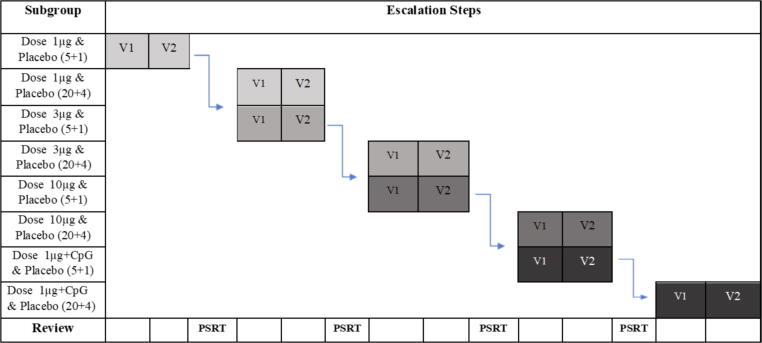
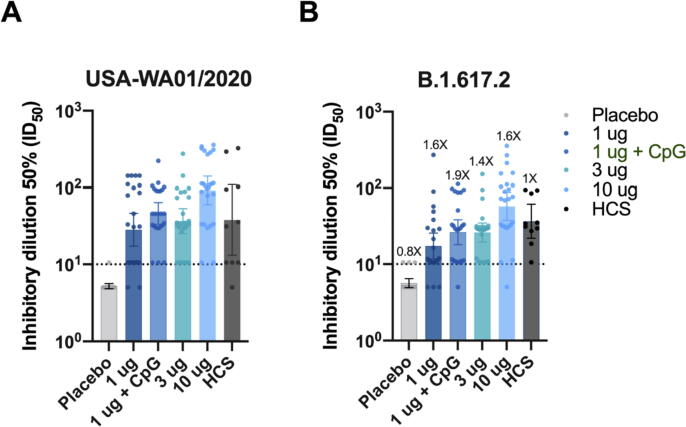
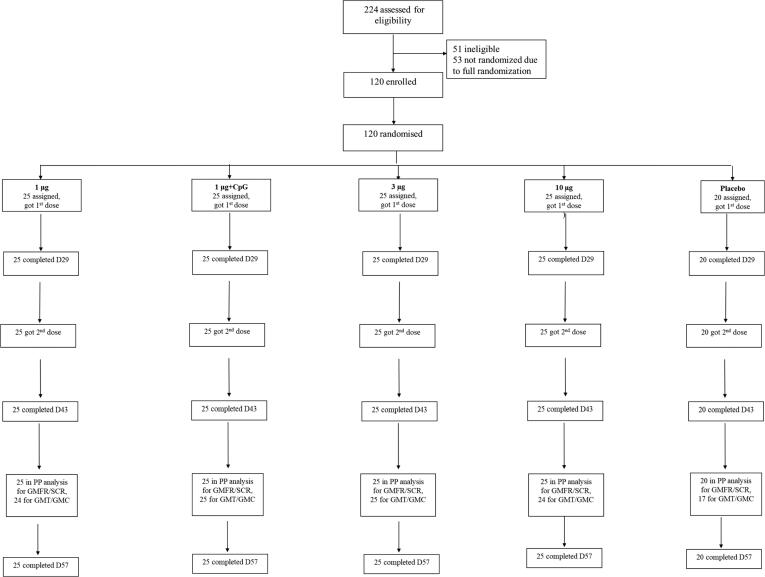
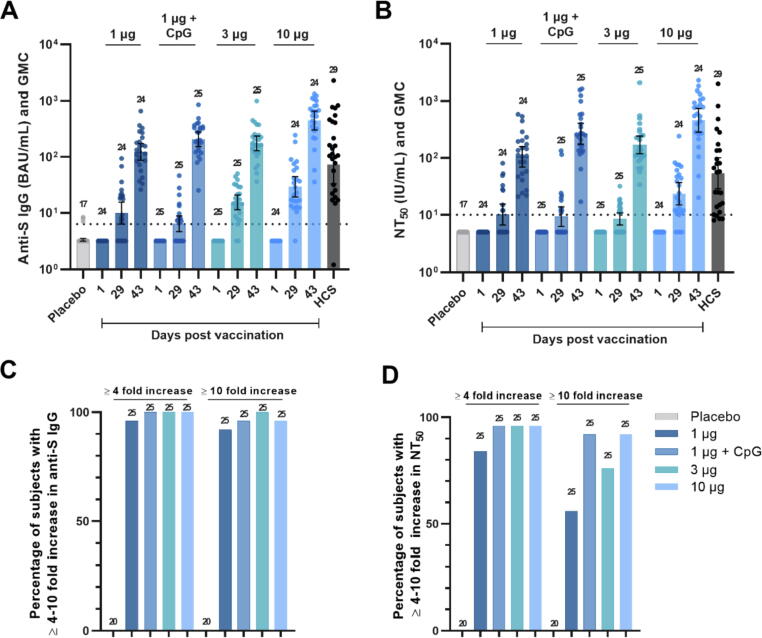
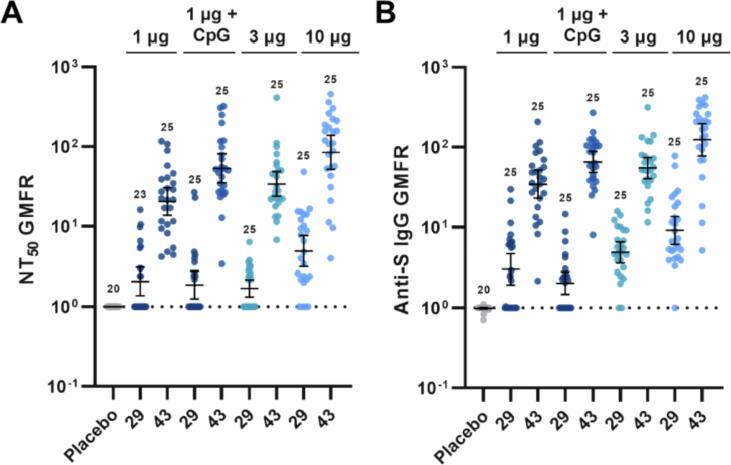
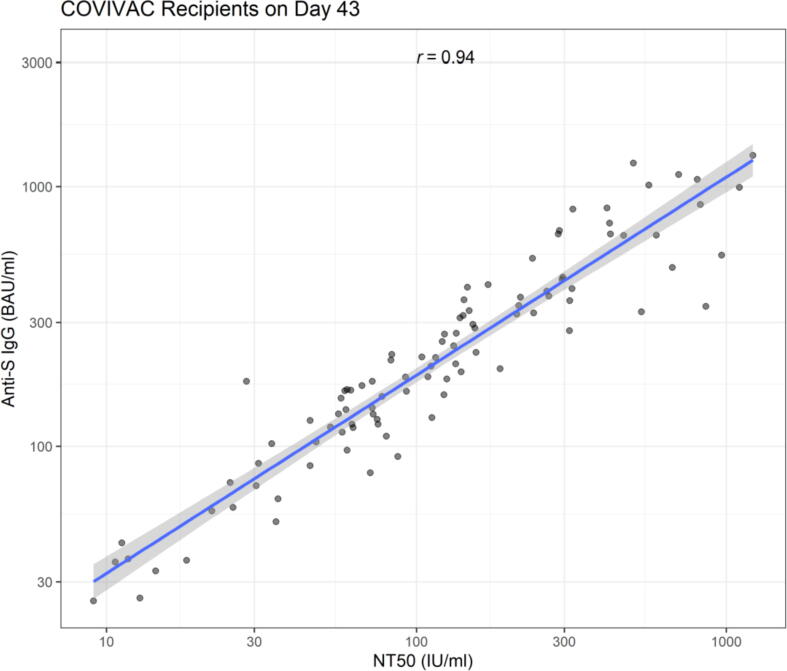
Production of affordable coronavirus disease 2019 (COVID-19) vaccines in low- and middle-income countries is needed. NDV-HXP-S is an inactivated egg-based Newcastle disease virus (NDV) vaccine expressing the spike protein of severe acute respiratory syndrome coronavirus 2 (SARS-CoV-2) Wuhan-Hu-1. The spike protein was stabilized and incorporated into NDV virions by removing the polybasic furin cleavage site, introducing the transmembrane domain and cytoplasmic tail of the fusion protein of NDV, and introducing six prolines for stabilization in the prefusion state. Vaccine production and clinical development was initiated in Vietnam, Thailand, and Brazil. Here the interim results from the first stage of the randomized, dose-escalation, observer-blind, placebo-controlled, phase 1/2 trial conducted at the Hanoi Medical University (Vietnam) are presented. Healthy adults aged 18-59 years, non-pregnant, and with self-reported negative history for SARS-CoV-2 infection were eligible. Participants were randomized to receive one of five treatments by intramuscular injection twice, 28 days apart: 1 μg +/- CpG1018 (a toll-like receptor 9 agonist), 3 μg alone, 10 μg alone, or placebo. Participants and personnel assessing outcomes were masked to treatment. The primary outcomes were solicited adverse events (AEs) during 7 days and subject-reported AEs during 28 days after each vaccination. Investigators further reviewed subject-reported AEs. Secondary outcomes were immunogenicity measures (anti-spike immunoglobulin G [IgG] and pseudotyped virus neutralization). This interim analysis assessed safety 56 days after first vaccination (day 57) in treatment-exposed individuals and immunogenicity through 14 days after second vaccination (day 43) per protocol. Between March 15 and April 23, 2021, 224 individuals were screened and 120 were enrolled (25 per group for active vaccination and 20 for placebo). All subjects received two doses. The most common solicited AEs among those receiving active vaccine or placebo were all predominantly mild and included injection site pain or tenderness (<58%), fatigue or malaise (<22%), headache (<21%), and myalgia (<14%). No higher proportion of the solicited AEs were observed for any group of active vaccine. The proportion reporting vaccine-related AEs during the 28 days after either vaccination ranged from 4% to 8% among vaccine groups and was 5% in controls. No vaccine-related serious adverse event occurred. The immune response in the 10 μg formulation group was highest, followed by 1 μg + CpG1018, 3 μg, and 1 μg formulations. Fourteen days after the second vaccination, the geometric mean concentrations (GMC) of 50% neutralizing antibody against the homologous Wuhan-Hu-1 pseudovirus ranged from 56.07 IU/mL (1 μg, 95% CI 37.01, 84.94) to 246.19 IU/mL (10 μg, 95% CI 151.97, 398.82), with 84% to 96% of vaccine groups attaining a ≥ 4-fold increase over baseline. This was compared to a panel of human convalescent sera (N = 29, 72.93 95% CI 33.00-161.14). Live virus neutralization to the B.1.617.2 (Delta) variant of concern was reduced but in line with observations for vaccines currently in use. Since the adjuvant has shown modest benefit, GMC ratio of 2.56 (95% CI, 1.4-4.6) for 1 μg +/- CpG1018, a decision was made not to continue studying it with this vaccine. NDV-HXP-S had an acceptable safety profile and potent immunogenicity. The 3 μg dose was advanced to phase 2 along with a 6 μg dose. The 10 μg dose was not selected for evaluation in phase 2 due to potential impact on manufacturing capacity. ClinicalTrials.gov NCT04830800.
需要在中低收入国家生产负担得起的 2019 年冠状病毒病(COVID-19)疫苗。NDV-HXP-S 是一种基于鸡蛋的已灭活的新城疫病毒(NDV)疫苗,表达严重急性呼吸综合征冠状病毒 2(SARS-CoV-2)武汉-Hu-1 的刺突蛋白。通过去除多碱性弗林裂解位点、引入 NDV 融合蛋白的跨膜结构域和细胞质尾巴以及引入 6 个脯氨酸以在预融合状态下稳定,稳定并将刺突蛋白掺入 NDV 病毒粒子中。疫苗的生产和临床开发始于越南、泰国和巴西。在这里,介绍了在河内医科大学(越南)进行的随机、剂量递增、观察者盲法、安慰剂对照、1/2 期临床试验的第一阶段的中期结果。年龄在 18-59 岁之间、非孕妇且自我报告 SARS-CoV-2 感染史阴性的健康成年人有资格参加。参与者通过肌肉注射分为五组,每 28 天接受两次治疗:1μg +/- CpG1018(一种 Toll 样受体 9 激动剂)、3μg 单独、10μg 单独或安慰剂。参与者和评估结果的人员对治疗情况进行了盲法。主要结局是接种后 7 天内出现的不良事件(AE)和接种后 28 天内出现的不良事件(AE)。研究人员进一步审查了不良事件报告。次要结局是免疫原性测量(抗刺突免疫球蛋白 G[IgG]和假型病毒中和)。这项中期分析评估了首次接种后 56 天(第 57 天)的安全性,以及按方案在第二次接种后 14 天(第 43 天)的免疫原性。2021 年 3 月 15 日至 4 月 23 日,筛选了 224 名参与者,120 名入选(每组 25 名接受主动疫苗接种,20 名接受安慰剂)。所有参与者均接受了两剂疫苗。接种主动疫苗或安慰剂的人中最常见的不良事件是注射部位疼痛或压痛(<58%)、疲劳或不适(<22%)、头痛(<21%)和肌痛(<14%)。任何一组主动疫苗的不良事件发生率都没有更高。在接种后 28 天内报告与疫苗相关的不良事件的比例在疫苗组中为 4%至 8%,在对照组中为 5%。没有发生与疫苗相关的严重不良事件。在 10μg 制剂组中,免疫反应最高,其次是 1μg+CpG1018、3μg 和 1μg 制剂。第二次接种后 14 天,同源武汉-Hu-1 假病毒的 50%中和抗体几何平均浓度(GMC)范围为 56.07 IU/mL(1μg,95%CI 37.01,84.94)至 246.19 IU/mL(10μg,95%CI 151.97,398.82),84%至 96%的疫苗组与基线相比有≥4 倍的增加。与一组人类恢复期血清(N=29,72.93 95%CI 33.00-161.14)相比,这一结果与之相比。对关注的 B.1.617.2(Delta)变异株的活病毒中和作用降低,但与目前使用的疫苗的观察结果一致。由于佐剂具有适度的益处,因此 1μg +/- CpG1018 的 GMC 比值为 2.56(95%CI,1.4-4.6),决定不再继续使用该疫苗进行研究。NDV-HXP-S 具有良好的安全性和强大的免疫原性。3μg 剂量与 6μg 剂量一起进入 2 期。由于可能对制造能力产生影响,因此未选择 10μg 剂量进行 2 期评估。ClinicalTrials.gov NCT04830800。