Murashita Mone, Wada Norio, Baba Shuhei, Sugawara Hajime, Miyoshi Arina, Obara Shinji
Department of Diabetes and Endocrinology, Sapporo City General Hospital, Sapporo, Japan.
Endocrinol Diabetes Metab Case Rep. 2022 May 1;2022. doi: 10.1530/EDM-22-0236.
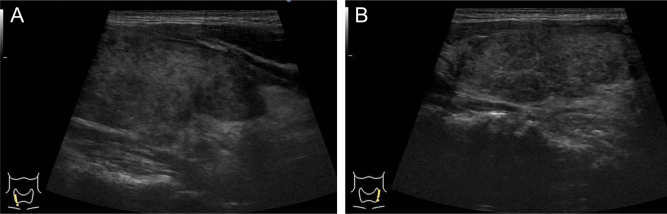
We report a 26-year-old Japanese man who visited our outpatient clinic presenting fever immediately after i.m. injection of the second dose of a coronavirus disease 2019 (COVID-19) vaccine (Moderna®). At the first visit, the patient had a fever of 37.7°C and a swollen thyroid gland with mild tenderness. He was diagnosed with subacute thyroiditis (SAT) based on the presence of thyrotoxicosis (free tri-iodothyronine, 32.3 pg/mL; free thyroxine, >7.77 ng/dL; and thyroid-stimulating hormone (TSH) < 0.01 μIU/mL), high C-reactive protein level (7.40 mg/dL), negative TSH receptor antibody, and characteristic ultrasound findings. His HLA types were A02:01/24:02, B15:11/35:01, Cw03:03, DRB109:01/12:01, DQB103:03, and DPB105: 01/41:01. He was initially administered prednisolone 15 mg/day, following which the fever subsided. After 10 days, he developed limb weakness and could not walk. The serum potassium level decreased to 1.8 mEq/L, which confirmed the diagnosis of thyrotoxic periodic paralysis (TPP). Potassium supplementation was initiated. The muscle weakness gradually decreased. Prednisolone therapy was terminated 6 weeks after the first visit. His thyroid function returned to normal 5 months after the first visit, through a hypothyroid state. To our knowledge, this is the first reported case of TPP-associated SAT following COVID-19 vaccination. Persistent fever following vaccination should be suspected of SAT. Additionally, TPP may be associated with SAT in Asian male patients.
Following coronavirus disease 2019 (COVID-19) vaccination, subacute thyroiditis may develop regardless of the vaccine type. If persistent fever, anterior neck pain, swelling and tenderness of thyroid gland, and symptoms of thyrotoxicosis are observed immediately after the COVID-19 vaccination, examination in consideration of the onset of subacute thyroiditis is recommended. HLA-B35 may be associated with the onset of subacute thyroiditis after the COVID-19 vaccination. Although rare, subacute thyroiditis can be associated with thyrotoxic periodic paralysis, especially in Asian men. Glucocorticoid therapy for subacute thyroiditis may induce thyrotoxic periodic paralysis through hypokalemia.
我们报告了一名26岁的日本男性,他在肌肉注射第二剂2019冠状病毒病(COVID-19)疫苗(Moderna®)后立即前来我们的门诊就诊,伴有发热症状。初诊时,患者体温为37.7°C,甲状腺肿大且有轻度压痛。基于甲状腺毒症(游离三碘甲状腺原氨酸,32.3 pg/mL;游离甲状腺素,>7.77 ng/dL;促甲状腺激素(TSH)<0.01 μIU/mL)、高C反应蛋白水平(7.40 mg/dL)、促甲状腺激素受体抗体阴性以及特征性超声表现,他被诊断为亚急性甲状腺炎(SAT)。他的人类白细胞抗原(HLA)类型为A02:01/24:02、B15:11/35:01、Cw03:03、DRB109:01/12:01、DQB103:03和DPB105:01/41:01。他最初接受泼尼松龙15 mg/天的治疗,随后发热消退。10天后,他出现肢体无力,无法行走。血清钾水平降至1.8 mEq/L,这证实了甲状腺毒症性周期性瘫痪(TPP)的诊断。开始补钾治疗。肌肉无力逐渐减轻。初诊6周后停用泼尼松龙治疗。初诊5个月后,他的甲状腺功能通过甲状腺功能减退状态恢复正常。据我们所知,这是首例报告的COVID-19疫苗接种后与TPP相关的SAT病例。接种疫苗后持续发热应怀疑为SAT。此外,TPP可能与亚洲男性患者的SAT有关。
接种2019冠状病毒病(COVID-19)疫苗后,无论疫苗类型如何,都可能发生亚急性甲状腺炎。如果在COVID-19疫苗接种后立即出现持续发热、前颈部疼痛、甲状腺肿大和压痛以及甲状腺毒症症状,建议考虑亚急性甲状腺炎发病进行检查。HLA-B35可能与COVID-19疫苗接种后亚急性甲状腺炎的发病有关。虽然罕见,但亚急性甲状腺炎可与甲状腺毒症性周期性瘫痪相关,尤其是在亚洲男性中。亚急性甲状腺炎的糖皮质激素治疗可能通过低钾血症诱发甲状腺毒症性周期性瘫痪。