Section on Molecular Neurobiology, Eunice Kennedy Shriver National Institute of Child Health and Human Development, Bethesda, MD.
Multidisciplinary Centre for Advanced Research and Studies, Jamia Millia Islamia, New Delhi, India.
J Cell Biol. 2022 Jul 4;221(7). doi: 10.1083/jcb.202110167. Epub 2022 May 17.
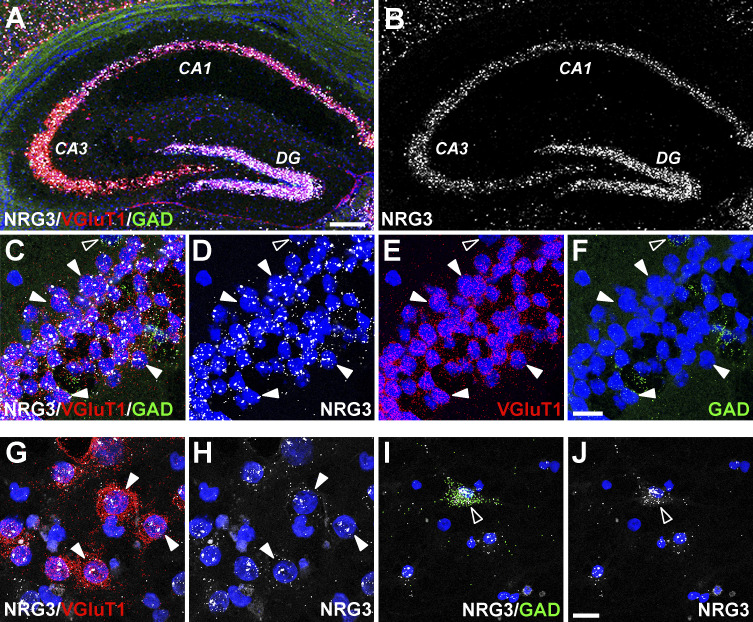
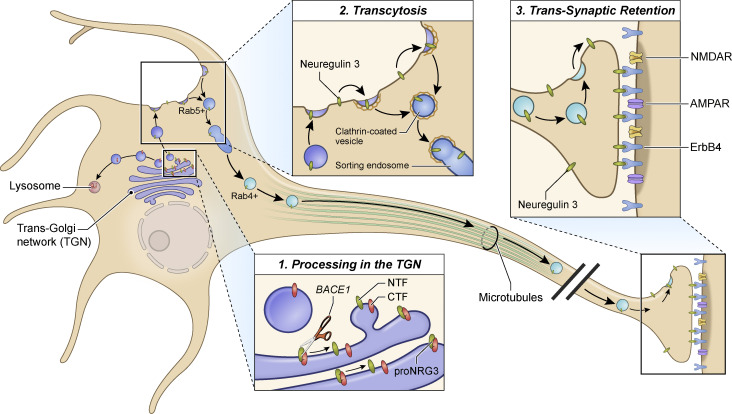
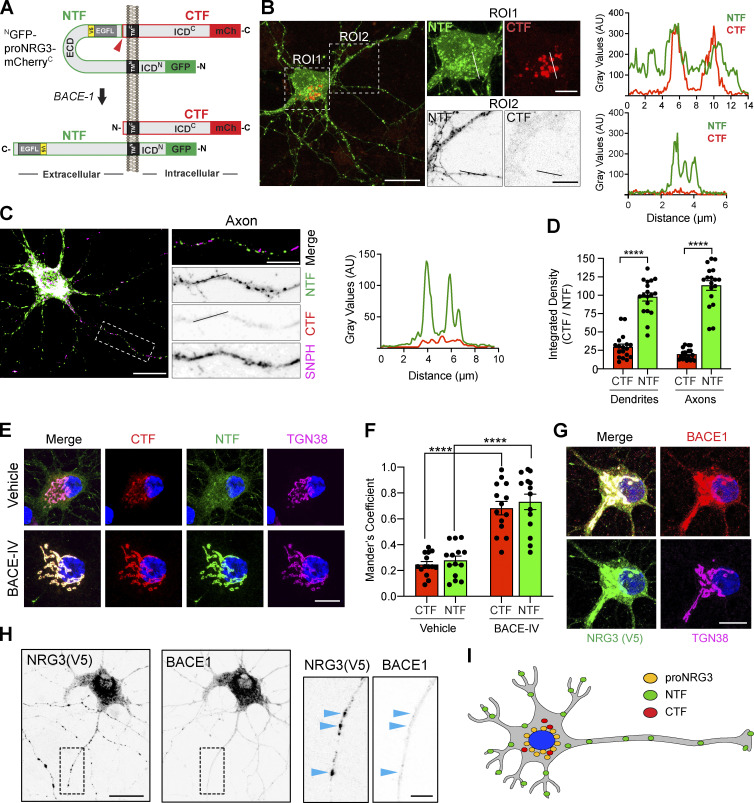
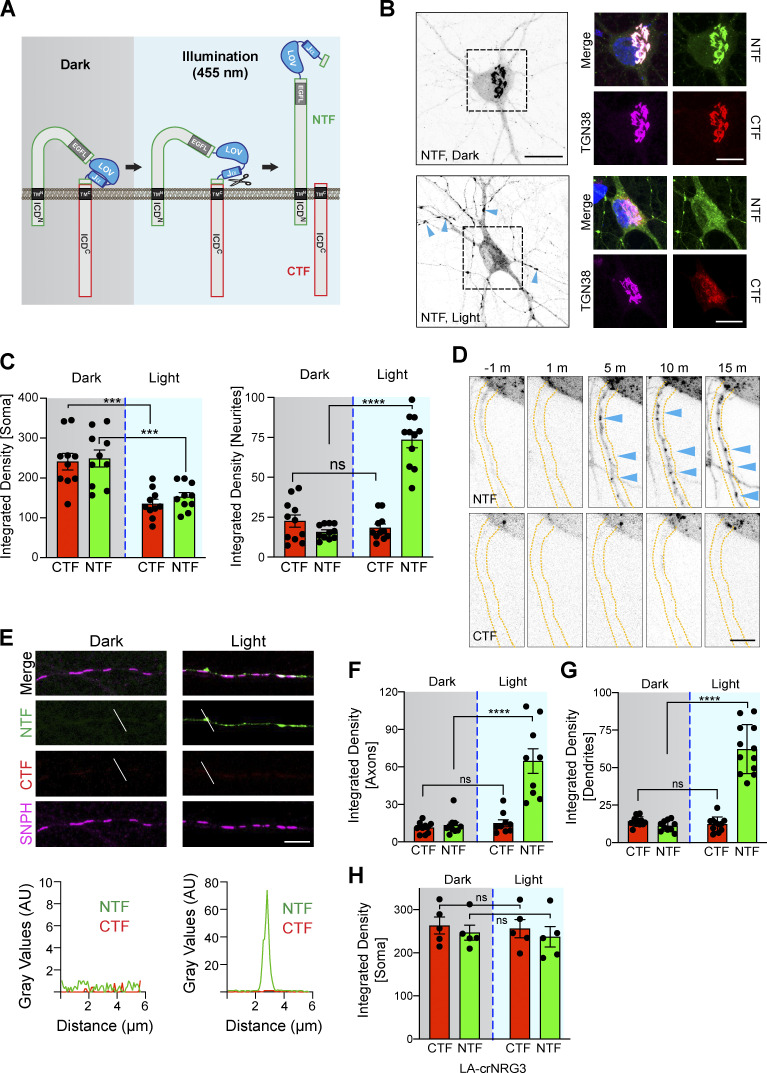
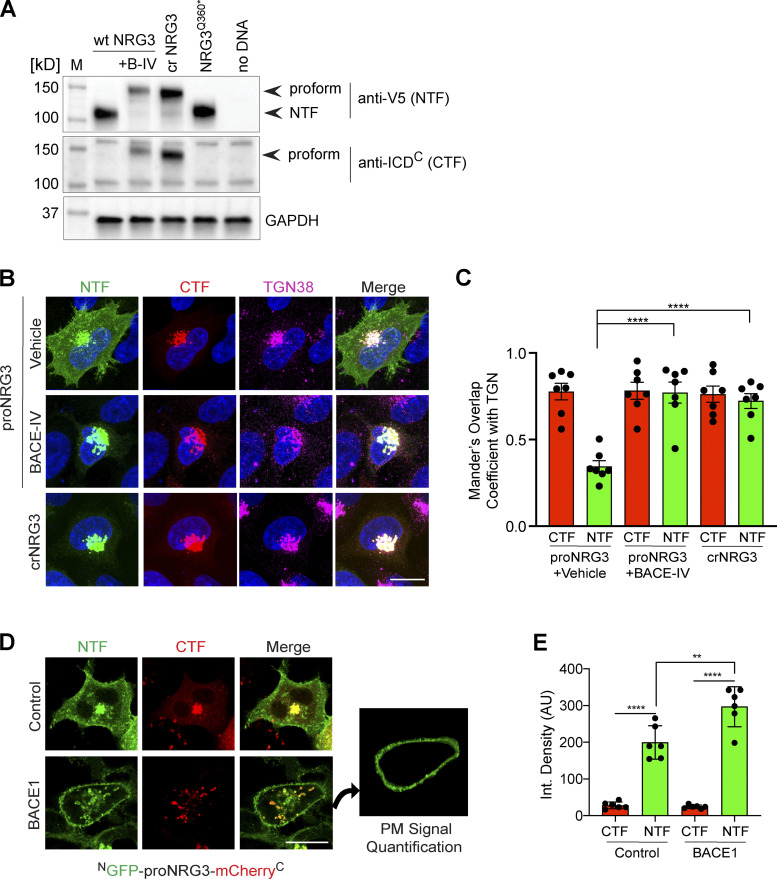
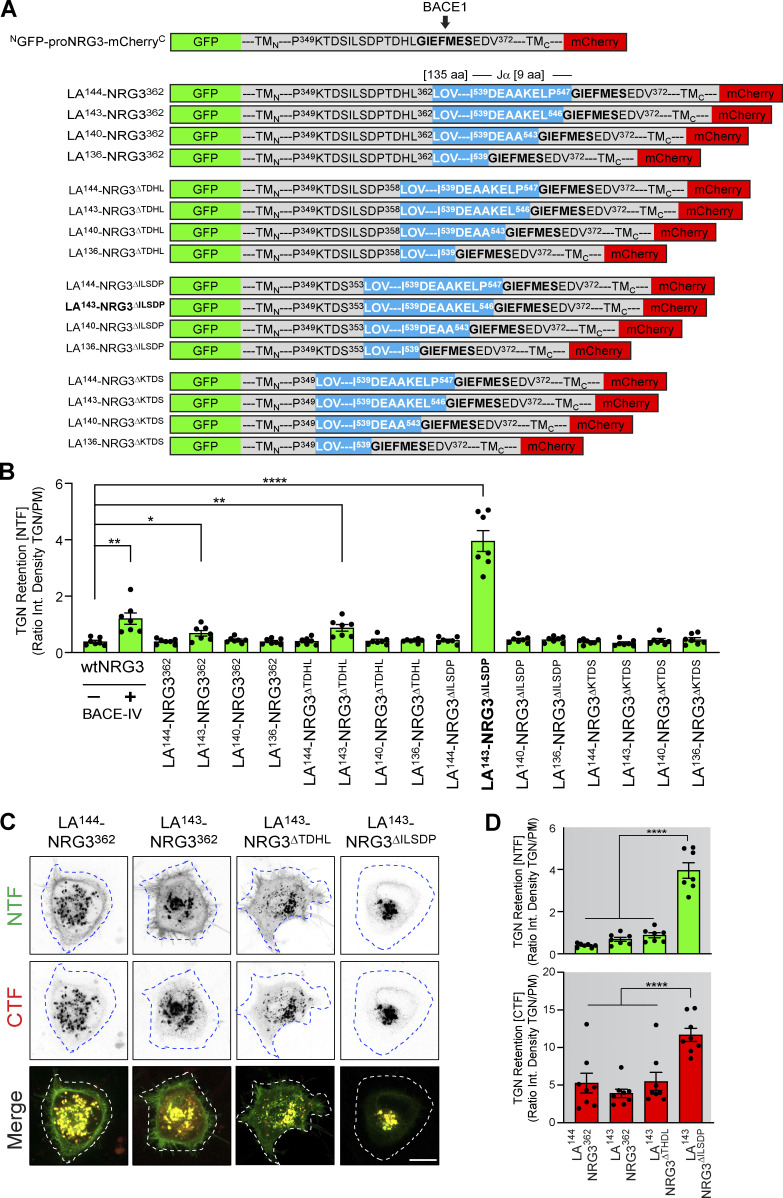
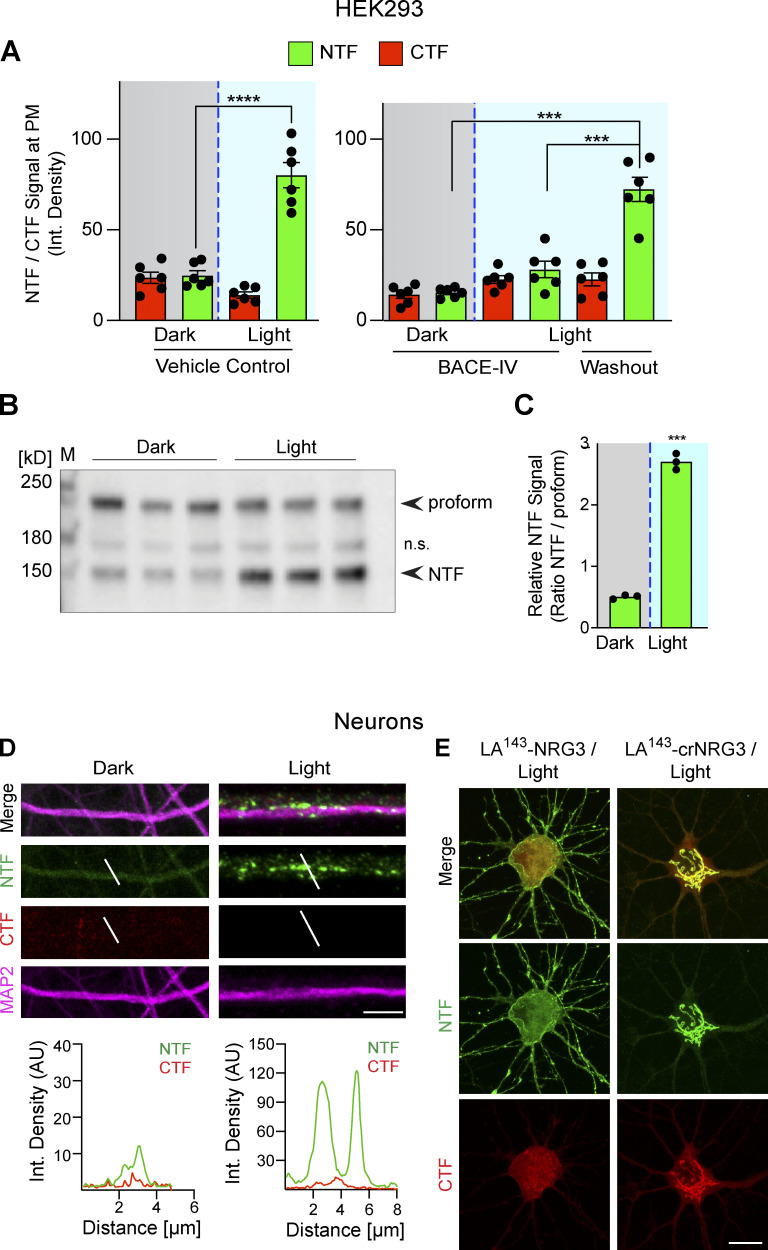
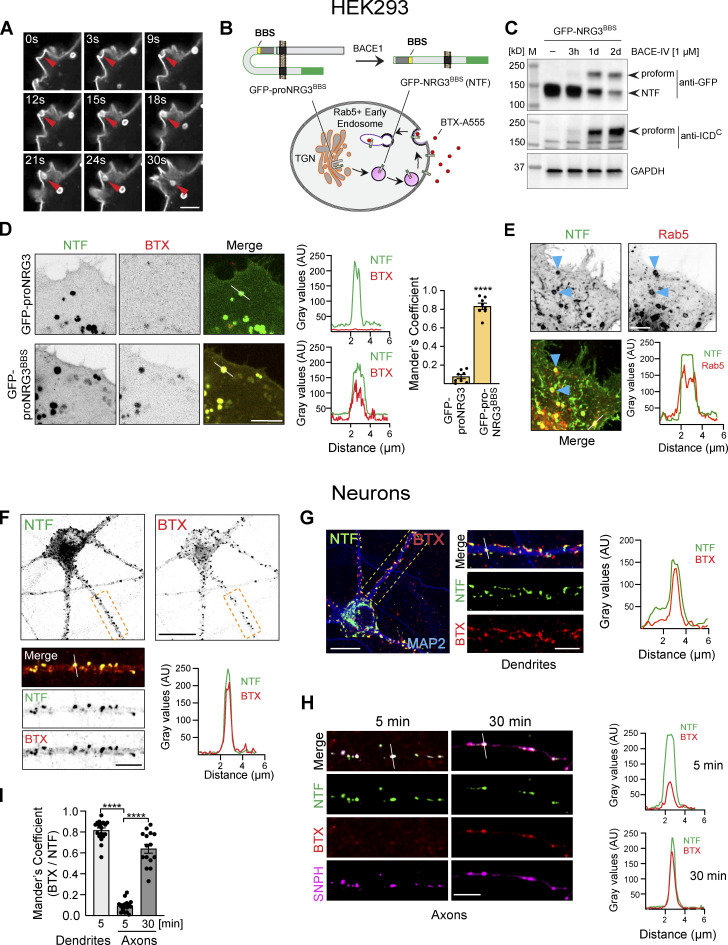
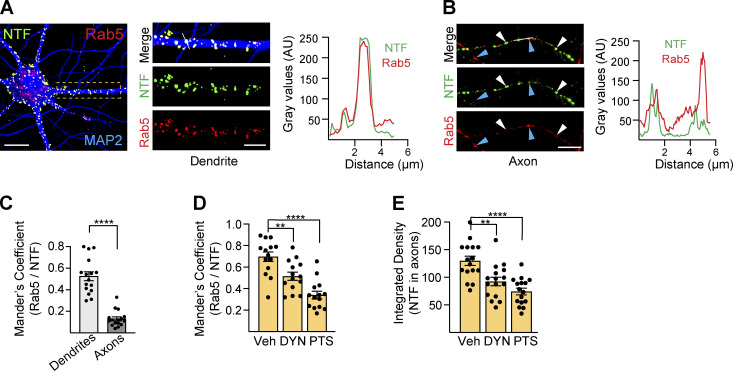
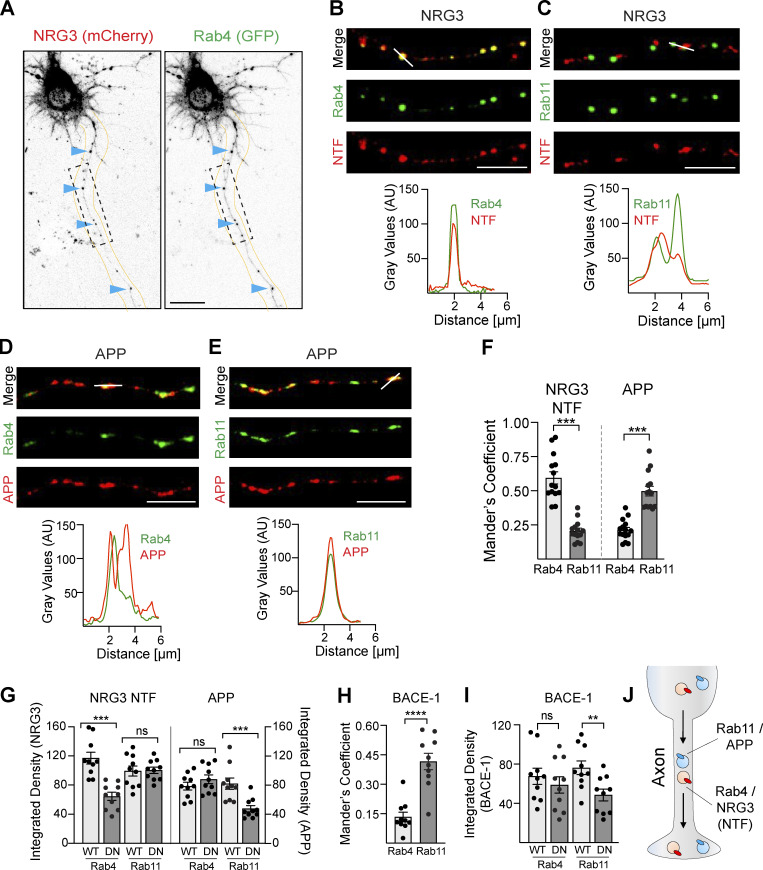
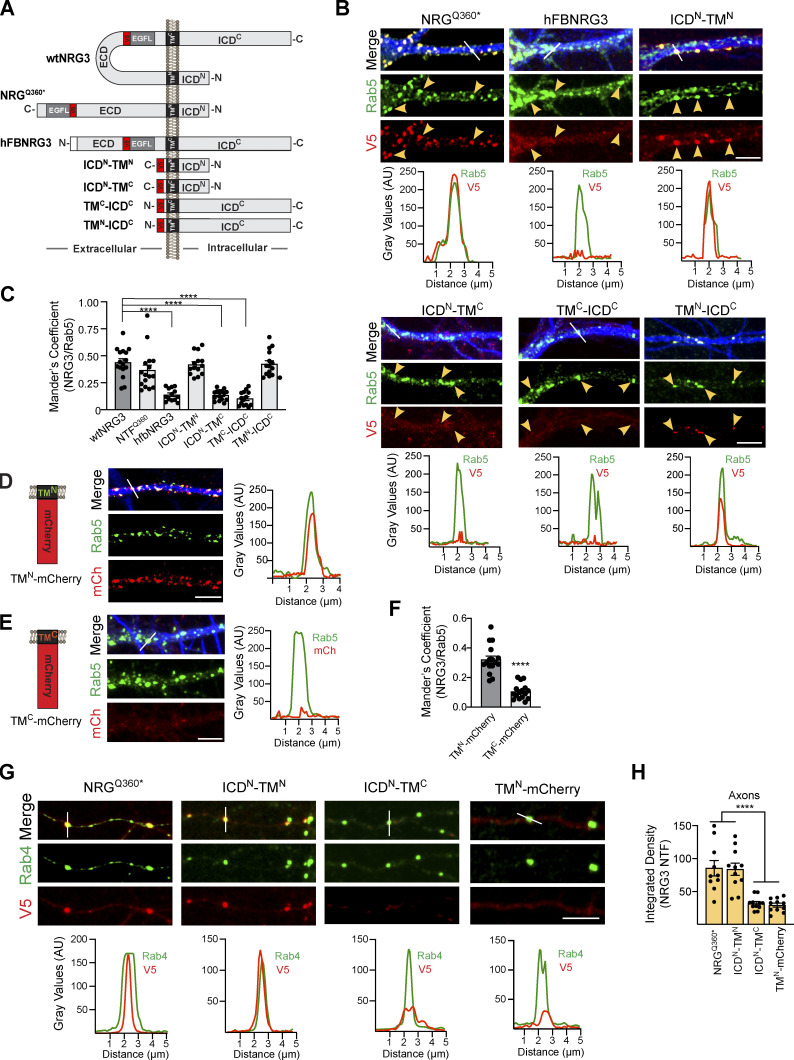
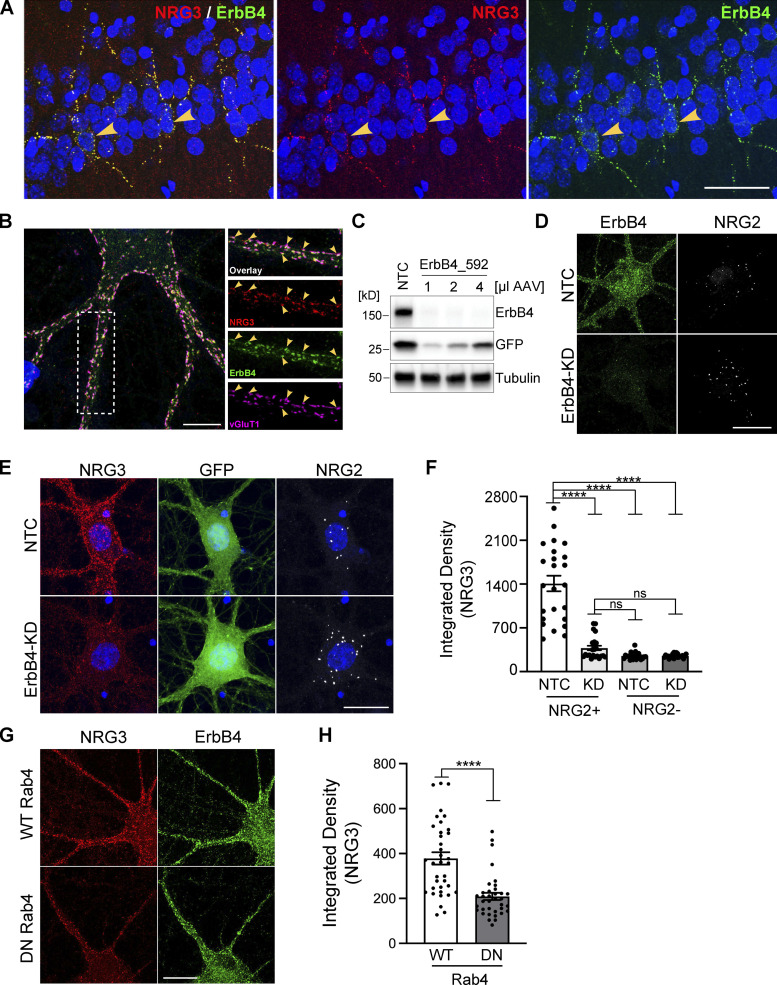
Neuregulins (NRGs) are EGF-like ligands associated with cognitive disorders. Unprocessed proNRG3 is cleaved by BACE1 to generate the mature membrane-bound NRG3 ligand, but the subcellular site of proNRG3 cleavage, mechanisms underlying its transport into axons, and presynaptic accumulation remain unknown. Using an optogenetic proNRG3 cleavage reporter (LA143-NRG3), we investigate the spatial-temporal dynamics of NRG3 processing and sorting in neurons. In dark conditions, unprocessed LA143-NRG3 is retained in the trans-Golgi network but, upon photoactivation, is cleaved by BACE1 and released from the TGN. Mature NRG3 then emerges on the somatodendritic plasma membrane from where it is re-endocytosed and anterogradely transported on Rab4+ vesicles into axons via transcytosis. By contrast, the BACE1 substrate APP is sorted into axons on Rab11+ vesicles. Lastly, by a mechanism we denote "trans-synaptic retention," NRG3 accumulates at presynaptic terminals by stable interaction with its receptor ErbB4 on postsynaptic GABAergic interneurons. We propose that trans-synaptic retention may account for polarized expression of other neuronal transmembrane ligands and receptors.
神经调节蛋白(NRGs)是与认知障碍相关的 EGF 样配体。未加工的前 NRG3 被 BACE1 切割生成成熟的膜结合 NRG3 配体,但前 NRG3 切割的亚细胞部位、其向轴突转运的机制以及前突触积累仍然未知。使用光遗传的 proNRG3 切割报告基因(LA143-NRG3),我们研究了神经元中 NRG3 加工和分拣的时空动态。在黑暗条件下,未加工的 LA143-NRG3 保留在反式高尔基网络中,但在光激活后,被 BACE1 切割并从 TGN 释放。成熟的 NRG3 随后出现在体树突质膜上,从那里它被重新内吞,并通过跨细胞运输在 Rab4+ 囊泡中逆行转运到轴突中。相比之下,BACE1 底物 APP 被分拣到 Rab11+ 囊泡中的轴突中。最后,通过我们称为“跨突触保留”的机制,NRG3 通过与突触后 GABA 能中间神经元上的受体 ErbB4 的稳定相互作用,在前突触末端积累。我们提出,跨突触保留可能解释了其他神经元跨膜配体和受体的极化表达。