MOE Joint International Research Laboratory of Animal Health and Food Safety, Engineering Laboratory of Animal Immunity of Jiangsu Province, College of Veterinary Medicine, Nanjing Agricultural University, Nanjing, China.
Microbiol Spectr. 2022 Jun 29;10(3):e0109822. doi: 10.1128/spectrum.01098-22. Epub 2022 May 18.
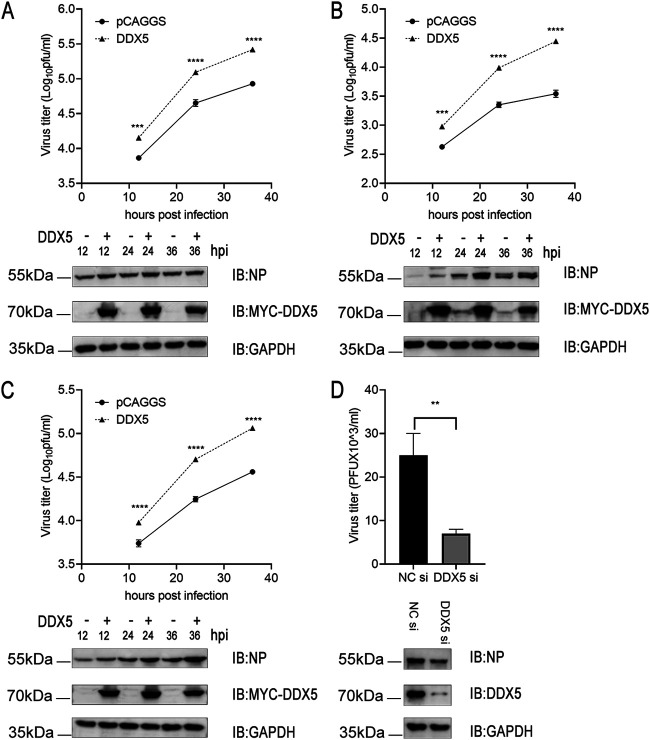
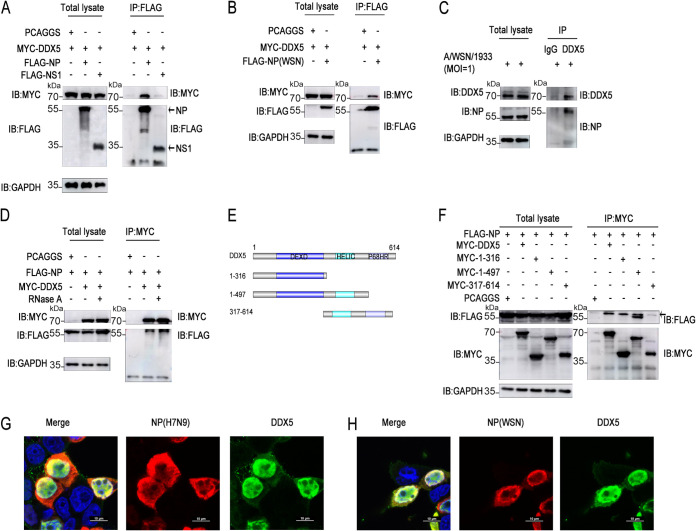
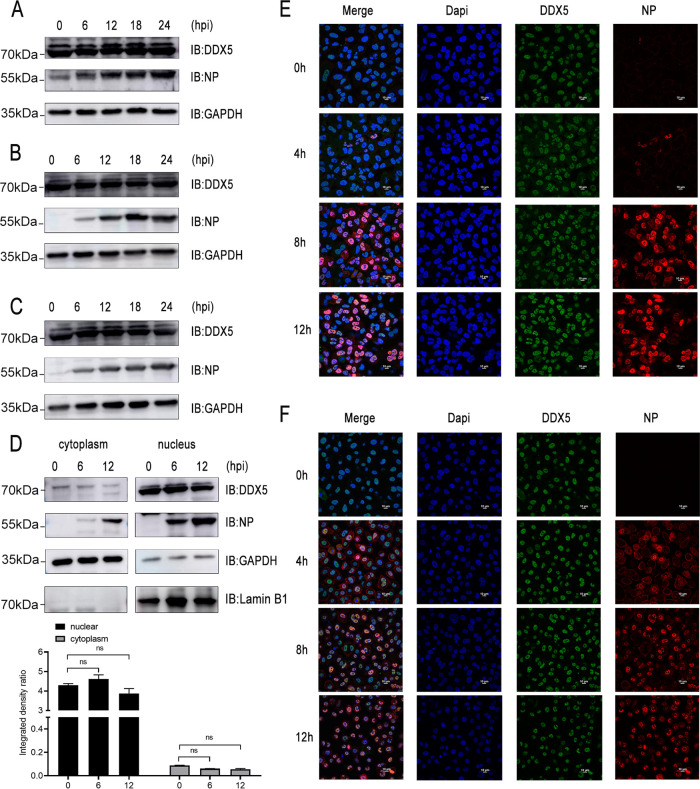
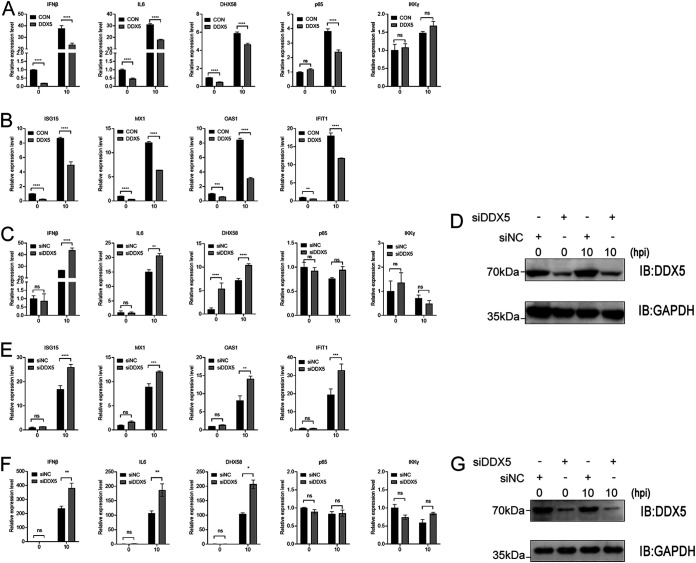
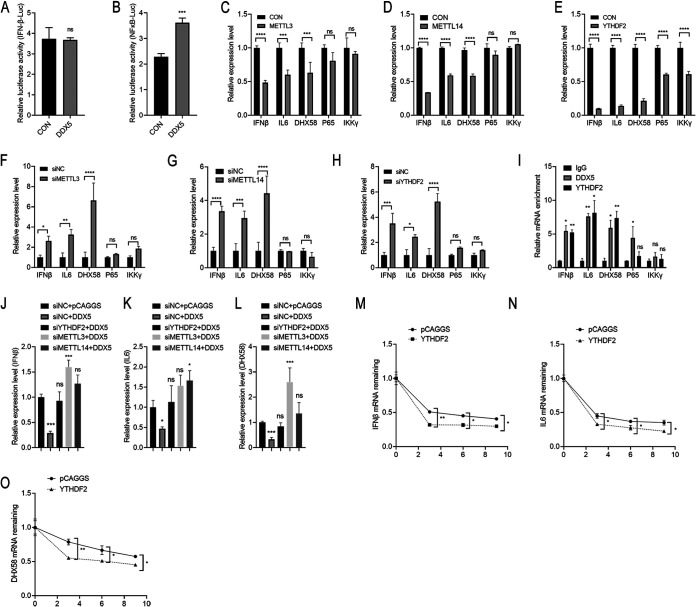
DEAD-box helicase 5 (DDX5), a member of the DEAD/H-box helicases, is known to participate in all aspects of RNA metabolism. However, its regulatory effect in antiviral innate immunity during replication of influenza virus remains unclear. Herein, we found that human DDX5 promotes replication of influenza virus in A549 cells. Moreover, our results further revealed that DDX5 relies on its N terminus to interact with the nucleoprotein (NP) of influenza virus, which is independent of RNA. Of course, we also observed colocalization of DDX5 with NP in the context of transfection or infection. However, influenza virus infection had no significant effect on the protein expression and nucleocytoplasmic distribution of DDX5. Importantly, we found that DDX5 suppresses antiviral innate immunity induced by influenza virus infection. Mechanistically, DDX5 downregulated the mRNA levels of interferon beta (IFN-β), interleukin 6 (IL-6), and DHX58 via the METTL3-METTL14/YTHDF2 axis. We revealed that DDX5 bound antiviral transcripts and regulated immune responses through YTHDF2-dependent mRNA decay. Taken together, our data demonstrate that the DDX5/METTL3-METTL14/YTHDF2 axis regulates the replication of influenza A virus. The replication and transcription of influenza virus depends on the participation of many host factors in cells. Exploring the relationship between viruses and host factors will help us fully understand the characteristics and pathogenic mechanisms of influenza viruses. In this study, we showed that DDX5 interacted with the NP of influenza virus. We demonstrated that DDX5 downregulated the expression of IFN-β and IL-6 and the transcription of antiviral genes downstream from IFN-β in influenza virus-infected A549 cells. Additionally, DDX5 downregulated the mRNA levels of antiviral transcripts via the METTL3-METTL14/YTHDF2 axis. Our findings provide a novel perspective to understand the mechanism by which DDX5 regulates antiviral immunity.
DEAD-box 解旋酶 5(DDX5)是 DEAD/H-box 解旋酶家族的成员,已知其参与 RNA 代谢的各个方面。然而,其在流感病毒复制过程中抗病毒先天免疫中的调节作用尚不清楚。在此,我们发现人 DDX5 促进 A549 细胞中流感病毒的复制。此外,我们的结果进一步表明,DDX5 依赖其 N 端与流感病毒的核蛋白(NP)相互作用,该相互作用不依赖于 RNA。当然,我们还观察到在转染或感染的情况下 DDX5 与 NP 的共定位。然而,流感病毒感染对 DDX5 的蛋白表达和核质分布没有显著影响。重要的是,我们发现 DDX5 抑制流感病毒感染诱导的抗病毒先天免疫。机制上,DDX5 通过 METTL3-METTL14/YTHDF2 轴下调干扰素β(IFN-β)、白细胞介素 6(IL-6)和 DHX58 的 mRNA 水平。我们揭示了 DDX5 通过 YTHDF2 依赖的 mRNA 降解结合抗病毒转录物并调节免疫反应。总之,我们的数据表明 DDX5/METTL3-METTL14/YTHDF2 轴调节甲型流感病毒的复制。流感病毒的复制和转录依赖于细胞中许多宿主因子的参与。探索病毒与宿主因子之间的关系将帮助我们充分了解流感病毒的特征和致病机制。在这项研究中,我们表明 DDX5 与流感病毒的 NP 相互作用。我们证明 DDX5 下调了 A549 细胞中感染流感病毒后的 IFN-β 和 IL-6 的表达以及 IFN-β 下游抗病毒基因的转录。此外,DDX5 通过 METTL3-METTL14/YTHDF2 轴下调抗病毒转录物的 mRNA 水平。我们的发现为理解 DDX5 调节抗病毒免疫的机制提供了新的视角。