Department of Pediatric Oncology, Hematology, and Immunology, University of Heidelberg, Heidelberg, Germany.
Hopp Children´s Cancer Center Heidelberg (KiTZ), Heidelberg, Germany.
Leukemia. 2022 Jul;36(7):1759-1768. doi: 10.1038/s41375-022-01587-0. Epub 2022 May 18.
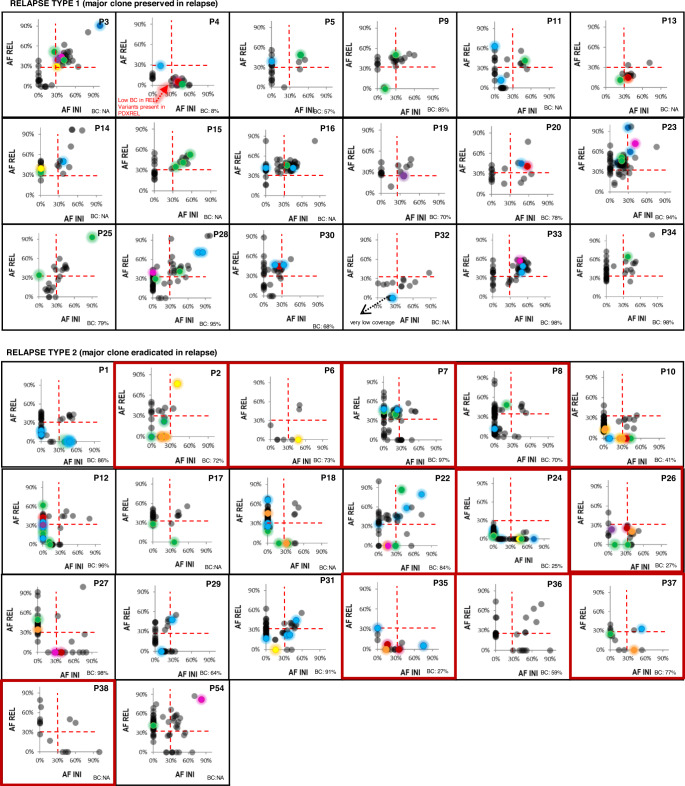
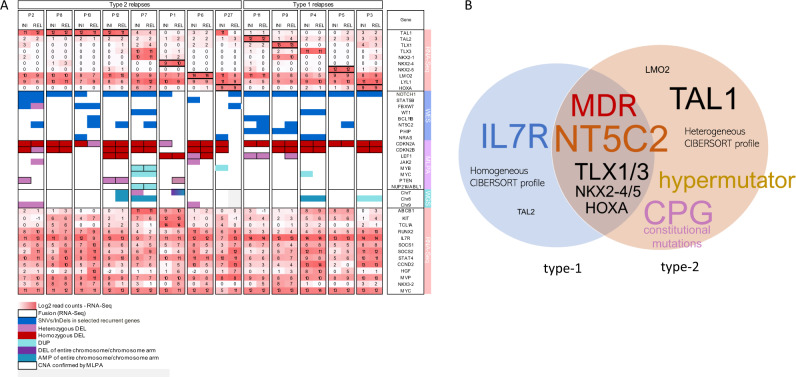
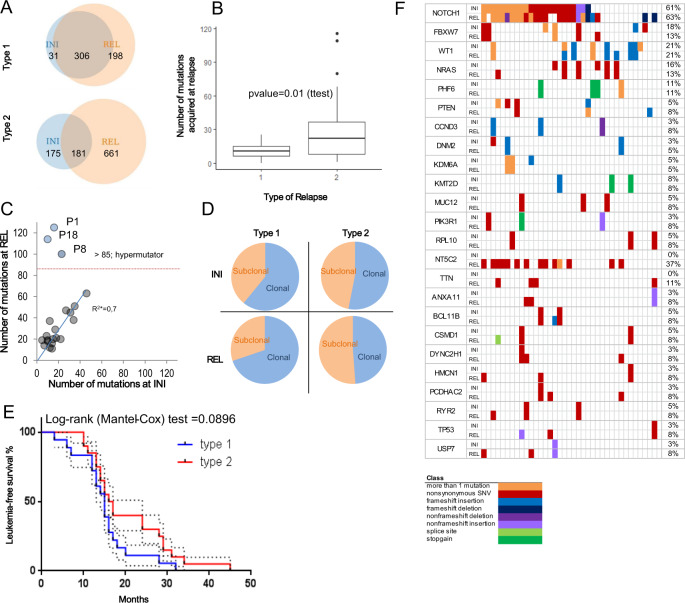
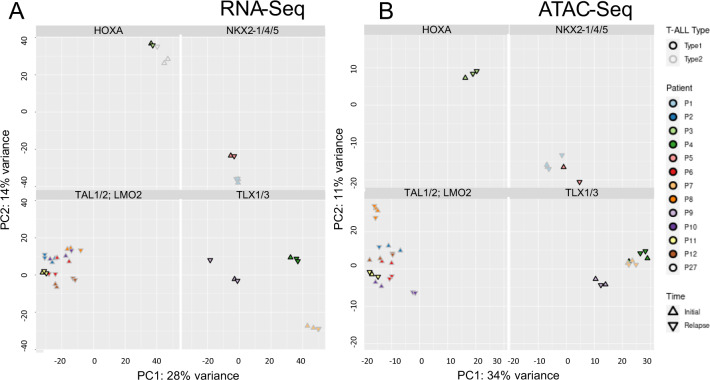
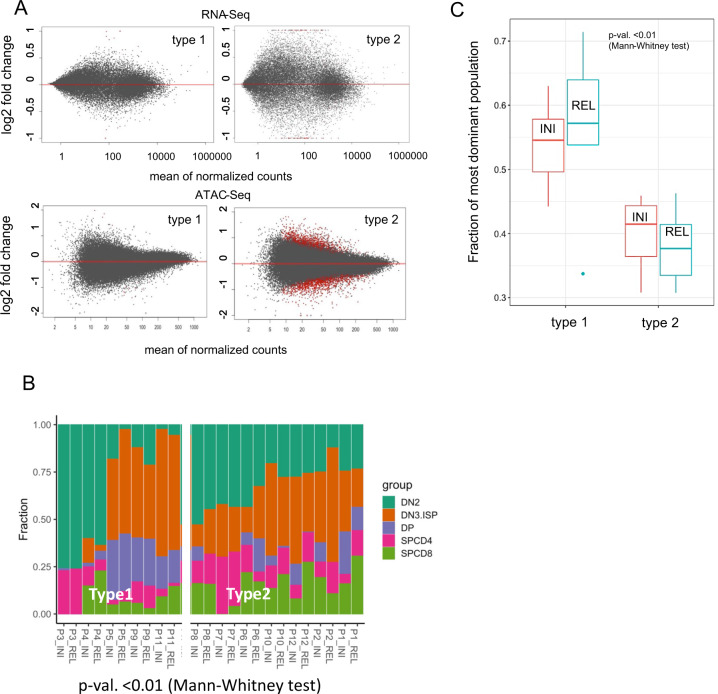
The mechanisms underlying T-ALL relapse remain essentially unknown. Multilevel-omics in 38 matched pairs of initial and relapsed T-ALL revealed 18 (47%) type-1 (defined by being derived from the major ancestral clone) and 20 (53%) type-2 relapses (derived from a minor ancestral clone). In both types of relapse, we observed known and novel drivers of multidrug resistance including MDR1 and MVP, NT5C2 and JAK-STAT activators. Patients with type-1 relapses were specifically characterized by IL7R upregulation. In remarkable contrast, type-2 relapses demonstrated (1) enrichment of constitutional cancer predisposition gene mutations, (2) divergent genetic and epigenetic remodeling, and (3) enrichment of somatic hypermutator phenotypes, related to BLM, BUB1B/PMS2 and TP53 mutations. T-ALLs that later progressed to type-2 relapses exhibited a complex subclonal architecture, unexpectedly, already at the time of initial diagnosis. Deconvolution analysis of ATAC-Seq profiles showed that T-ALLs later developing into type-1 relapses resembled a predominant immature thymic T-cell population, whereas T-ALLs developing into type-2 relapses resembled a mixture of normal T-cell precursors. In sum, our analyses revealed fundamentally different mechanisms driving either type-1 or type-2 T-ALL relapse and indicate that differential capacities of disease evolution are already inherent to the molecular setup of the initial leukemia.
T-ALL 复发的机制在很大程度上仍不清楚。对 38 对初始和复发 T-ALL 的多层次组学研究显示,18 种(47%)为 1 型(由主要祖细胞衍生而来)和 20 种(53%)为 2 型复发(由次要祖细胞衍生而来)。在这两种复发类型中,我们观察到了已知和新的多药耐药驱动因素,包括 MDR1 和 MVP、NT5C2 和 JAK-STAT 激活剂。1 型复发患者的特点是 IL7R 上调。相比之下,2 型复发具有以下特征:(1) 富含先天易患癌症基因的突变;(2) 遗传和表观遗传重塑的差异;(3) 与 BLM、BUB1B/PMS2 和 TP53 突变相关的体细胞高频突变表型的富集。后来发展为 2 型复发的 T-ALL 在初始诊断时已经表现出复杂的亚克隆结构,这令人惊讶。ATAC-Seq 谱的去卷积分析表明,后来发展为 1 型复发的 T-ALL 类似于主要的不成熟胸腺 T 细胞群,而发展为 2 型复发的 T-ALL 类似于正常 T 细胞前体的混合物。总之,我们的分析揭示了导致 1 型或 2 型 T-ALL 复发的根本不同的机制,并表明疾病进化的差异能力已经固有地存在于初始白血病的分子构成中。