
采用新方法制造的牙科纤维复合桩的弯曲强度
Flexural Strength of Dental Fiber Composite Post Manufactured with a Novel Approach.
作者信息
Abdelkader Esraa M, Cortes Cortes Jose Manuel, Botella Candela Reyes, Nassar Khaled, Rus Guillermo, Fathy Salma M
机构信息
Department of Textile, Faculty of Applied Arts, Badr University in Cairo, Cairo 11829, Egypt.
Department of Structural Mechanics, Ultrasonics Lab (TEP-959), University of Granada, 18071 Granada, Spain.
出版信息
Materials (Basel). 2022 May 8;15(9):3370. doi: 10.3390/ma15093370.
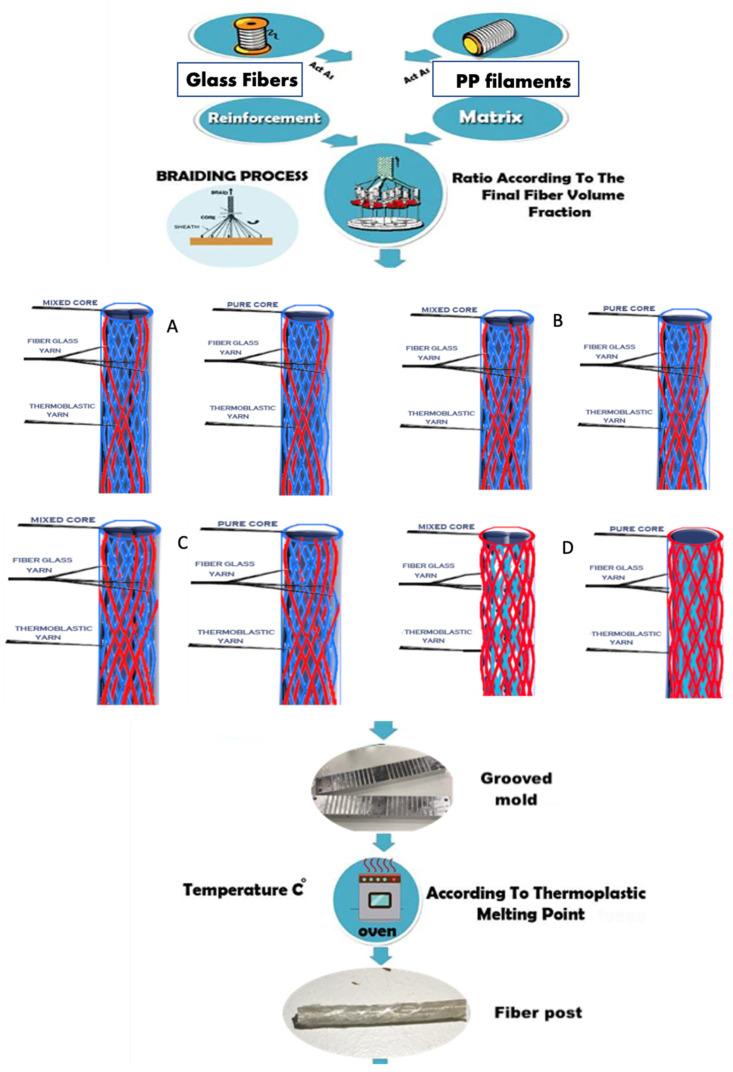
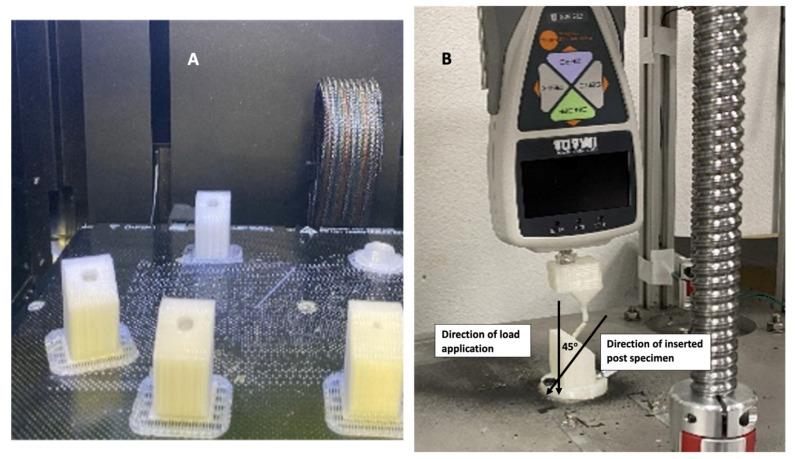
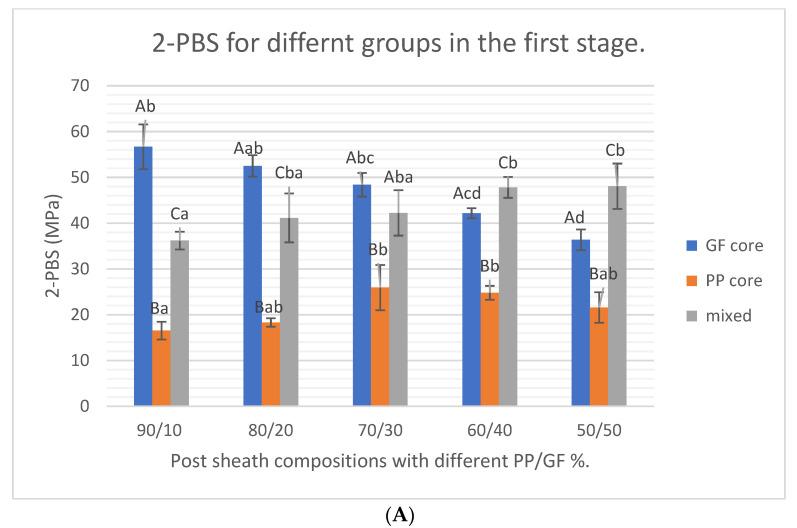
Thermoplastic resin fiber composites have an easy fabrication process, good mechanical properties, and compatible stiffness to tooth dentin. However, they have not yet attracted much interest in the field of dentistry. The current study was carried out to test a new proposed approach to manufacture a fiber reinforced composite endodontic post and evaluate its flexural strength through a two-point inclined loading test. The proposed fiber post manufacture approach depends upon a braiding technique of the glass fibers' (GF) reinforcing component with thermoplastic polypropylene (PP) resin fibers that will later represent the resin matrix after thermal melting. Posts were made of different core (70%) and sheath (30%) construction (PP/GF ratios) using three different GF types and seizing pre-treatment to both fiber types. Two-point inclined loading test at 45 °C applied force angle was used to test the posts' flexural strength. Fiber posts (1.6 mm in diameter) with pure GF (de-sized starch E-GF and pre-silanized S-GF) core, and sheath construction with higher PP/GF ratios, showed the significantly highest two-point bending strength (56.67 ± 4.89 and 53.96 ± 1.81 MPa, respectively), among experimental posts groups (except for the commercial control posts). However, posts with PP core type showed the lowest values (21.59 ± 1.86 and 16.54 ± 1.94 MPa for de-sized and E-glass sheath fibers, respectively). Based on these findings, the proposed approach was reliable in producing fiber-reinforced composite post with the desired dimensions and fiber distribution. Post construction with a pure GF core and higher PP/GF ratio showed considerably higher flexural strength and GF volume fraction comparable to commercial available post types.
热塑性树脂纤维复合材料具有易于制造的工艺、良好的机械性能以及与牙本质相匹配的刚度。然而,它们在牙科领域尚未引起太多关注。当前的研究旨在测试一种新提出的制造纤维增强复合根管桩的方法,并通过两点倾斜加载试验评估其抗弯强度。所提出的纤维桩制造方法依赖于玻璃纤维(GF)增强组分与热塑性聚丙烯(PP)树脂纤维的编织技术,热融化后PP树脂纤维将代表树脂基体。使用三种不同类型的GF并对两种纤维进行预处理,制备了具有不同芯(70%)和鞘(30%)结构(PP/GF比例)的桩。在45°C施加力角度下进行两点倾斜加载试验,以测试桩的抗弯强度。在实验桩组中(商业对照桩除外),具有纯GF(脱浆淀粉E-GF和预硅烷化S-GF)芯且鞘结构具有较高PP/GF比例的纤维桩(直径1.6mm)显示出显著最高的两点弯曲强度(分别为56.67±4.89和53.96±1.81MPa)。然而,PP芯类型的桩显示出最低的值(脱浆和E玻璃鞘纤维分别为21.59±1.86和16.54±1.94MPa)。基于这些发现,所提出的方法在生产具有所需尺寸和纤维分布的纤维增强复合桩方面是可靠的。具有纯GF芯和较高PP/GF比例的桩结构显示出与市售桩类型相当的更高抗弯强度和GF体积分数。

 Zotero 插件