Tang Mengxin, Pan Mianluan, Qiu Ye, Huang Jie, Zeng Wen, Zhang Jianquan
Department of Respiratory and Critical Medicine, The Eighth Affiliated Hospital, Sun Yat-Sen University, Shenzhen, Guangdong, 518000, People's Republic of China.
Department of Respiratory and Critical Medicine, The First Affiliated Hospital of Guangxi Medical University, Nanning, Guangxi, 530021, People's Republic of China.
Infect Drug Resist. 2022 May 10;15:2459-2467. doi: 10.2147/IDR.S360063. eCollection 2022.
Anti-IFN-γ autoantibodies (AIGAs) are closely related to the disseminated infection of multiple pathogens. (M. phlei) is a nonpathogenic nontuberculous mycobacteria (NTM), and infection of the bone is extremely rare. We report a rare case of high-titer AIGAs presenting with Sweet's syndrome (SS) accompanied by opportunistic coinfection with multiple pathogens during 12 years of follow-up. The patient in this case also developed disseminated infection with osteolytic destruction after treatment for SS.
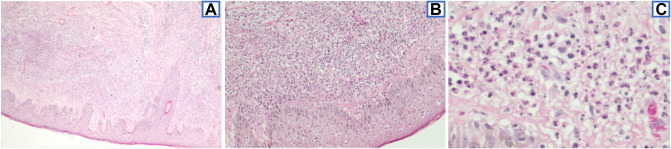
A 68-year-old Chinese woman was admitted to our hospital in August 2009 due to fever and cough with expectoration for 3 months. The patient was successively infected with , herpes zoster virus and . Chest computed tomography (CT) showed recurrent consolidations in different lung fields. After 15 months of antimicrobial treatment, the patient experienced partial recovery. In September 2010, the patient was pathologically diagnosed with SS due to the presence of multiple rashes. After prednisone and thalidomide treatment, the rashes subsided, and the pulmonary lesions had completely absorbed. In May 2011, the patient was diagnosed with disseminated tuberculosis and was administered anti-tuberculosis therapy for 3 months without improvement. NTM was subsequently cultured from her sputum and chest wall pus, and she improved after 20 months of anti-NTM therapy. In March 2016, the patient developed osteolytic destruction of the C7-T2 vertebral bodies with a back abscess. NTM was eventually cultured from the dorsal abscess pus and further identified as . High-titer AIGAs were detected in the patient's serum. After another round of aggressive anti-NTM therapy, the patient was finally cured.
Patients with AIGA-associated anti-cytokine autoantibody disease can present with multiple opportunistic infections and SS involving the lung. AIGA-associated immunodeficiency leads to infection with nonpathogenic , which is refractory, can cause relapse, and even leads to osteolytic destruction.
抗干扰素-γ自身抗体(AIGAs)与多种病原体的播散性感染密切相关。草分枝杆菌是一种非致病性非结核分枝杆菌(NTM),骨骼感染极为罕见。我们报告1例罕见的高滴度AIGAs病例,该患者在12年随访期间出现伴多种病原体机会性合并感染的Sweet综合征(SS)。该病例患者在接受SS治疗后还发生了伴有溶骨性破坏的播散性草分枝杆菌感染。
一名68岁中国女性于2009年8月因发热、咳嗽伴咳痰3个月入院。该患者先后感染了草分枝杆菌、带状疱疹病毒和[此处原文缺失一种病原体名称]。胸部计算机断层扫描(CT)显示不同肺野反复出现实变。经过15个月的抗菌治疗,患者部分恢复。2010年9月,患者因出现多处皮疹经病理诊断为SS。在接受泼尼松和沙利度胺治疗后,皮疹消退,肺部病变完全吸收。2011年5月,患者被诊断为播散性肺结核,接受抗结核治疗3个月但无改善。随后从其痰液和胸壁脓液中培养出NTM,在接受20个月的抗NTM治疗后病情好转。2016年3月,患者出现C7 - T2椎体溶骨性破坏并伴有背部脓肿。最终从背部脓肿脓液中培养出NTM,并进一步鉴定为草分枝杆菌。在患者血清中检测到高滴度AIGAs。经过另一轮积极的抗NTM治疗,患者最终治愈。
AIGA相关的抗细胞因子自身抗体疾病患者可出现多种机会性感染及累及肺部的SS。AIGA相关免疫缺陷导致非致病性草分枝杆菌感染,这种感染难治、可导致复发,甚至引起溶骨性破坏。