Lee Jack Y, Nguyen Bianca, Mukhopadhyay Anandaroop, Han Mia, Zhang Jun, Gujar Ravindra, Salazar Jon, Hermiz Reneta, Svenson Lauren, Browning Erica, Lyerly H Kim, Canton David A, Fisher Daniel, Daud Adil, Algazi Alain, Skitzki Joseph, Twitty Christopher G
Oncosec Medical Incorporated, 3565 General Atomics Court, San Diego, CA 92121, USA.
Department of Immunology, Duke University, Durham, NC 27710, USA.
Mol Ther Oncolytics. 2022 Apr 18;25:174-188. doi: 10.1016/j.omto.2022.04.005. eCollection 2022 Jun 16.
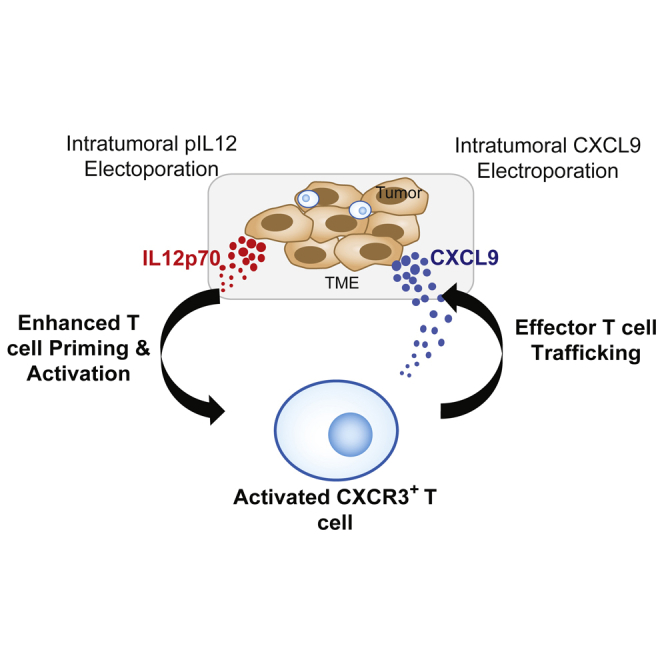
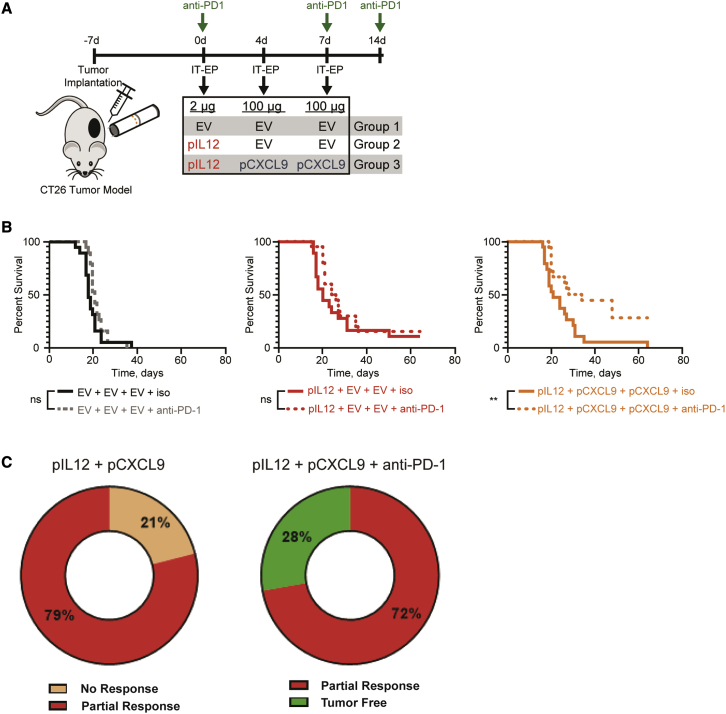
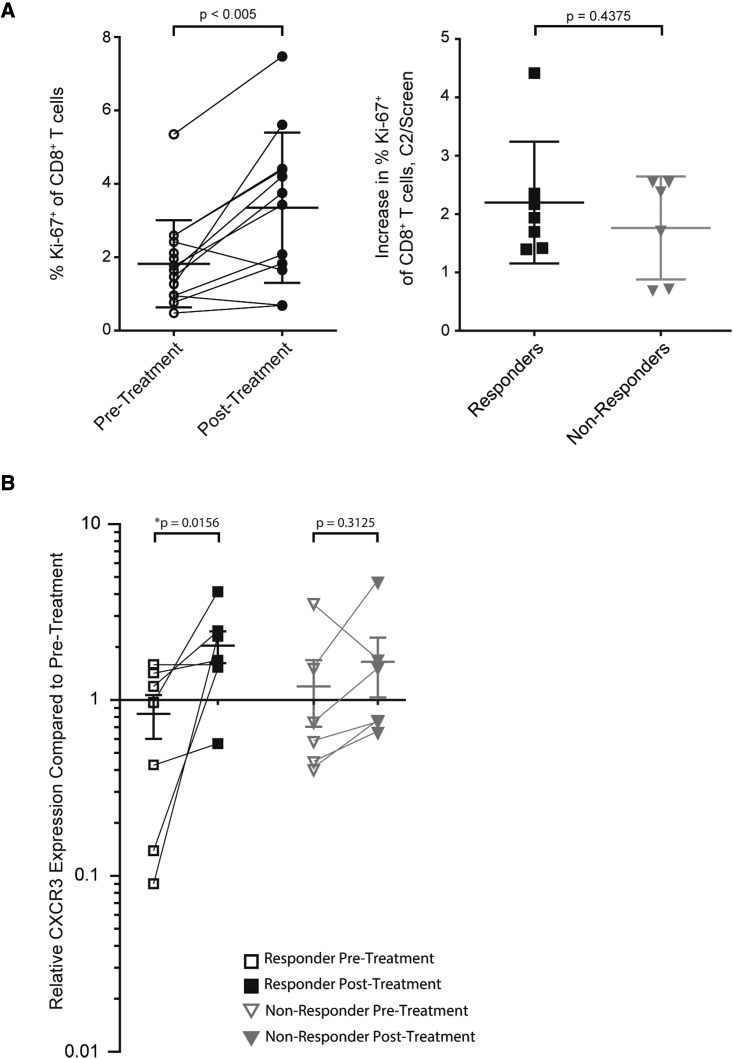
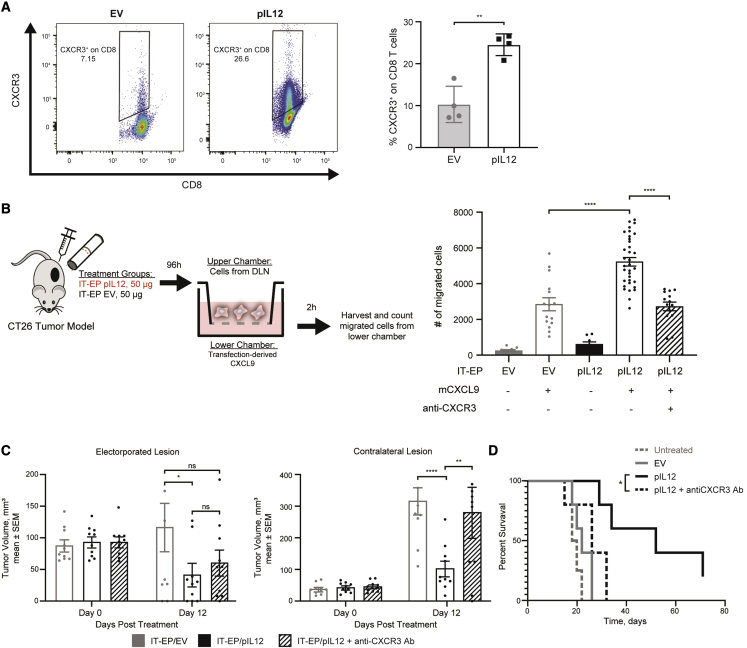
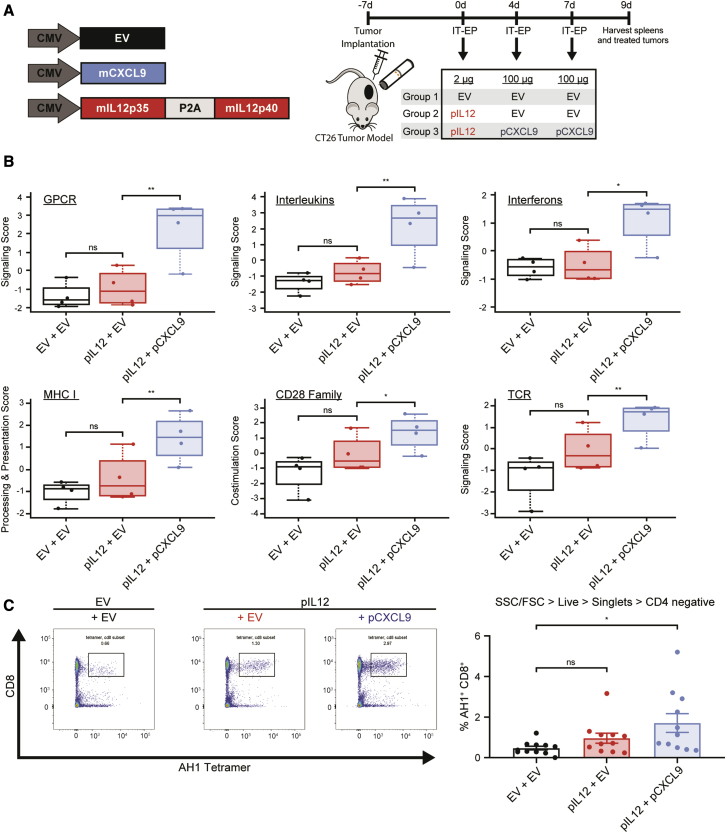
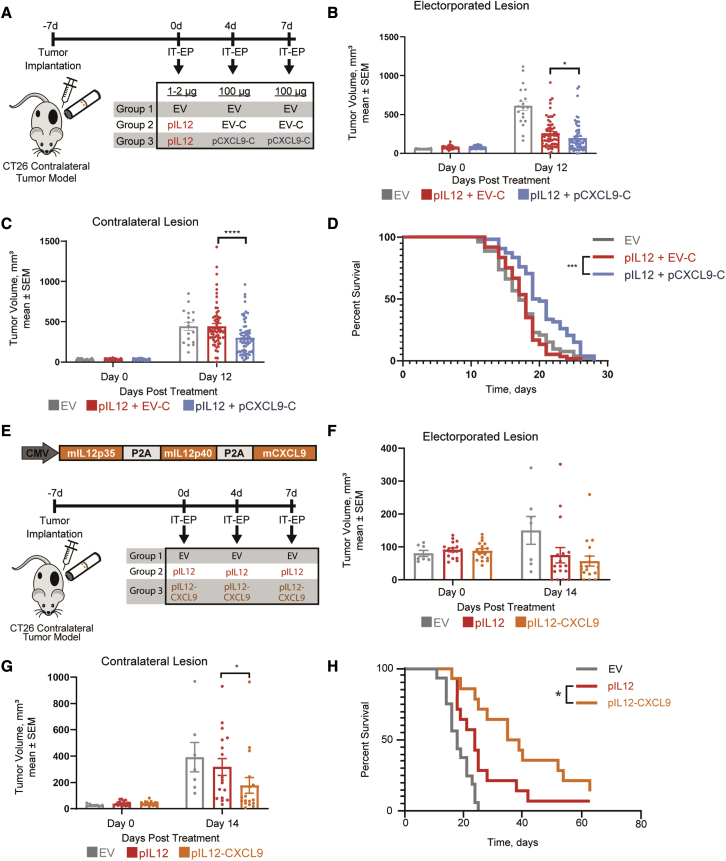
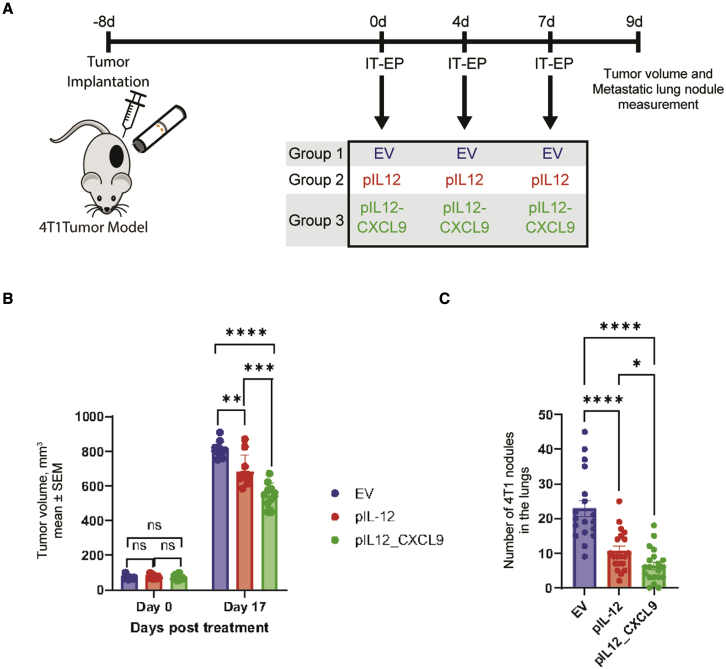
Clinical studies have demonstrated that local expression of the cytokine IL-12 drives interferon-gamma expression and recruits T cells to the tumor microenvironment, ultimately yielding durable systemic T cell responses. Interrogation of longitudinal biomarker data from our late-stage melanoma trials identified a significant on-treatment increase of intratumoral transcripts that was restricted to responding patients, underscoring the clinical relevance of tumor-infiltrating CXCR3 immune cells. In this study, we sought to understand if the addition of DNA-encodable CXCL9 could augment the anti-tumor immune responses driven by intratumoral IL-12. We show that localized IL-12 and CXCL9 treatment reshapes the tumor microenvironment to promote dendritic cell licensing and CD8 T cell activation. Additionally, this combination treatment results in a significant abscopal anti-tumor response and provides a concomitant benefit to anti-PD-1 therapies. Collectively, these data demonstrate that a functional tumoral CXCR3/CXCL9 axis is critical for IL-12 anti-tumor efficacy. Furthermore, restoring or amplifying the CXCL9 gradient in the tumors via intratumoral electroporation of plasmid CXCL9 can not only result in efficient trafficking of cytotoxic CD8 T cells into the tumor but can also reshape the microenvironment to promote systemic immune response.
临床研究表明,细胞因子IL-12的局部表达可驱动干扰素-γ的表达,并将T细胞募集到肿瘤微环境中,最终产生持久的全身性T细胞反应。对我们晚期黑色素瘤试验的纵向生物标志物数据进行分析发现,肿瘤内转录本在治疗期间显著增加,且仅限于有反应的患者,这突出了肿瘤浸润性CXCR3免疫细胞的临床相关性。在本研究中,我们试图了解添加可DNA编码的CXCL9是否能增强肿瘤内IL-12驱动的抗肿瘤免疫反应。我们发现,局部给予IL-12和CXCL9可重塑肿瘤微环境,以促进树突状细胞的激活和CD8 T细胞的活化。此外,这种联合治疗可产生显著的远隔抗肿瘤反应,并为抗PD-1疗法带来协同益处。总的来说,这些数据表明功能性肿瘤CXCR3/CXCL9轴对IL-12的抗肿瘤疗效至关重要。此外,通过肿瘤内电穿孔质粒CXCL9来恢复或放大肿瘤内CXCL9梯度,不仅可使细胞毒性CD8 T细胞有效地转运到肿瘤中,还可重塑微环境以促进全身性免疫反应。