Graduate School of Engineering, Hokkaido University, Sapporo, 060-8628, Japan.
Faculty of Technology, University of Jaffna, Kilinochchi, 44000, Sri Lanka.
Sci Rep. 2022 May 25;12(1):8821. doi: 10.1038/s41598-022-12773-6.
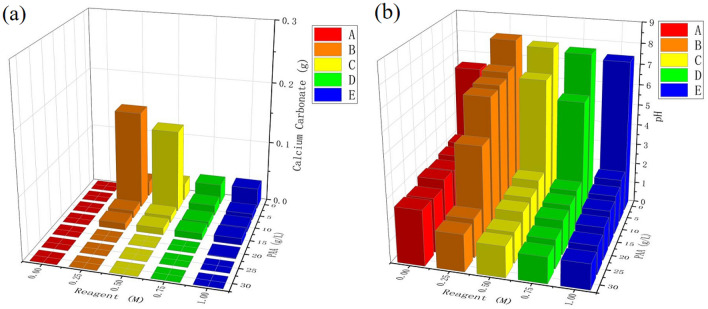
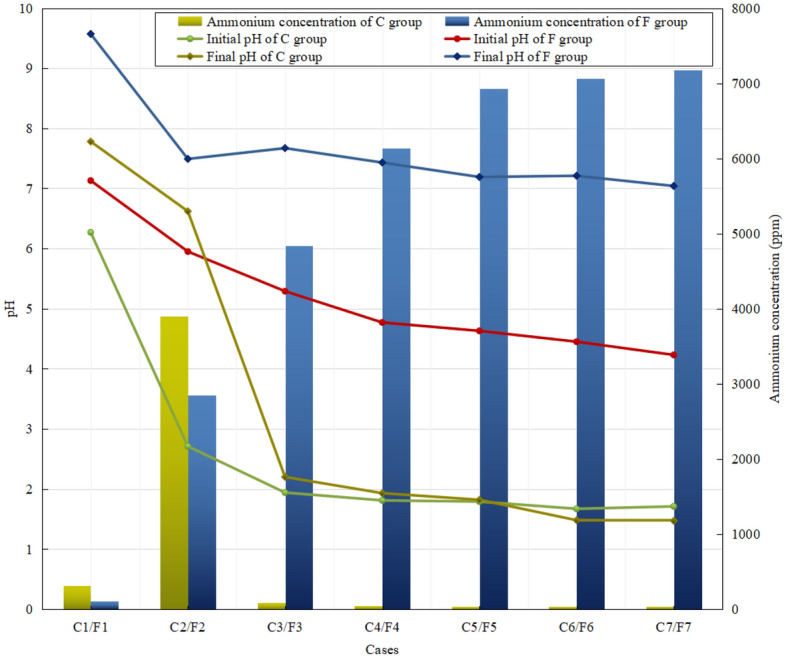
Biocementation using enzyme induced carbonate precipitation (EICP) process has become an innovative method for soil improvement. One of the major limitations in scaling-up of biocement treatment is the emission of gaseous ammonia during the urea hydrolysis, which is environmentally hazardous. In order to eliminate this shortcoming, this paper presents a series of experiments performed to evaluate a novel approach for preventing the ammonia byproducts in the EICP process via the use of polyacrylic acid (PAA). Through the adjustment of the pH to acidic, PAA not only promotes the enzyme activity, but also averts the conversion of ammonium to gaseous ammonia and its release, thus preventing any harm to the environment. The sand samples were treated with cementation solution and assessed for improvement in strength. Calcium carbonate content measurements and X-ray powder diffraction analysis identified the calcite crystals precipitated in the soil pores. Scanning electron microscopy analysis clearly showed that calcium carbonate was precipitated connecting soil particles, thus providing a uniaxial compressive strength (UCS) of up to 1.65 MPa. Overall, the inhibition in the speciation of gaseous ammonia shows the great potential of PAA for large-scale promotion of biocement.
利用酶诱导碳酸钙沉淀(EICP)工艺进行生物固化已成为土壤改良的一种创新方法。生物固化处理规模化的主要限制之一是在尿素水解过程中会排放气态氨,这对环境有危害。为了消除这一缺点,本文提出了一系列实验,以评估通过使用聚丙烯酸(PAA)防止 EICP 工艺中氨副产物的新方法。通过将 pH 值调整为酸性,PAA 不仅可以促进酶的活性,还可以避免铵转化为气态氨并释放出来,从而防止对环境造成任何危害。用胶结溶液处理砂样,并评估强度的提高。碳酸钙含量测量和 X 射线粉末衍射分析确定了在土壤孔隙中沉淀的方解石晶体。扫描电子显微镜分析清楚地表明,碳酸钙沉淀连接了土壤颗粒,从而提供了高达 1.65 MPa 的单轴抗压强度(UCS)。总的来说,气态氨的形态抑制表明 PAA 在大规模推广生物水泥方面具有巨大的潜力。