Löscher Wolfgang, Howe Charles L
Department of Pharmacology, Toxicology and Pharmacy, University of Veterinary Medicine, Hannover, Germany.
Center for Systems Neuroscience, Hannover, Germany.
Front Mol Neurosci. 2022 May 9;15:870868. doi: 10.3389/fnmol.2022.870868. eCollection 2022.
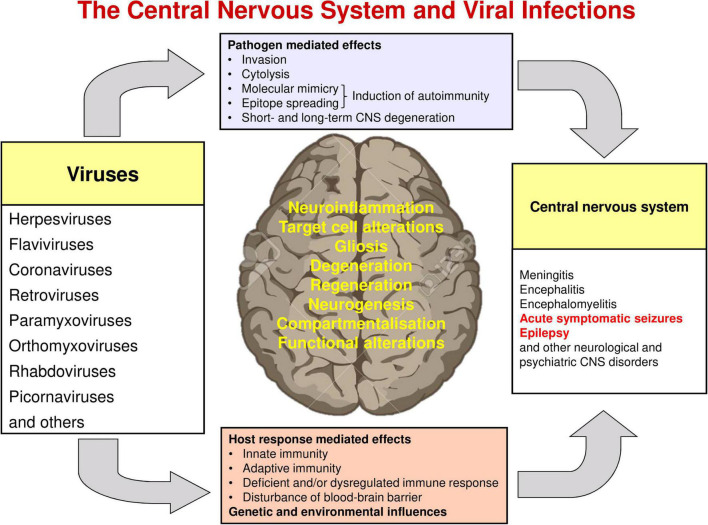
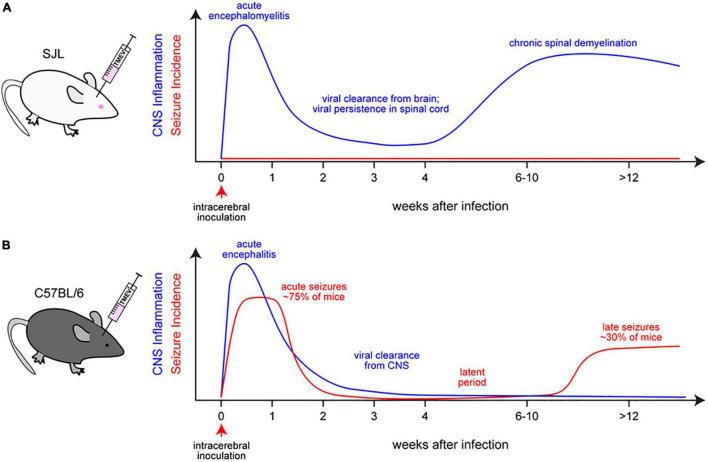
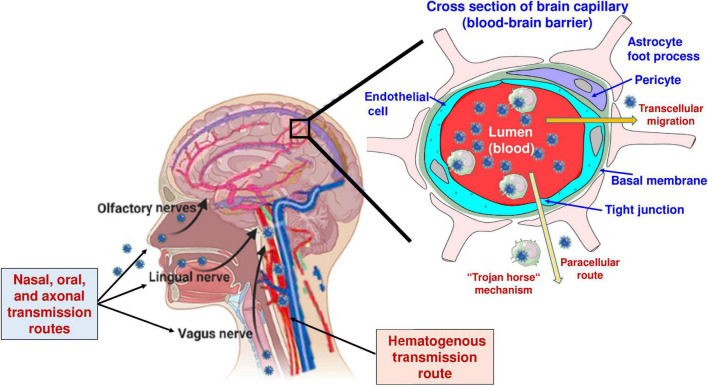
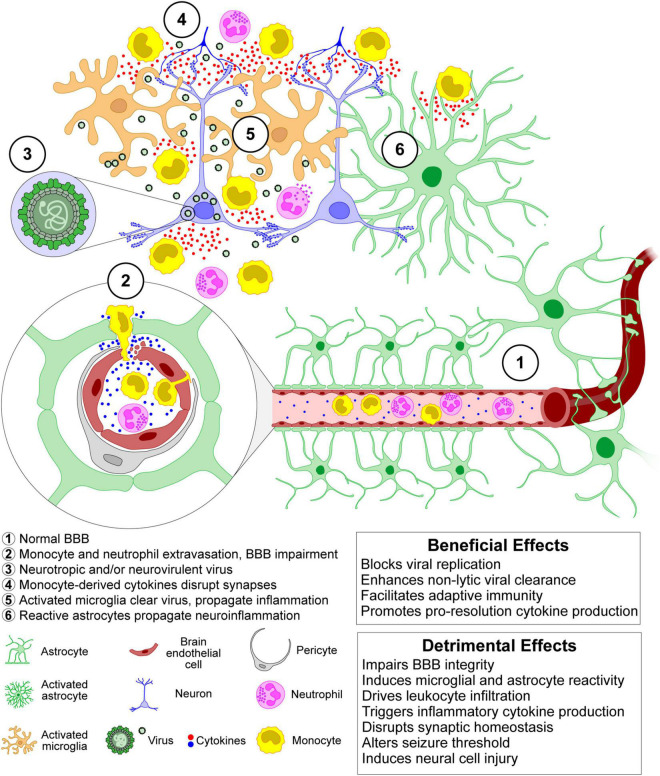
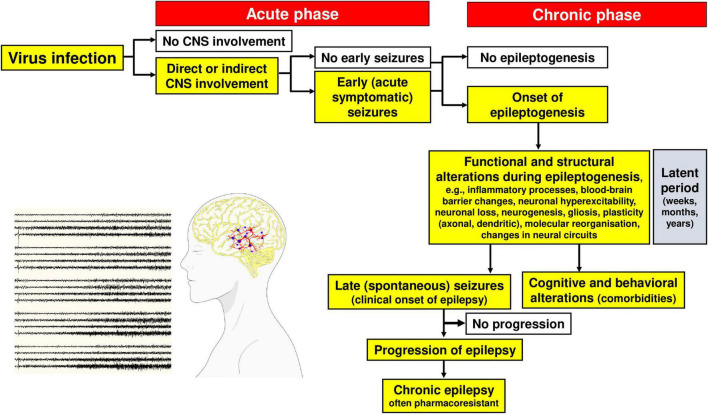
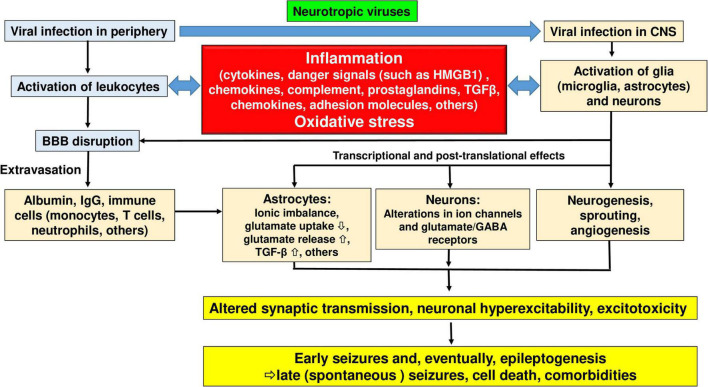
Seizures are a common presenting symptom during viral infections of the central nervous system (CNS) and can occur during the initial phase of infection ("early" or acute symptomatic seizures), after recovery ("late" or spontaneous seizures, indicating the development of acquired epilepsy), or both. The development of acute and delayed seizures may have shared as well as unique pathogenic mechanisms and prognostic implications. Based on an extensive review of the literature, we present an overview of viruses that are associated with early and late seizures in humans. We then describe potential pathophysiologic mechanisms underlying ictogenesis and epileptogenesis, including routes of neuroinvasion, viral control and clearance, systemic inflammation, alterations of the blood-brain barrier, neuroinflammation, and inflammation-induced molecular reorganization of synapses and neural circuits. We provide clinical and animal model findings to highlight commonalities and differences in these processes across various neurotropic or neuropathogenic viruses, including herpesviruses, SARS-CoV-2, flaviviruses, and picornaviruses. In addition, we extensively review the literature regarding Theiler's murine encephalomyelitis virus (TMEV). This picornavirus, although not pathogenic for humans, is possibly the best-characterized model for understanding the molecular mechanisms that drive seizures, epilepsy, and hippocampal damage during viral infection. An enhanced understanding of these mechanisms derived from the TMEV model may lead to novel therapeutic interventions that interfere with ictogenesis and epileptogenesis, even within non-infectious contexts.
癫痫发作是中枢神经系统(CNS)病毒感染期间常见的症状表现,可发生在感染的初始阶段(“早期”或急性症状性癫痫发作)、恢复后(“晚期”或自发性癫痫发作,表明获得性癫痫的发展),或两者皆有。急性和迟发性癫痫发作的发生可能具有共同以及独特的致病机制和预后意义。基于对文献的广泛综述,我们概述了与人类早期和晚期癫痫发作相关的病毒。然后,我们描述了癫痫发作和癫痫发生潜在的病理生理机制,包括神经侵袭途径、病毒控制和清除、全身炎症、血脑屏障改变、神经炎症以及炎症诱导的突触和神经回路分子重组。我们提供临床和动物模型研究结果,以突出各种嗜神经病毒或神经致病病毒(包括疱疹病毒、SARS-CoV-2、黄病毒和微小核糖核酸病毒)在这些过程中的共性和差异。此外,我们广泛回顾了关于泰勒氏鼠脑脊髓炎病毒(TMEV)的文献。这种微小核糖核酸病毒虽然对人类无致病性,但可能是理解病毒感染期间引发癫痫发作、癫痫和海马损伤分子机制的最具特征的模型。对源自TMEV模型的这些机制的深入理解可能会带来新的治疗干预措施,即使在非感染性情况下也能干扰癫痫发作和癫痫发生。