Bioavailability Control Laboratory, College of Pharmacy, Ajou University, Suwon, 16499, Republic of Korea.
Dongkook Pharmaceutical Co., Ltd, Seoul, Republic of Korea.
Int J Nanomedicine. 2022 May 17;17:2243-2260. doi: 10.2147/IJN.S356804. eCollection 2022.
To conjugate different degree of saturation of C18 fatty acids (stearic acid, oleic acid, and linoleic acid) with the hydroxyl groups of leuprolide acetate (LEU acetate) and to investigate the controlled release and enhanced permeability through self-assembled nanoparticles (L18FNs).
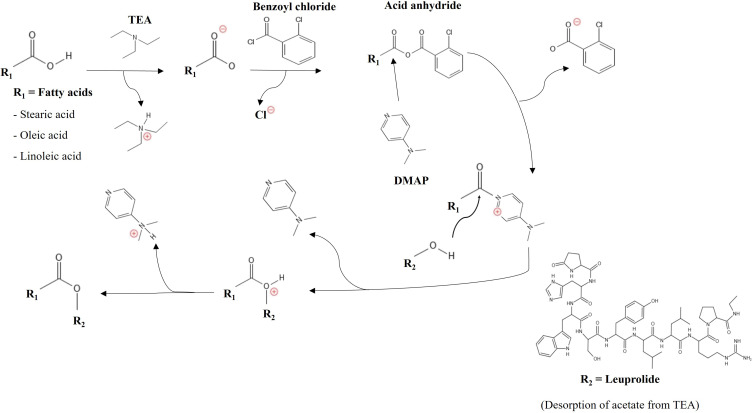
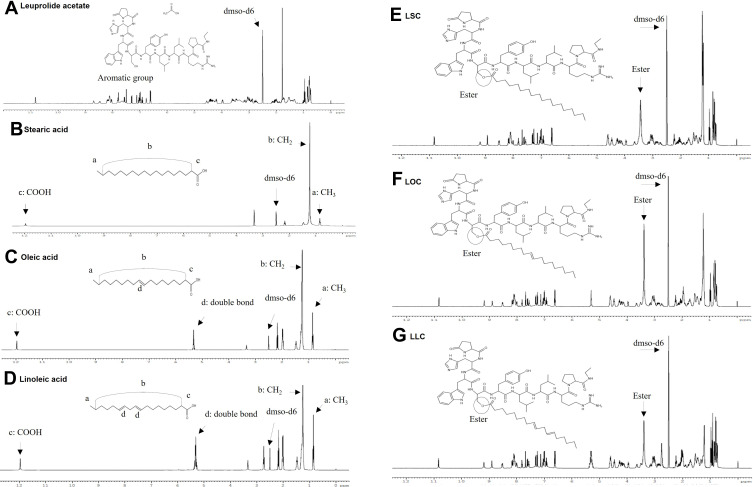
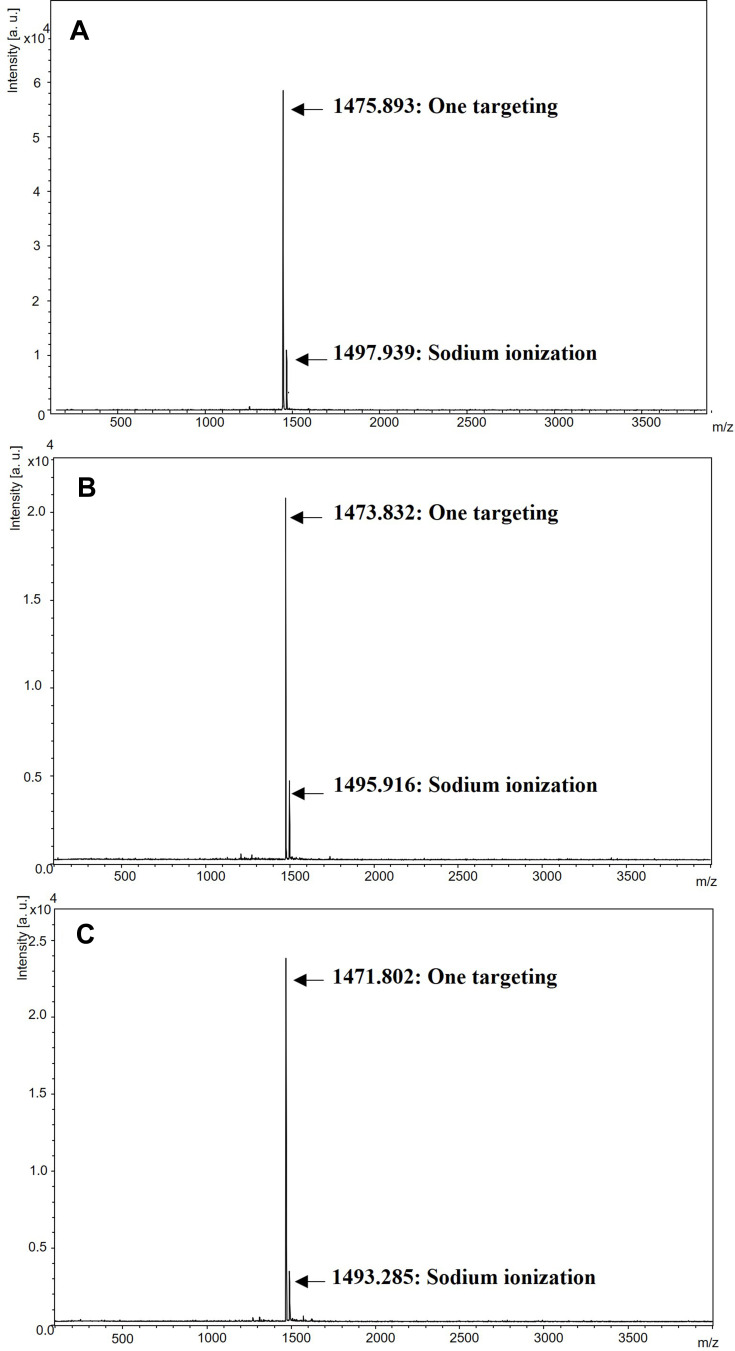
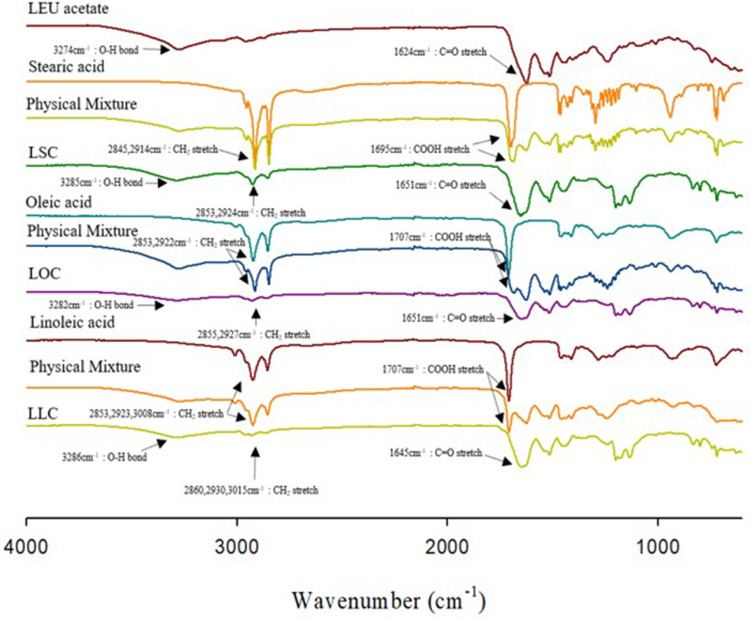
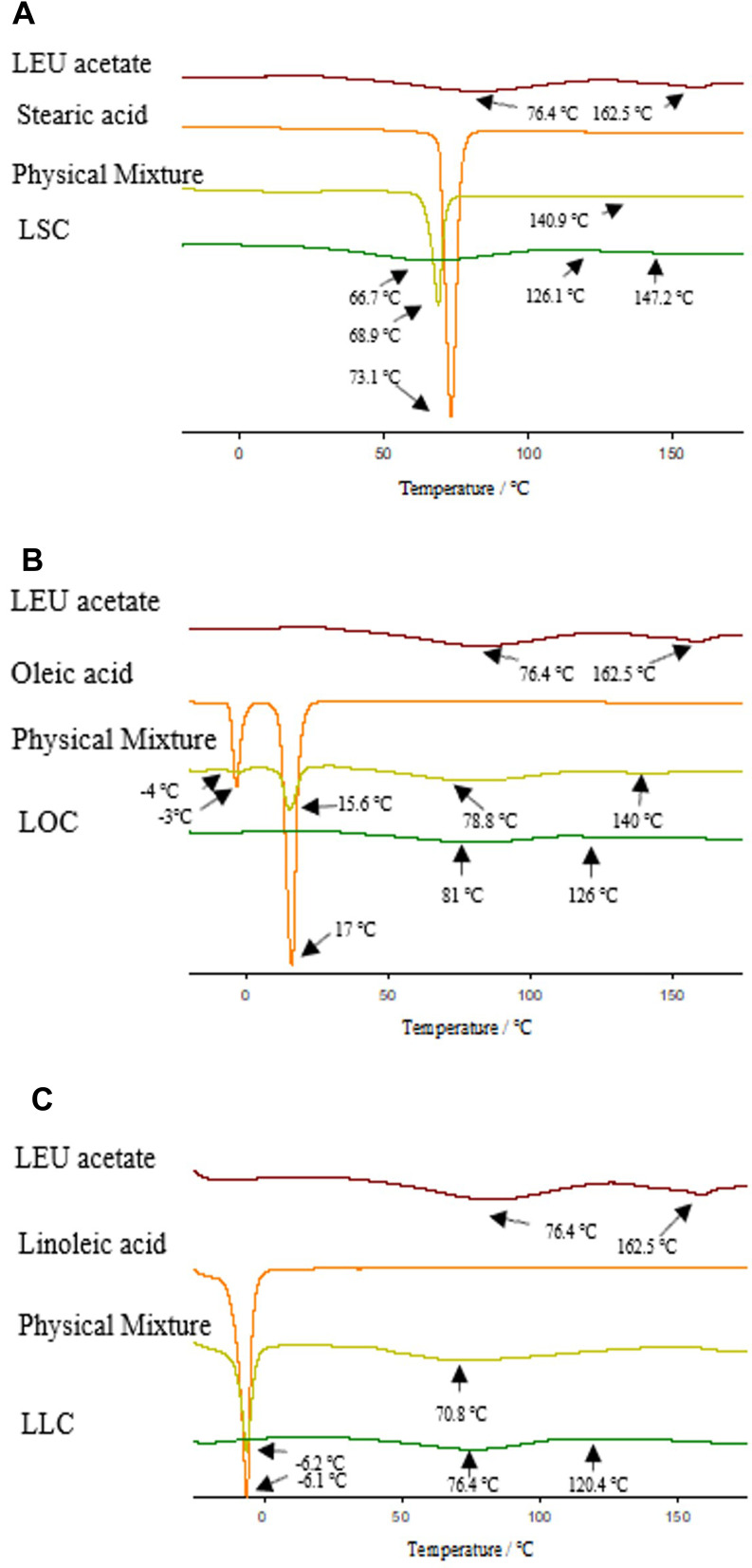
Yamaguchi esterification with benzoyl chloride and DMAP (4-Dimethylaminopyridine) allowed the conjugation of the fatty acid to the hydroxyl group of LEU. The three conjugates were then designated as stearic acid-conjugated LEU, LSC, oleic acid-conjugated LEU, LOC, and linoleic acid-conjugated LEU, LLC, respectively. The conjugates (L18FCs) were purified using preparative HPLC (Prep-HPLC) and identified through various instrumental analyses.
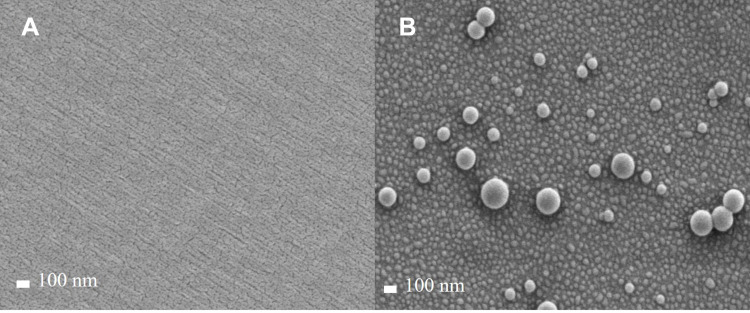
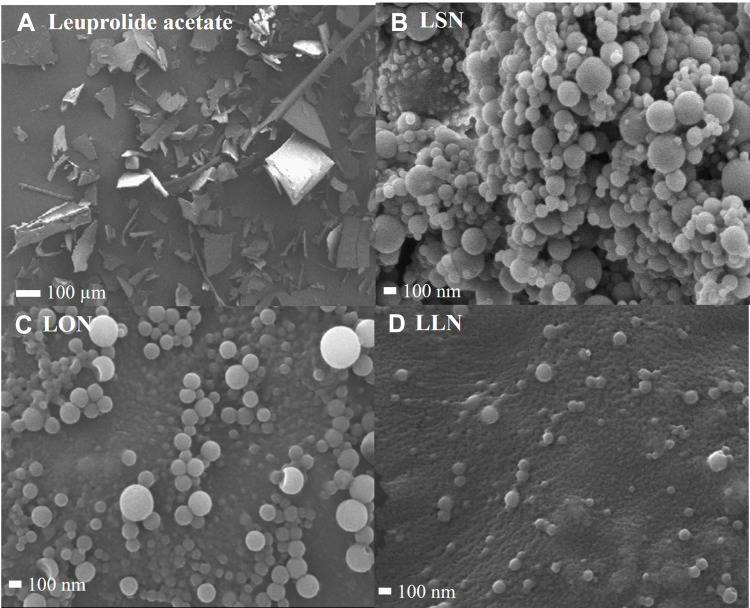
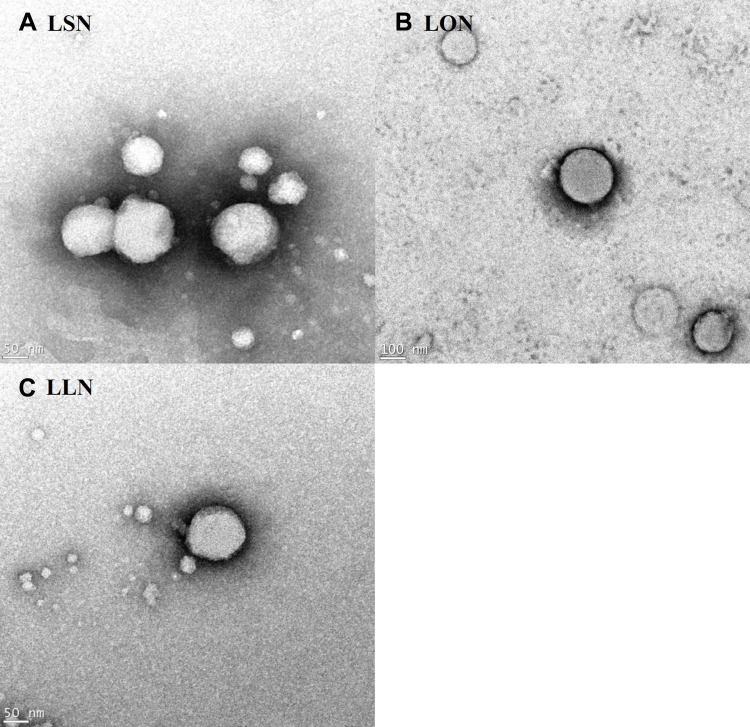
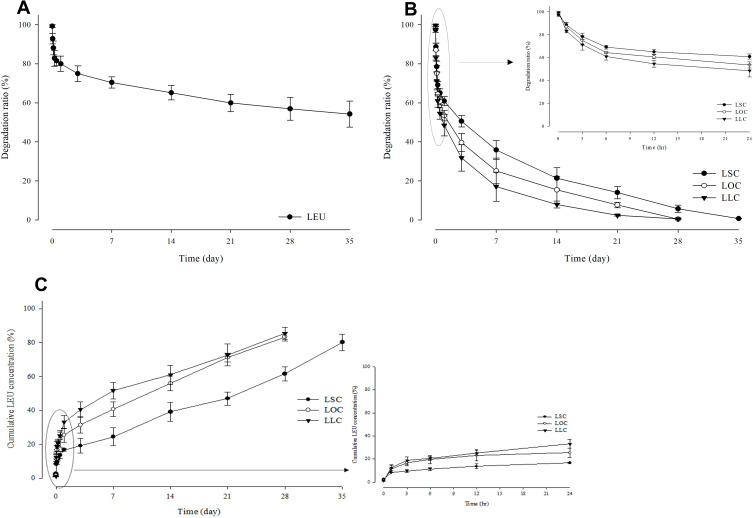
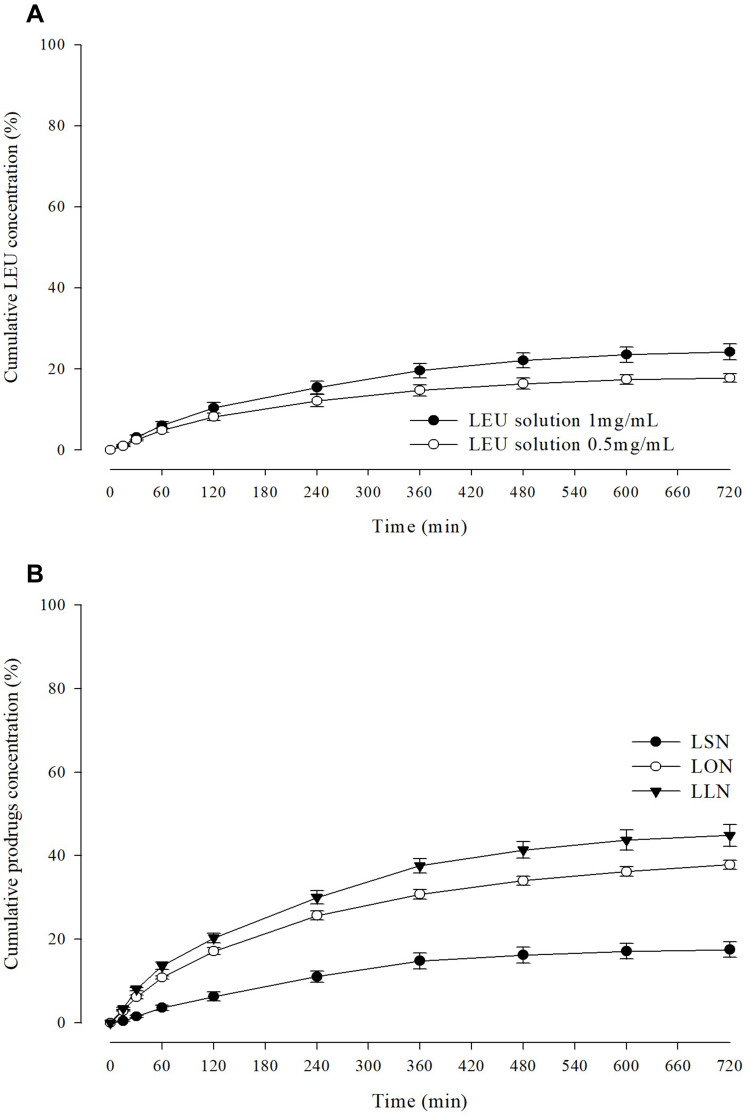
The zeta potential, particle size, and morphology of each L18FNs were evaluated. In the case of LSNs, the zeta potential value was relatively low and the particle size was larger than LONs and LLNs owing to the higher hydrophobicity of saturated fatty chain, while the LLNs showed a higher zeta potential and smaller particle size. In human plasma, LLC showed the fastest degradation rate with the highest accumulative drug release. The permeability of L18FNs was analyzed through the Franz diffusion cell experiment, confirming that the degree of saturation of fatty acids affects the permeability of LFNs. While the permeability of LSNs was not significantly enhanced due to higher particle size after nanonization, LONs and LLNs increased 1.56 and 1.85 times in permeation, respectively, compared to LEU.
Utilization of different degree of saturation of fatty acids to conjugate a peptide drug could provide pharmaceutical versatility via self-assembly and modification of physicochemical properties.
将不同饱和度的 C18 脂肪酸(硬脂酸、油酸和亚油酸)与亮丙瑞林醋酸盐(LEU 醋酸盐)的羟基进行共轭,研究通过自组装纳米粒(L18FNs)的控制释放和增强渗透性。
用苯甲酰氯和 DMAP(4-二甲氨基吡啶)进行 Yamaguchi 酯化,使脂肪酸与 LEU 的羟基发生共轭。然后将这三种缀合物分别命名为硬脂酸-缀合 LEU(LSC)、油酸-缀合 LEU(LOC)和亚油酸-缀合 LEU(LLC)。通过制备型 HPLC(Prep-HPLC)对缀合物(L18FCs)进行纯化,并通过各种仪器分析进行鉴定。
评估了每个 L18FNs 的 ζ 电位、粒径和形态。在 LSNs 的情况下,由于饱和脂肪酸链的疏水性较高,ζ 电位值相对较低,粒径较大,而 LONs 和 LLNs 的粒径较小。在人血浆中,由于具有最高的累积药物释放率, LLC 表现出最快的降解速率。通过 Franz 扩散池实验分析了 L18FNs 的渗透性,证实了脂肪酸的饱和度会影响 LFNs 的渗透性。虽然纳米化后粒径较大导致 LSNs 的渗透性没有显著增强,但 LONs 和 LLNs 的渗透性分别增加了 1.56 倍和 1.85 倍,高于 LEU。
利用不同饱和度的脂肪酸对肽类药物进行共轭,可以通过自组装和修饰物理化学性质来提供药物的多功能性。