Atilla Pinar Ataca, Atilla Erden
Ankara University Stem Cell Institute, Ankara, Turkey.
Department of Hematology, Mersin City Hospital, Mersin, Turkey.
Transl Oncol. 2022 Aug;22:101459. doi: 10.1016/j.tranon.2022.101459. Epub 2022 May 23.
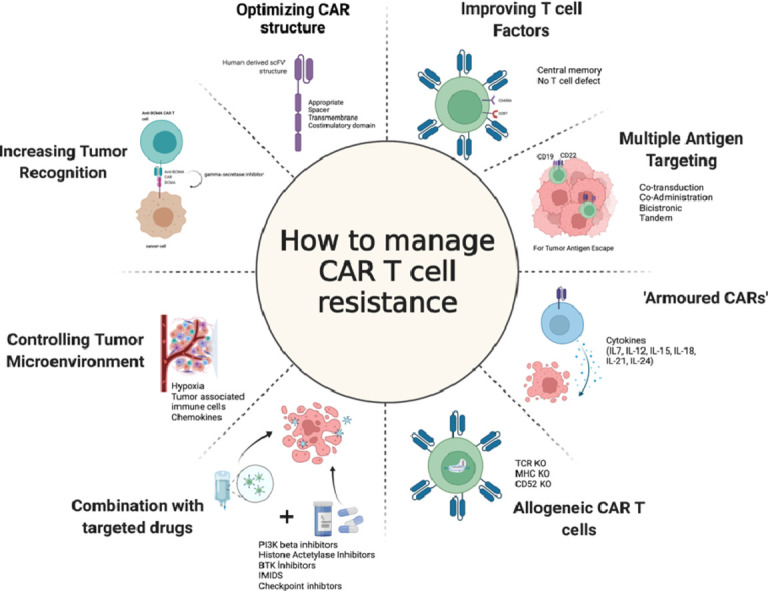
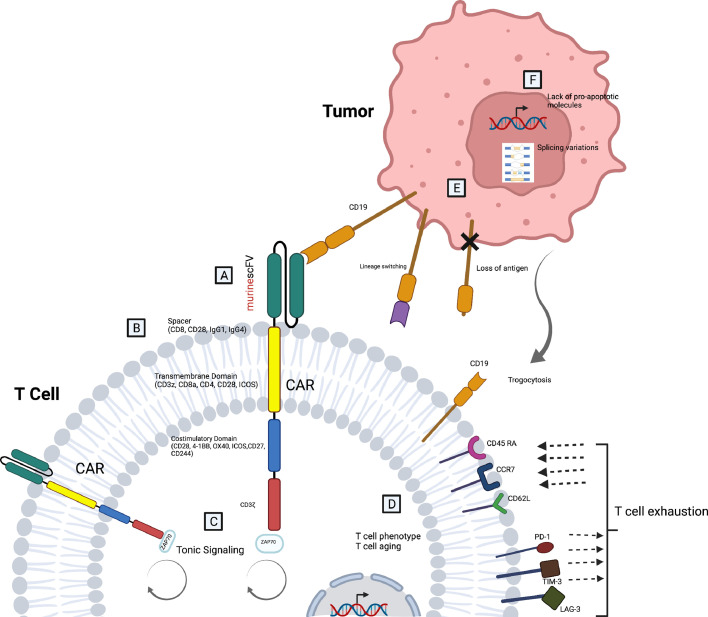
Chimeric antigen receptor T (CAR T) cell therapy is a new treatment paradigm that has revolutionized the treatment of CD19-positive B cell malignancies and BCMA-positive plasma cell malignancies. The response rates are highly impressive in comparison to historical cohorts, but the responses are not durable. The most recent results from pivotal trials show that current CAR T cell products fail to demonstrate optimal long-term disease control. Resistance to CAR T cells is related to CAR structure, T cell factors, tumor factors and the immunosuppressive microenvironment. Novel strategies are needed following failure with CAR T cell treatment. In this review, we discuss the resistance mechanisms to CAR T cell treatment according to disease and the emerging strategies to overcome resistance.
嵌合抗原受体T(CAR T)细胞疗法是一种全新的治疗模式,它彻底改变了CD19阳性B细胞恶性肿瘤和BCMA阳性浆细胞恶性肿瘤的治疗方式。与既往队列相比,其缓解率非常可观,但缓解并不持久。关键试验的最新结果表明,目前的CAR T细胞产品未能实现最佳的长期疾病控制。对CAR T细胞的耐药性与CAR结构、T细胞因子、肿瘤因子以及免疫抑制微环境有关。CAR T细胞治疗失败后需要新的策略。在本综述中,我们根据疾病讨论了CAR T细胞治疗的耐药机制以及克服耐药性的新兴策略。