Torezin Mendonça Geovani, Cassaboni Stracke Mateus, de Oliveira Coelho Bruna, Bruna Soligo Sanchuki Heloisa, Klassen de Oliveira Viviane, Klerynton Marchini Fabricio, Lucíola Zanette Dalila, Nóbrega Aoki Mateus, Ribeiro Viana Emilson, Blanes Lucas
Laboratory for Applied Science and Technology in Health, Carlos Chagas Institute, Oswaldo Cruz Foundation (Fiocruz), Professor Algacyr Munhoz Mader 3775 St., Curitiba, Paraná, Brazil.
Paraná Institute of Molecular Biology, Professor Algacyr Munhoz Mader 3775 St., Curitiba, Paraná, Brazil.
Microchem J. 2022 Sep;180:107600. doi: 10.1016/j.microc.2022.107600. Epub 2022 May 20.
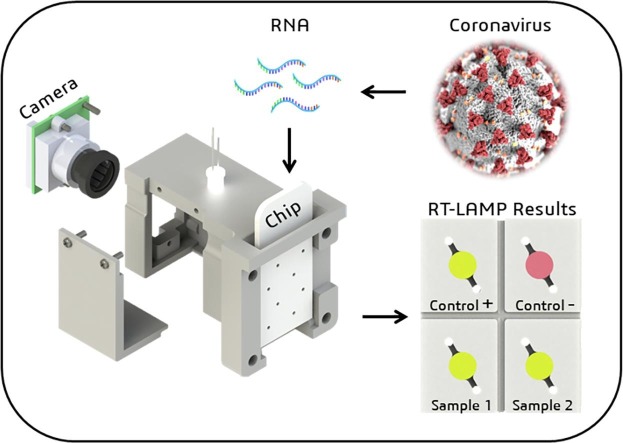
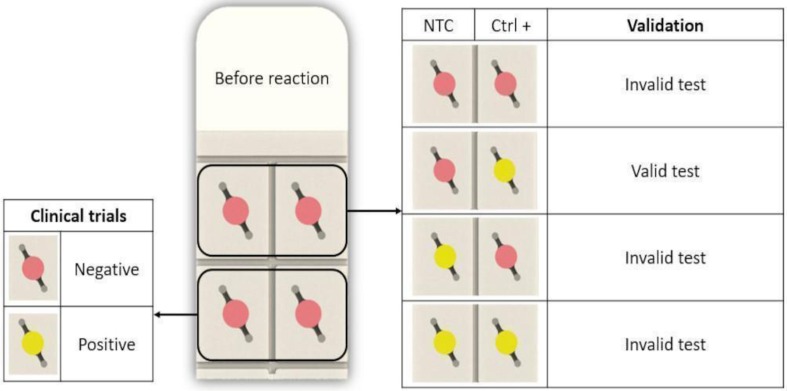
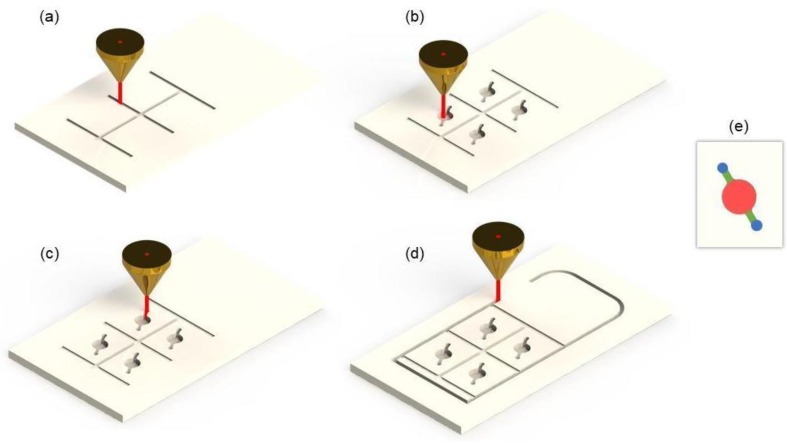
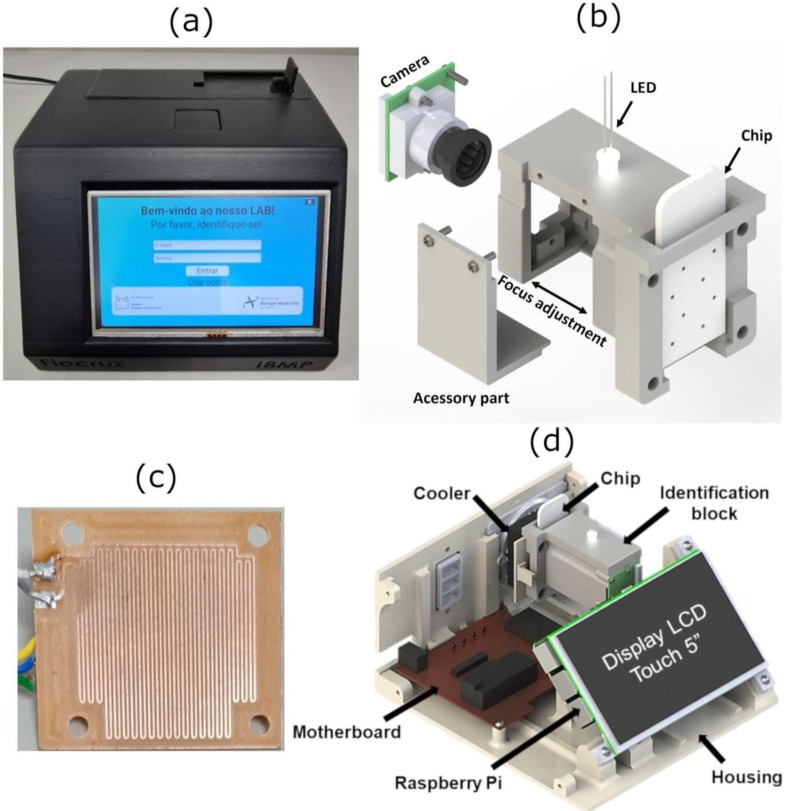
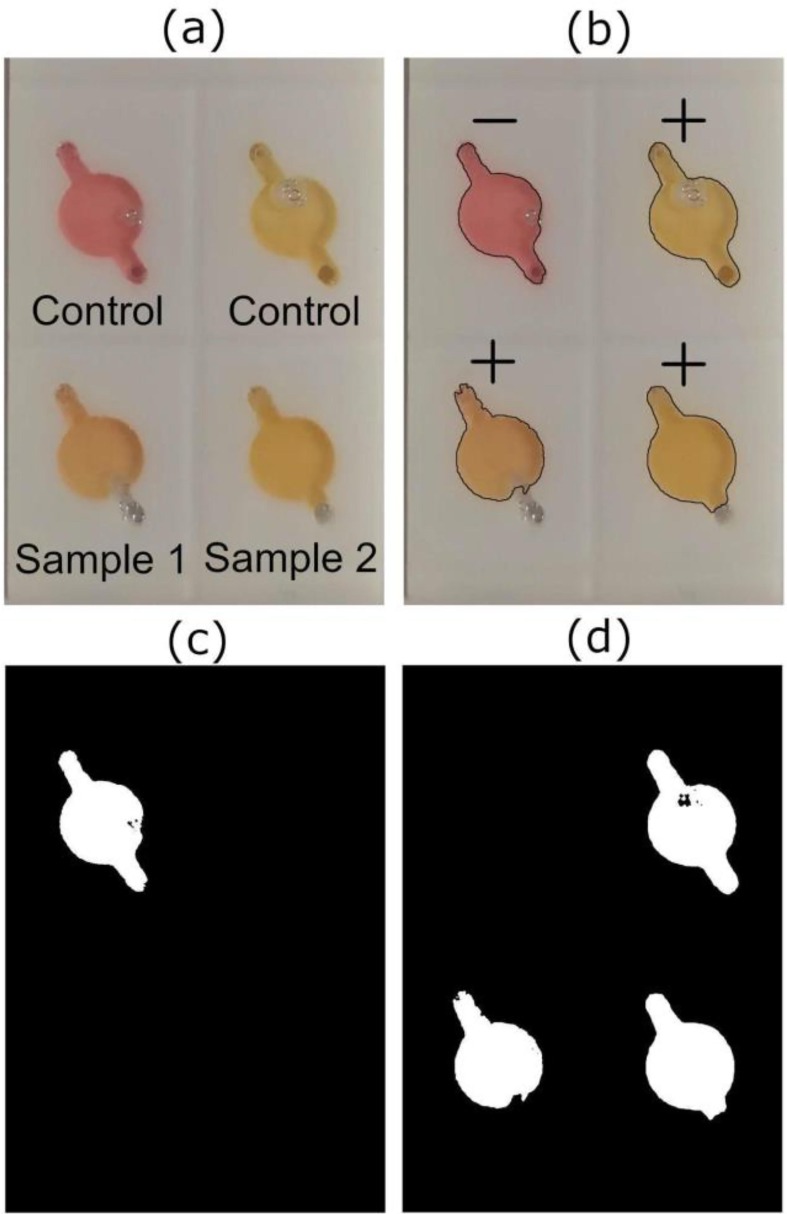
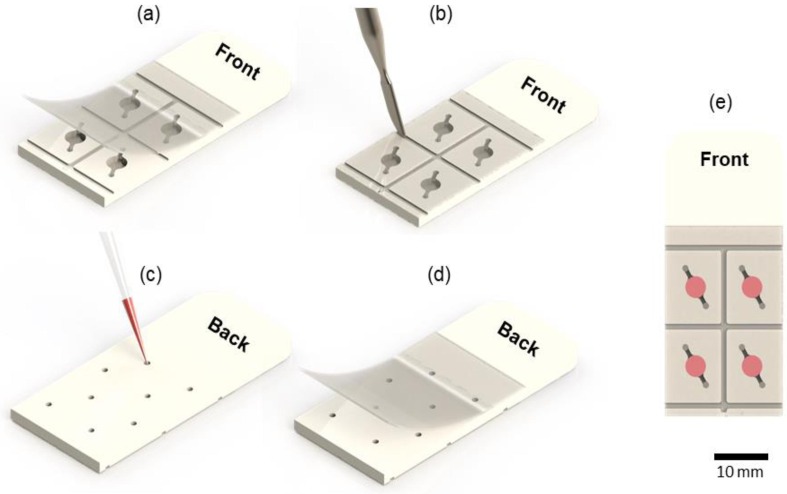
This work describes the development of a Point-of-Care (POC) Lab-on-a-Chip (LOC) instrument for diagnosis of SARS-CoV-2 by Reverse-Transcription Loop-mediated isothermal amplification (RT-LAMP). The hardware is based on a Raspberry Pi computer ($35), a video camera, an Arduino Nano microcontroller, a printed circuit board as a heater and a 3D printed housing. The chips were manufactured in polymethyl methacrylate (PMMA) using a CO2 laser cutting machine and sealed with a PCR optic plastic film. The chip temperature is precisely controlled by a proportional-integral-derivative (PID) algorithm. During the RT-LAMP amplifications the chip was maintained at ∼ (65.0 ± 0.1) °C for 25 minutes and 5 minutes cooling down, totaling a 30 minutes of reaction .The software interpretation occurs in less than a second. The chip design has four 25 µL chambers, two for clinical samples and two for positive and negative control-samples. The RT-LAMP master mix solution added in the chip chambers contains the pH indicator Phenol Red, that is pink (for pH ∼ 8.0) before amplification and becomes yellow (pH ∼ 6.0) if the genetic material is amplified. The RT-LAMP SARS-CoV-2 diagnostic was made by color image recognition using the OpenCV machine vision software library. The software was programmed to automatically distinguish the HSV color parameter distribution in each one of the four chip chambers. The instrument was successfully tested for SARS-CoV-2 diagnosis, in 22 clinic samples, 11 positives and 11 negatives, achieving an assertiveness of 86% when compared to the results obtained by RT-LAMP standard reactions performed in conventional PCR equipment.
这项工作描述了一种用于通过逆转录环介导等温扩增(RT-LAMP)诊断新型冠状病毒(SARS-CoV-2)的即时检测(POC)芯片实验室(LOC)仪器的开发。该硬件基于一台树莓派计算机(35美元)、一台摄像机、一个Arduino Nano微控制器、一块用作加热器的印刷电路板以及一个3D打印外壳。芯片采用聚甲基丙烯酸甲酯(PMMA)通过二氧化碳激光切割机制造,并用PCR光学塑料薄膜密封。芯片温度由比例积分微分(PID)算法精确控制。在RT-LAMP扩增过程中,芯片保持在约(65.0±0.1)℃25分钟,然后冷却5分钟,反应总共持续30分钟。软件解读在不到一秒内完成。芯片设计有四个25微升的腔室,两个用于临床样本,两个用于阳性和阴性对照样本。添加到芯片腔室中的RT-LAMP预混溶液含有pH指示剂酚红,扩增前为粉红色(pH约8.0),如果遗传物质被扩增则变为黄色(pH约6.0)。通过使用OpenCV机器视觉软件库的彩色图像识别进行RT-LAMP SARS-CoV-2诊断。该软件被编程为自动区分四个芯片腔室中每个腔室的HSV颜色参数分布。该仪器已成功用于22个临床样本(11个阳性和11个阴性)的SARS-CoV-2诊断,与在传统PCR设备中进行的RT-LAMP标准反应获得的结果相比,置信度达到86%。