Discovery Toxicology, Drug Safety Research & Evaluation, Takeda Development Center Americas, Inc., San Diego, CA 92121, USA.
Gastrointestinal Immunology, Gastrointestinal Drug Discovery Unit, Takeda Development Center Americas, Inc., San Diego, CA 92121, USA.
Cells. 2022 May 21;11(10):1708. doi: 10.3390/cells11101708.
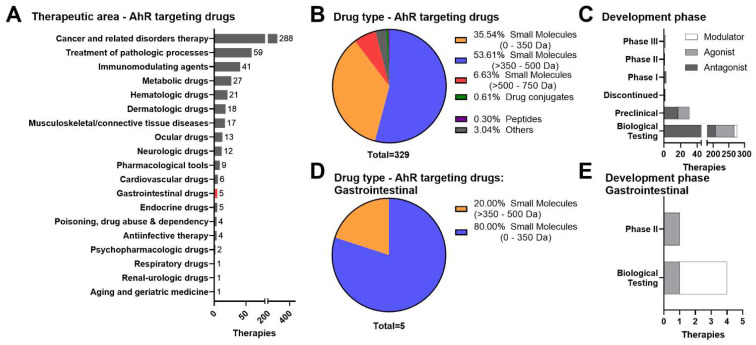
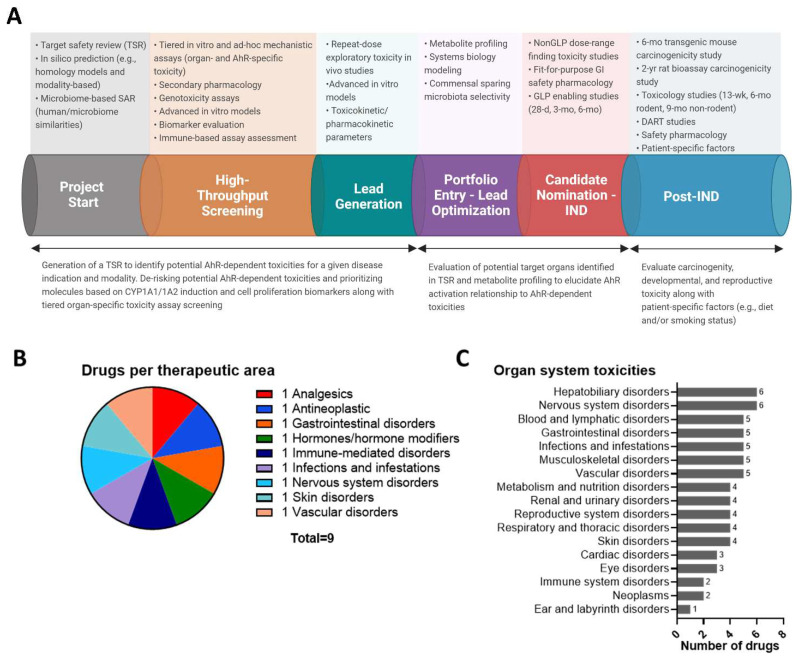
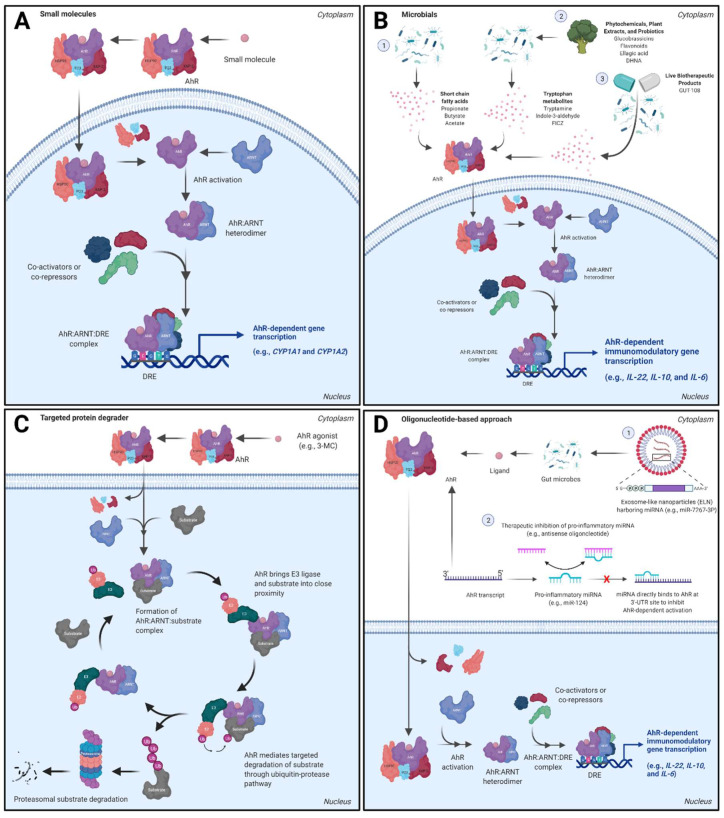
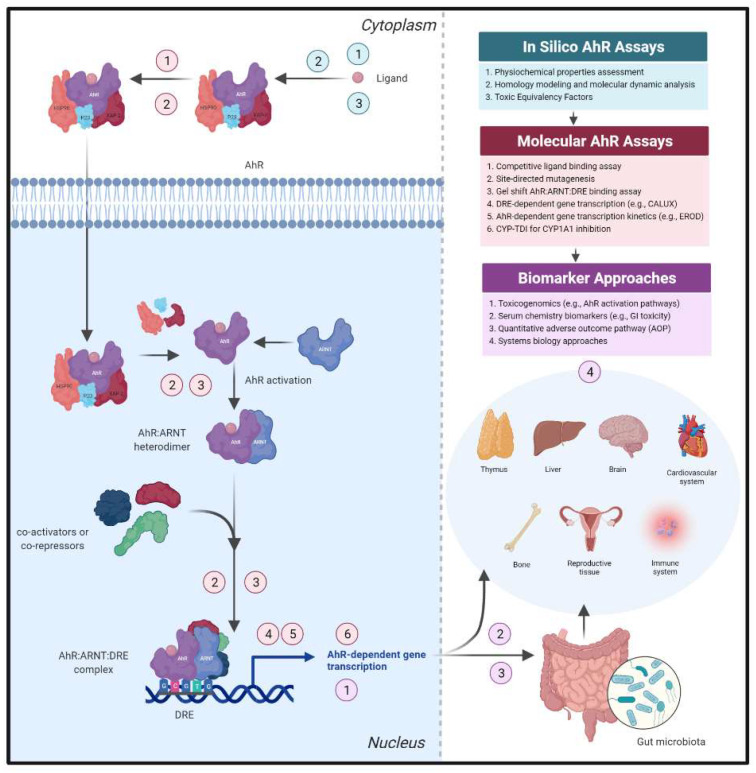
Target modulation of the AhR for inflammatory gastrointestinal (GI) conditions holds great promise but also the potential for safety liabilities both within and beyond the GI tract. The ubiquitous expression of the AhR across mammalian tissues coupled with its role in diverse signaling pathways makes development of a "clean" AhR therapeutically challenging. Ligand promiscuity and diversity in context-specific AhR activation further complicates targeting the AhR for drug development due to limitations surrounding clinical translatability. Despite these concerns, several approaches to target the AhR have been explored such as small molecules, microbials, PROTACs, and oligonucleotide-based approaches. These various chemical modalities are not without safety liabilities and require unique de-risking strategies to parse out toxicities. Collectively, these programs can benefit from in silico and in vitro methodologies that investigate specific AhR pathway activation and have the potential to implement thresholding parameters to categorize AhR ligands as "high" or "low" risk for sustained AhR activation. Exploration into transcriptomic signatures for AhR safety assessment, incorporation of physiologically-relevant in vitro model systems, and investigation into chronic activation of the AhR by structurally diverse ligands will help address gaps in our understanding regarding AhR-dependent toxicities. Here, we review the role of the AhR within the GI tract, novel therapeutic modality approaches to target the AhR, key AhR-dependent safety liabilities, and relevant strategies that can be implemented to address drug safety concerns. Together, this review discusses the emerging therapeutic landscape of modalities targeting the AhR for inflammatory GI indications and offers a safety roadmap for AhR drug development.
靶向 AhR 治疗炎症性胃肠道 (GI) 疾病具有很大的潜力,但也存在潜在的安全风险,不仅在胃肠道内,而且在胃肠道外也存在安全风险。AhR 在哺乳动物组织中的广泛表达及其在多种信号通路中的作用,使得开发一种“清洁”的 AhR 治疗方法具有挑战性。配体的混杂性和上下文特异性 AhR 激活的多样性进一步增加了针对 AhR 进行药物开发的难度,因为这受到临床可转化性的限制。尽管存在这些担忧,但已经探索了几种靶向 AhR 的方法,例如小分子、微生物、PROTAC 和基于寡核苷酸的方法。这些不同的化学模式都存在安全风险,需要独特的风险降低策略来区分毒性。总的来说,这些项目可以受益于研究特定 AhR 通路激活的计算和体外方法,并有潜力实施阈值参数将 AhR 配体分类为“高”或“低”风险,以持续激活 AhR。探索 AhR 安全性评估的转录组特征、纳入生理相关的体外模型系统以及研究结构多样的配体对 AhR 的慢性激活,将有助于解决我们对 AhR 依赖性毒性的理解中的差距。在这里,我们回顾了 AhR 在胃肠道中的作用、靶向 AhR 的新型治疗模式方法、关键的 AhR 依赖性安全性问题,以及可以实施的相关策略,以解决药物安全性问题。总的来说,这篇综述讨论了针对炎症性 GI 适应症靶向 AhR 的治疗模式的新兴治疗领域,并为 AhR 药物开发提供了安全性路线图。