Abadeen Ali Zain Ul, Hussain Arshad, Sathish Kumar Veerappan, Murali Gunasekaran, Vatin Nikolai Ivanovich, Riaz Hassan
School of Civil and Environmental Engineering, National University of Sciences and Technology, Islamabad 44000, Pakistan.
Faculty of Civil Engineering, Architecture and Geodesy, University of Split, 21000 Split, Croatia.
Materials (Basel). 2022 May 20;15(10):3672. doi: 10.3390/ma15103672.
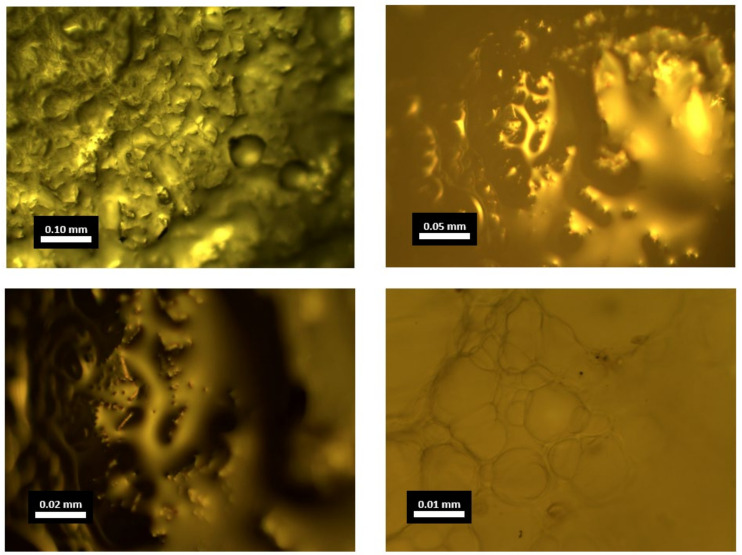
Ultraviolet radiation, oxidation, temperature, moisture, and traffic loads produce degradation and brittleness in the asphalt pavement. Microcracks develop into macrocracks, which eventually lead to pavement failure. Although asphalt has an inherent capacity for self-healing, it is constricted. As a result, damages build beyond the ability of asphalt to repair themselves. This research employs the in-situ crack healing method of encapsulated rejuvenator technology to enhance the insufficient self-healing capability of roads. This allows the extrinsically induced healing in asphalt to assist it in recovering from damage sustained during service life. Optical microscopy, thermogravimetric analysis, and the compressive load test of capsules were done to characterise their properties. We measured the self-healing behaviour of encapsulated rejuvenator-induced asphalt utilising the three-point bending beam tests on unaged, short-term aged and long-term aged asphalt beams. The rate of oil release before and after healing was quantified using Fourier transform infrared spectroscopy. The results of these tests were utilised to explain the link between healing time, temperature, asphalt ageing, and healing level. Overall, it was determined that the encapsulated rejuvenator was acceptable for mending asphalt mixes because it increased healing temperature and duration, resulting in an up to 80% healing index.
紫外线辐射、氧化、温度、湿度和交通荷载会使沥青路面产生降解和脆性。微裂缝会发展成宏观裂缝,最终导致路面损坏。尽管沥青具有内在的自愈合能力,但这种能力是有限的。因此,损害的积累超出了沥青自我修复的能力。本研究采用封装再生剂技术的原位裂缝愈合方法,以增强道路不足的自愈合能力。这使得沥青中的外部诱导愈合能够帮助其从使用寿命期间遭受的损害中恢复。对胶囊进行了光学显微镜、热重分析和压缩载荷试验,以表征其性能。我们利用对未老化、短期老化和长期老化沥青梁的三点弯曲梁试验,测量了封装再生剂诱导沥青的自愈合行为。使用傅里叶变换红外光谱法定量了愈合前后的油释放率。这些试验的结果被用来解释愈合时间、温度、沥青老化和愈合水平之间的联系。总体而言,确定封装再生剂可用于修补沥青混合料,因为它提高了愈合温度和持续时间,从而产生了高达80%的愈合指数。