Chuang Sung-Ting, Papp Henrietta, Kuczmog Anett, Eells Rebecca, Condor Capcha Jose M, Shehadeh Lina A, Jakab Ferenc, Buchwald Peter
Diabetes Research Institute, Miller School of Medicine, University of Miami, Miami, FL 33136, USA.
National Laboratory of Virology, University of Pécs, 7622 Pécs, Hungary.
Pharmaceuticals (Basel). 2022 May 18;15(5):621. doi: 10.3390/ph15050621.
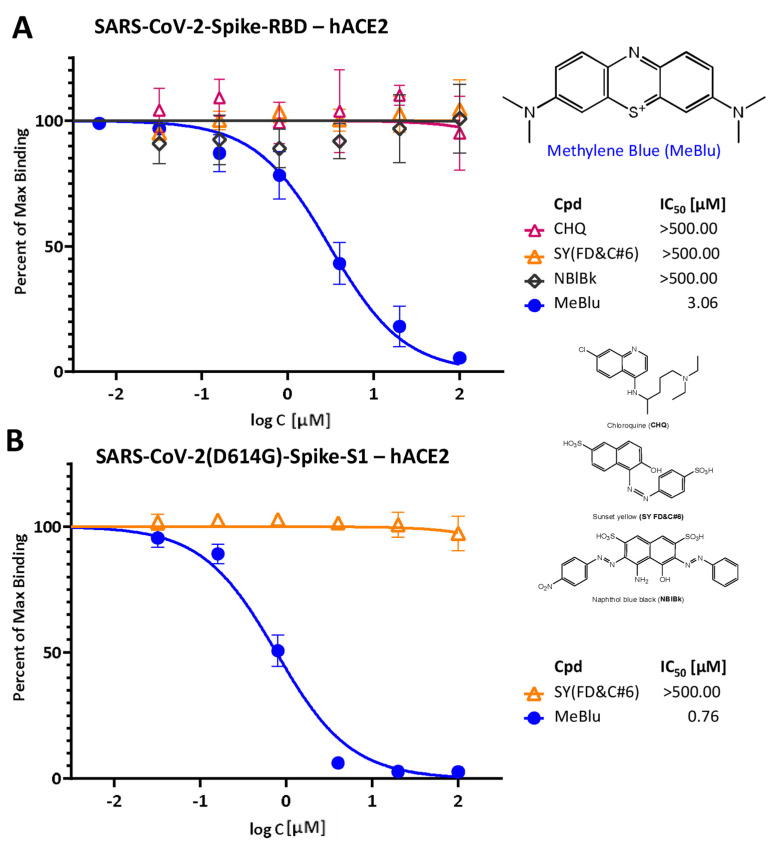
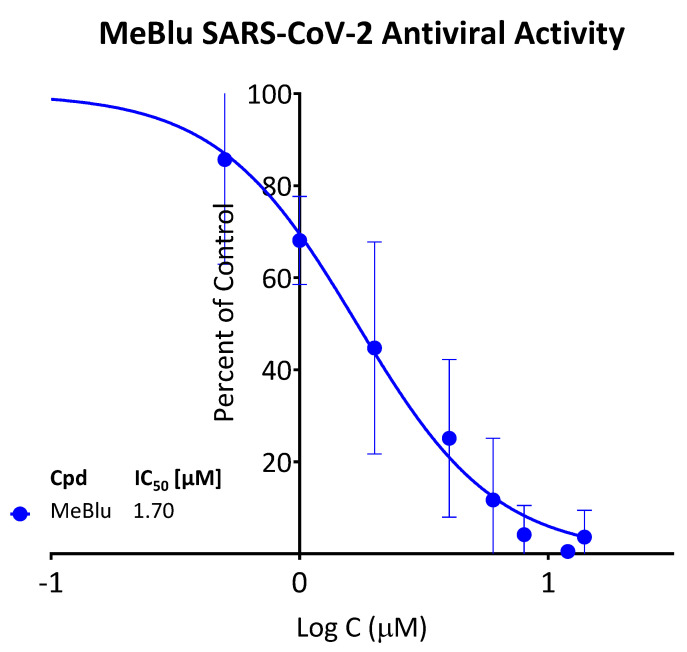
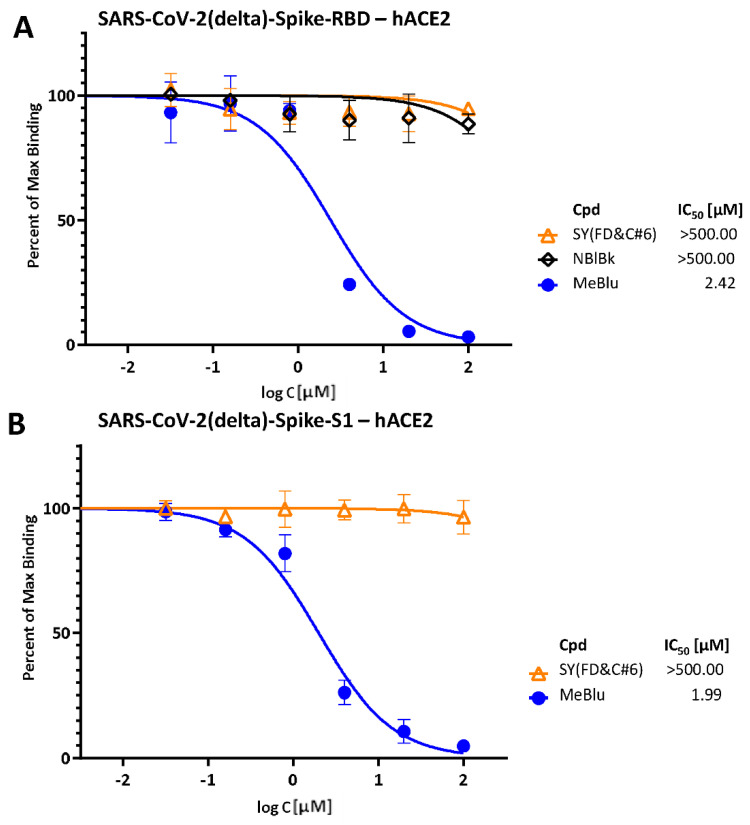
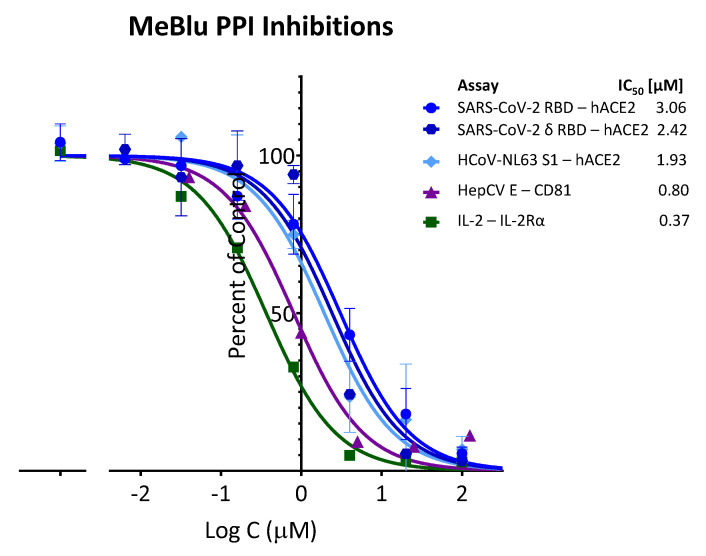
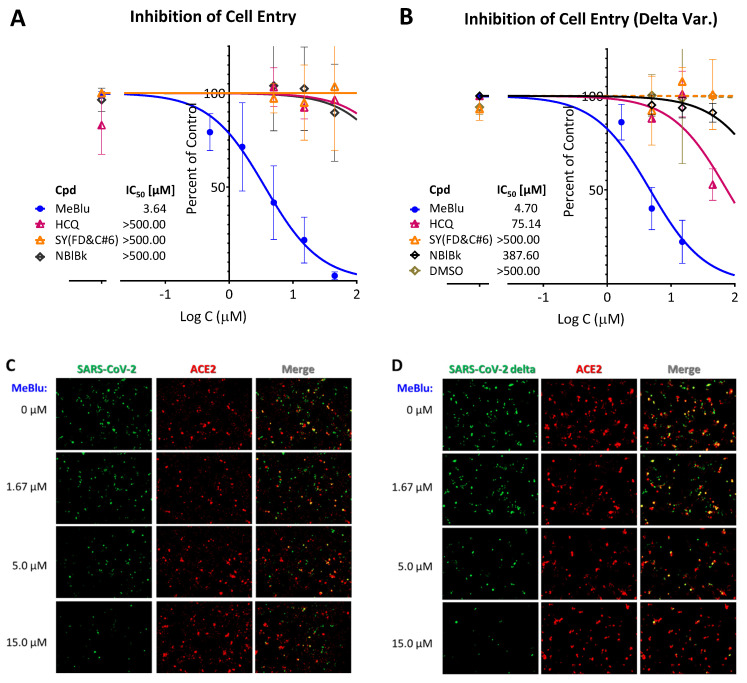
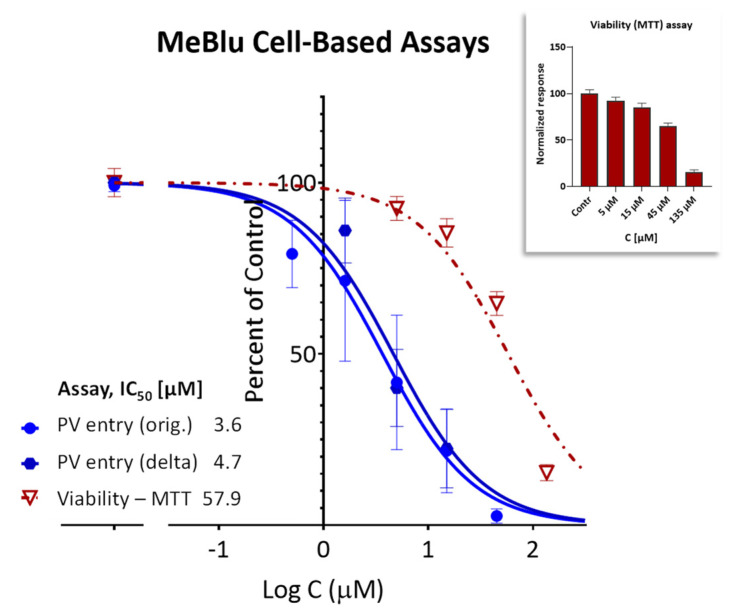
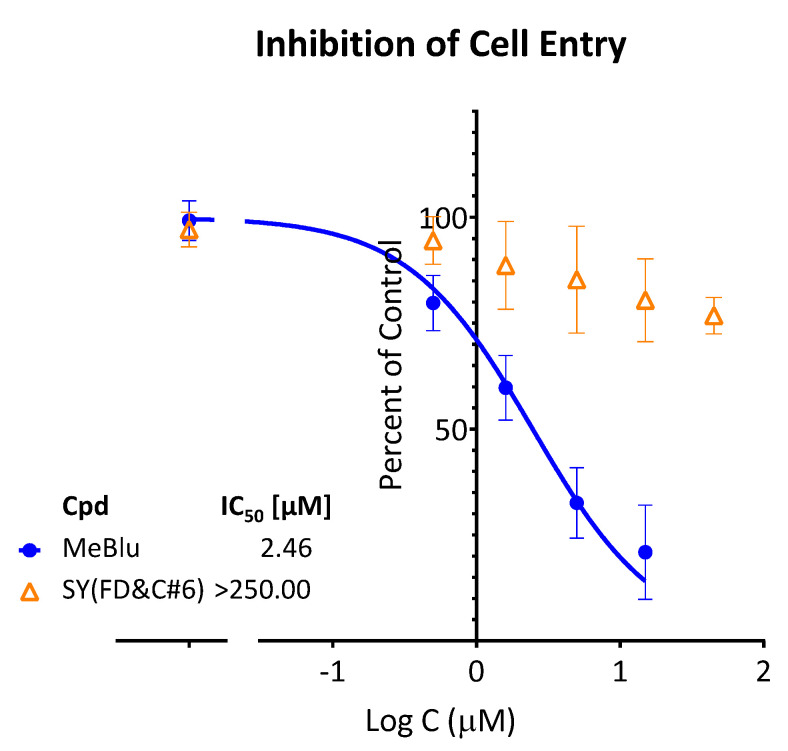
We have previously identified methylene blue, a tricyclic phenothiazine dye approved for clinical use for the treatment of methemoglobinemia and for other medical applications as a small-molecule inhibitor of the protein-protein interaction (PPI) between the spike protein of the SARS-CoV-2 coronavirus and ACE2, the first critical step of the attachment and entry of this coronavirus responsible for the COVID-19 pandemic. Here, we show that methylene blue concentration dependently inhibits this PPI for the spike protein of the original strain as well as for those of variants of concern such as the D614G mutant and delta (B.1.617.2) with IC in the low micromolar range (1-5 μM). Methylene blue also showed promiscuous activity and inhibited several other PPIs of viral proteins (e.g., HCoV-NL63-ACE2, hepatitis C virus E-CD81) as well as others (e.g., IL-2-IL-2Rα) with similar potency. This nonspecificity notwithstanding, methylene blue inhibited the entry of pseudoviruses bearing the spike protein of SARS-CoV-2 in hACE2-expressing host cells, both for the original strain and the delta variant. It also blocked SARS-CoV-2 (B.1.5) virus replication in Vero E6 cells with an IC in the low micromolar range (1.7 μM) when assayed using quantitative PCR of the viral RNA. Thus, while it seems to be a promiscuous PPI inhibitor with low micromolar activity and has a relatively narrow therapeutic index, methylene blue inhibits entry and replication of SARS-CoV-2, including several of its mutant variants, and has potential as a possible inexpensive, broad-spectrum, orally bioactive small-molecule antiviral for the prevention and treatment of COVID-19.
我们之前已鉴定出亚甲蓝,这是一种三环吩噻嗪染料,已被批准用于临床治疗高铁血红蛋白血症以及其他医学用途,它可作为小分子抑制剂,抑制严重急性呼吸综合征冠状病毒2(SARS-CoV-2)刺突蛋白与血管紧张素转换酶2(ACE2)之间的蛋白质-蛋白质相互作用(PPI),而这是该冠状病毒附着和进入的第一个关键步骤,该冠状病毒引发了新冠疫情。在此,我们表明亚甲蓝浓度依赖性地抑制原始毒株以及值得关注的变体(如D614G突变体和德尔塔毒株(B.1.617.2))的刺突蛋白的这种PPI,其半数抑制浓度(IC)处于低微摩尔范围(1-5 μM)。亚甲蓝还表现出混杂活性,并以类似效力抑制病毒蛋白的其他几种PPI(例如,人冠状病毒NL63-ACE2、丙型肝炎病毒E-CD81)以及其他PPI(例如,白细胞介素-2-白细胞介素-2受体α)。尽管存在这种非特异性,但亚甲蓝抑制了携带SARS-CoV-2刺突蛋白的假病毒进入表达人ACE2的宿主细胞,无论是原始毒株还是德尔塔变体。当使用病毒RNA的定量PCR进行检测时,它还在低微摩尔范围(1.7 μM)的IC下阻断了SARS-CoV-2(B.1.5)病毒在Vero E6细胞中的复制。因此,虽然亚甲蓝似乎是一种具有低微摩尔活性的混杂PPI抑制剂,且治疗指数相对较窄,但它抑制SARS-CoV-2的进入和复制,包括其几种突变变体,并且有潜力成为一种可能廉价、广谱、口服生物活性的小分子抗病毒药物,用于预防和治疗新冠。