Shvartsur Rachel, Agam Galila, Uzzan Sarit, Azab Abed N
Department of Nursing, School for Community Health Professions, Faculty of Health Sciences, Ben-Gurion University of the Negev, P.O. Box 653, Beer-Sheva 8410501, Israel.
Department of Clinical Biochemistry and Pharmacology, Faculty of Health Sciences, Ben-Gurion University of the Negev, P.O. Box 653, Beer-Sheva 8410501, Israel.
Pharmaceutics. 2022 Apr 20;14(5):901. doi: 10.3390/pharmaceutics14050901.
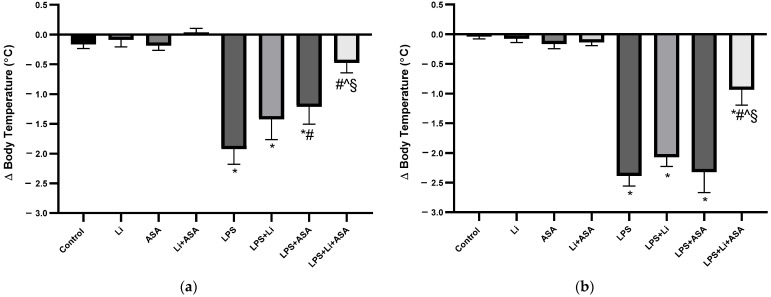
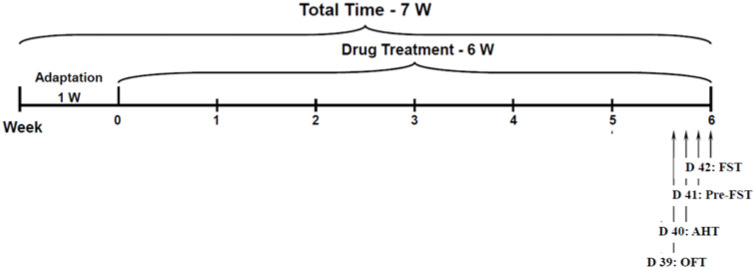
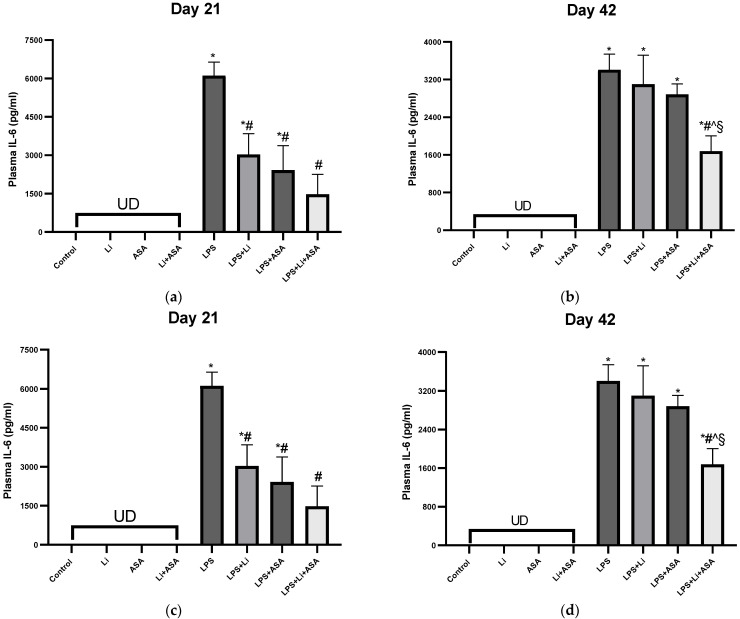
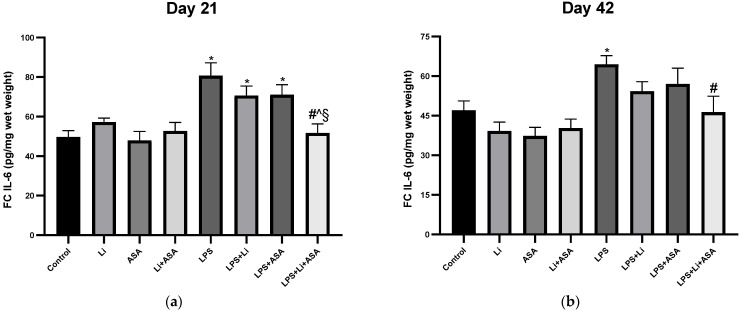
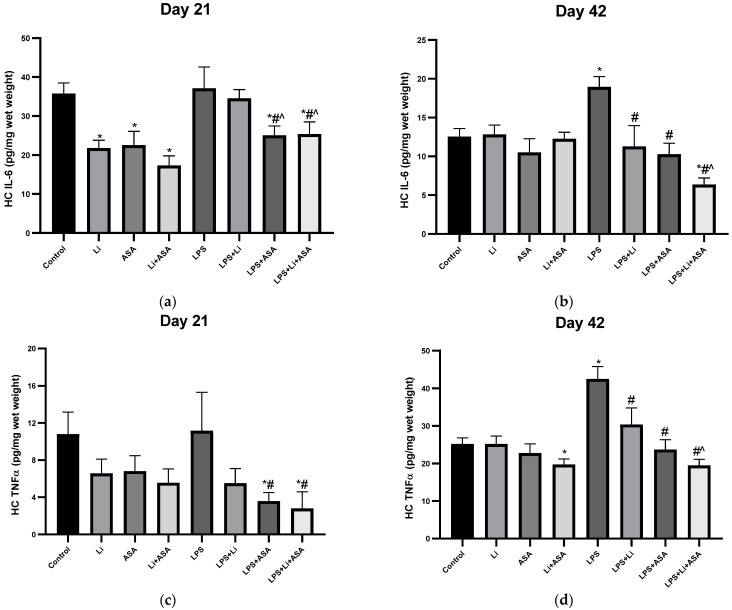
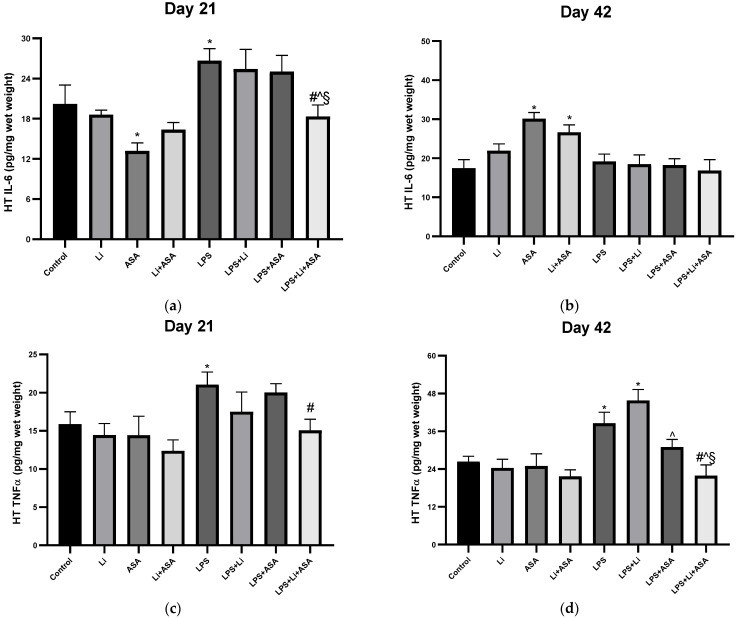
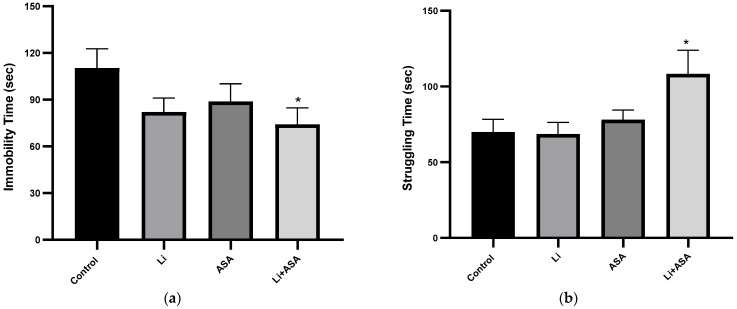
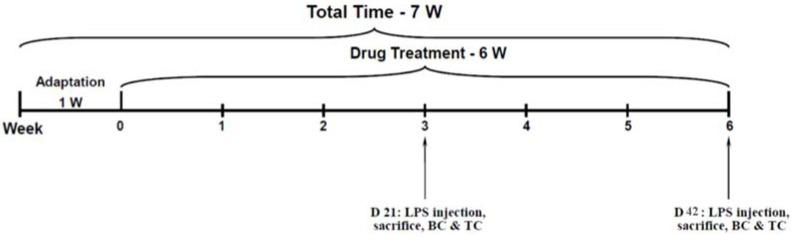
Mounting evidence suggests that immune-system dysfunction and inflammation play a role in the pathophysiology and treatment of mood-disorders in general and of bipolar disorder in particular. The current study examined the effects of chronic low-dose aspirin and low-dose lithium (Li) treatment on plasma and brain interleukin-6 and tumor necrosis factor-α production in lipopolysaccharide (LPS)-treated rats. Rats were fed regular or Li-containing food (0.1%) for six weeks. Low-dose aspirin (1 mg/kg) was administered alone or together with Li. On days 21 and 42 rats were injected with 1 mg/kg LPS or saline. Two h later body temperature was measured and rats were sacrificed. Blood samples, the frontal-cortex, hippocampus, and the hypothalamus were extracted. To assess the therapeutic potential of the combined treatment, rats were administered the same Li + aspirin protocol without LPS. We found that the chronic combined treatment attenuated LPS-induced hypothermia and significantly reduced plasma and brain cytokine level elevation, implicating the potential neuroinflammatory diminution purportedly present among the mentally ill. The combined treatment also significantly decreased immobility time and increased struggling time in the forced swim test, suggestive of an antidepressant-like effect. This preclinical evidence provides a potential approach for treating inflammation-related mental illness.
越来越多的证据表明,免疫系统功能障碍和炎症在一般情绪障碍尤其是双相情感障碍的病理生理学及治疗中发挥作用。本研究检测了慢性低剂量阿司匹林和低剂量锂(Li)治疗对脂多糖(LPS)处理大鼠血浆和脑内白细胞介素-6及肿瘤坏死因子-α产生的影响。大鼠喂食普通食物或含锂食物(0.1%)六周。低剂量阿司匹林(1毫克/千克)单独给药或与锂联合给药。在第21天和第42天,给大鼠注射1毫克/千克LPS或生理盐水。两小时后测量体温并处死大鼠。采集血样、额叶皮质、海马体和下丘脑。为评估联合治疗的潜在疗效,给大鼠采用相同的锂+阿司匹林方案但不注射LPS。我们发现,慢性联合治疗减轻了LPS诱导的体温过低,并显著降低了血浆和脑内细胞因子水平的升高,这意味着在精神病患者中可能存在潜在的神经炎症减轻。联合治疗在强迫游泳试验中也显著减少了不动时间并增加了挣扎时间,提示有类似抗抑郁的作用。这一临床前证据为治疗炎症相关精神疾病提供了一种潜在方法。