Xu Yu-Ling, Wang Xiao-Yu, Chen Jun, Kang Min, Wang Yi-Xin, Zhang Li-Juan, Shu Hui-Ye, Liao Xu-Lin, Zou Jie, Wei Hong, Ling Qian, Shao Yi
Department of Ophthalmology, The First Affiliated Hospital of Nanchang University, Nanchang, China.
Department of Ophthalmology and Visual Sciences, Cardiff University, Cardiff, United Kingdom.
Front Psychiatry. 2022 May 11;13:914039. doi: 10.3389/fpsyt.2022.914039. eCollection 2022.
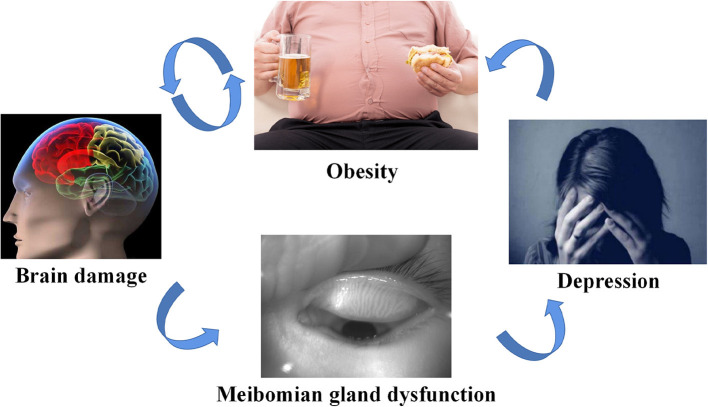
Utilizing the fractional amplitude of low-frequency fluctuations (fALFF) technique, this study sought to correlate spontaneous cerebral abnormalities with the clinical manifestations of meibomian gland dysfunction (MGD) in severely obese (SO) population.
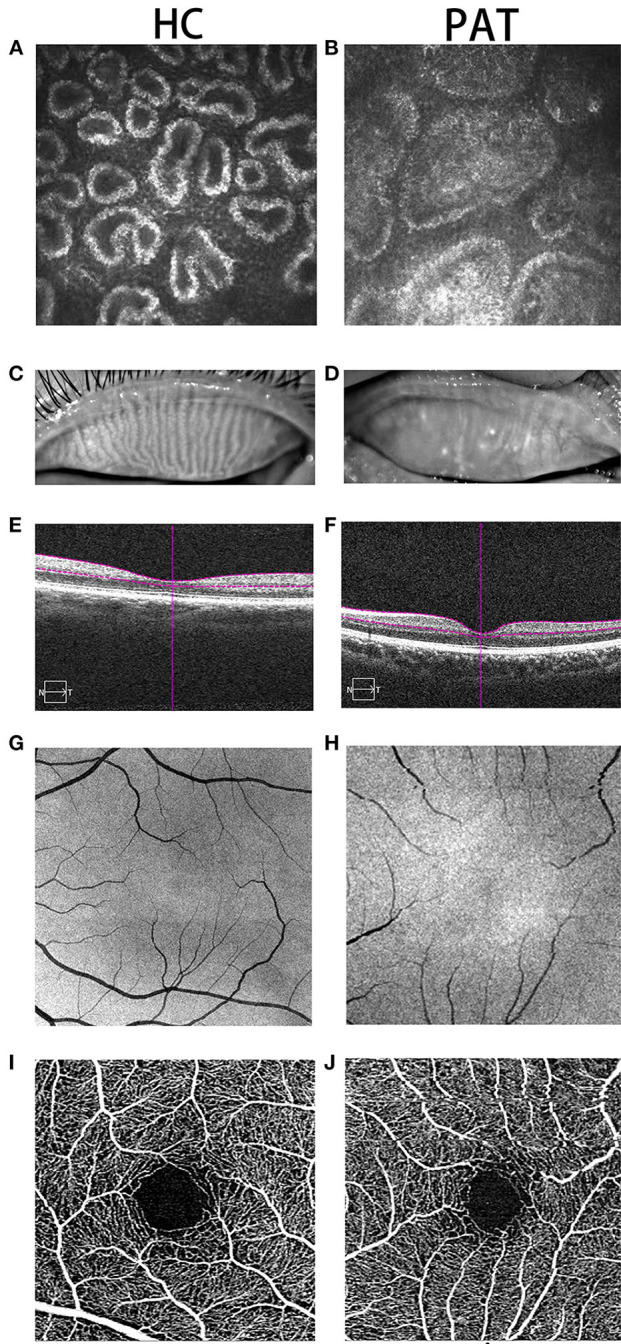
Twelve MGD patients in SO population (PATs) (4 males and 8 females) and twelve healthy controls (HCs) (6 males and 6 females) matched by gender and age were enrolled. Every participant underwent resting-state functional magnetic resonance imaging (rs-MRI) scanning. Spontaneous cerebral activity alterations were examined using the fALFF method. Receiver operating characteristic (ROC) curves were utilized to classify the medial fALFF values of the PATs and HCs. PATs were also asked to complete anxiety and depression score forms, permitting a correlation analysis.
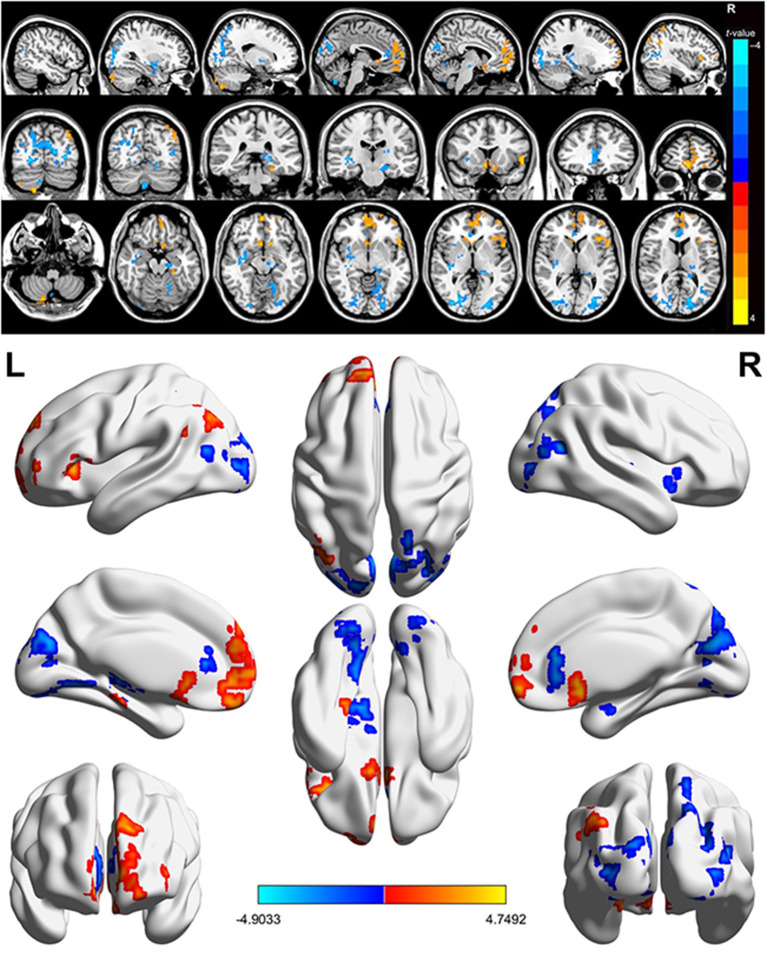
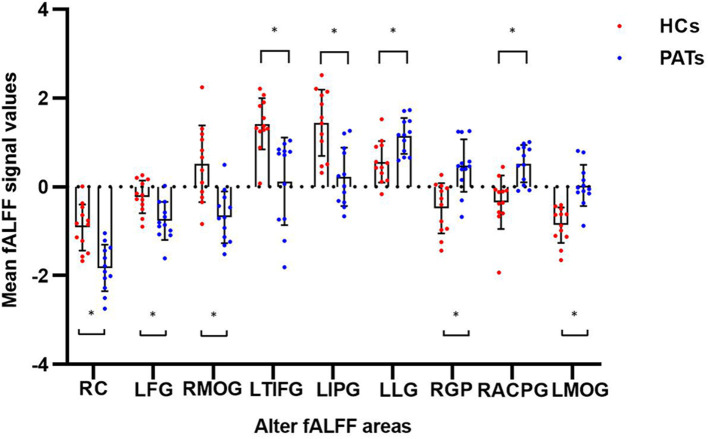
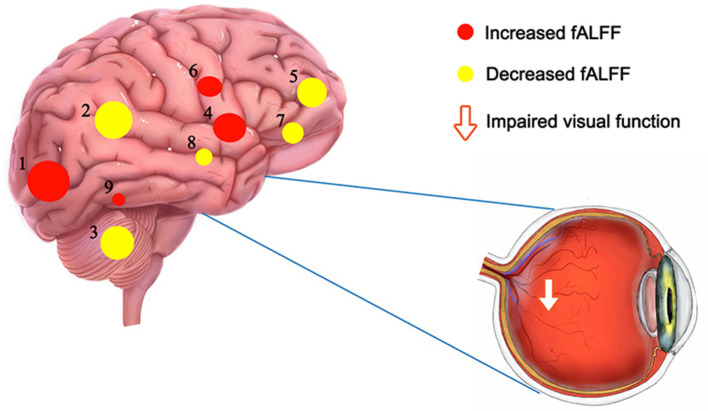
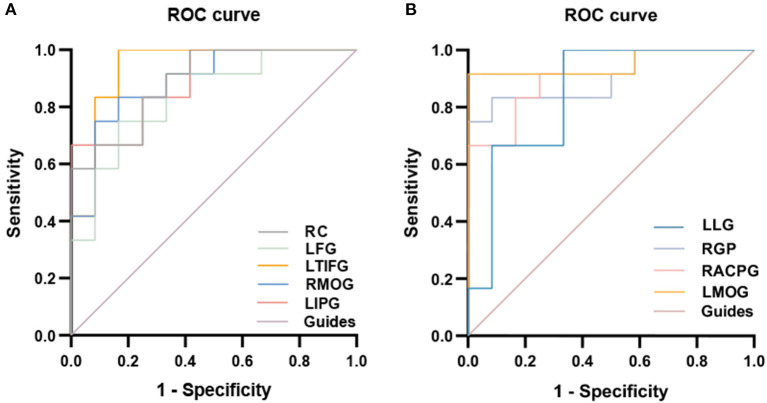
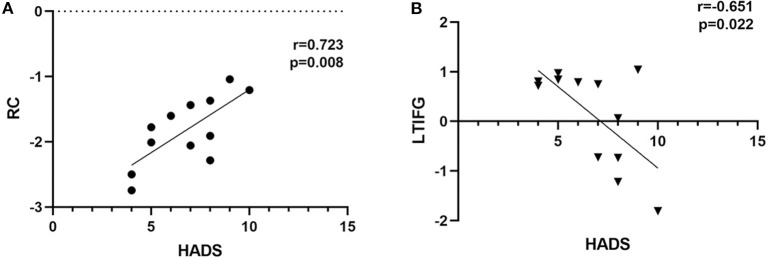
In contrast with HCs, PATs had prominently increased fALFF values in the left lingual gyrus, the right globus pallidus, the right anterior cingulate and paracingulate gyri and the left middle occipital lobe ( < 0.05), and decreased fALFF values in the right cerebellum, the left fusiform gyrus, the right medial orbitofrontal gyrus, the left triangle inferior frontal gyrus and the left inferior parietal gyrus ( < 0.05). The results of the ROC curve indicated that changes in regional fALFF values might help diagnose MGD in SO population. Moreover, fALFF values in the right cerebellum of PATs were positively correlated with hospital anxiety and depression scores (HADS) (r = 0.723, = 0.008). The fALFF values in the left triangle inferior frontal gyrus of PAT were negatively correlated with HADS (r = -0.651, = 0.022).
Aberrant spontaneous activity was observed in multiple regions of the cerebrum, offering helpful information about the pathology of MGD in SO population. Aberrant fALFF values in these regions likely relates to the latent pathologic mechanisms of anomalous cerebral activities in PATs.
本研究采用低频振幅分数(fALFF)技术,旨在探讨重度肥胖(SO)人群中脑自发活动异常与睑板腺功能障碍(MGD)临床表现之间的相关性。
招募12例SO人群中的MGD患者(PATs)(4例男性,8例女性)和12例年龄及性别相匹配的健康对照者(HCs)(6例男性,6例女性)。每位参与者均接受静息态功能磁共振成像(rs-MRI)扫描。采用fALFF方法检测脑自发活动改变。利用受试者工作特征(ROC)曲线对PATs和HCs的内侧fALFF值进行分类。PATs还被要求完成焦虑和抑郁评分表,以便进行相关性分析。
与HCs相比,PATs在左侧舌回、右侧苍白球、右侧前扣带回和旁扣带回以及左侧枕叶中部的fALFF值显著升高(<0.05),而在右侧小脑、左侧梭状回、右侧眶额内侧回、左侧额下回三角部和左侧顶下小叶的fALFF值降低(<0.05)。ROC曲线结果表明,局部fALFF值的变化可能有助于诊断SO人群中的MGD。此外,PATs右侧小脑的fALFF值与医院焦虑抑郁量表(HADS)评分呈正相关(r = 0.723,P = 0.008)。PATs左侧额下回三角部的fALFF值与HADS评分呈负相关(r = -0.651,P = 0.022)。
在大脑多个区域观察到异常的自发活动,为SO人群中MGD的病理学提供了有用信息。这些区域异常的fALFF值可能与PATs大脑异常活动的潜在病理机制有关。